Key Takeaway
The definitive, evidence-based comparison of live vs frozen prey for snakes. Covers safety data, nutritional equivalence, disease risk, cost analysis, ethics, and the expert consensus on which is better and why.
Table of Contents
- 1. The Safety Question: Which Is Safer for the Snake?
- Injury Risk from Live Prey
- Injury Risk from Frozen-Thawed Prey
- 2. The Nutritional Comparison: Is Live Prey More Nutritious?
- The Myth of "Fresh Is Nutritionally Superior"
- What Research Shows
- 3. Disease Risk: Which Carries More Pathogens?
- Disease Risks from Live Prey
- Disease Risks from Frozen-Thawed Prey
- 4. Cost Analysis: Which Is More Economical?
- Live Prey Cost Structure
- Frozen Prey Cost Structure
- 5. Convenience and Practicality
- Live Prey: Practical Challenges
- Frozen Prey: Practical Advantages
- 6. The Ethics Question
- The Ethics of Live Feeding
- 7. When Live Feeding Is Sometimes Justified
- 8. The Expert Consensus
- The Transition: Making the Switch
- Frequently Asked Questions
- Conclusion
- 9. Addressing the Most Common Objections to Frozen-Thawed
- 10. The Long View: 20 Years of Feeding Decisions
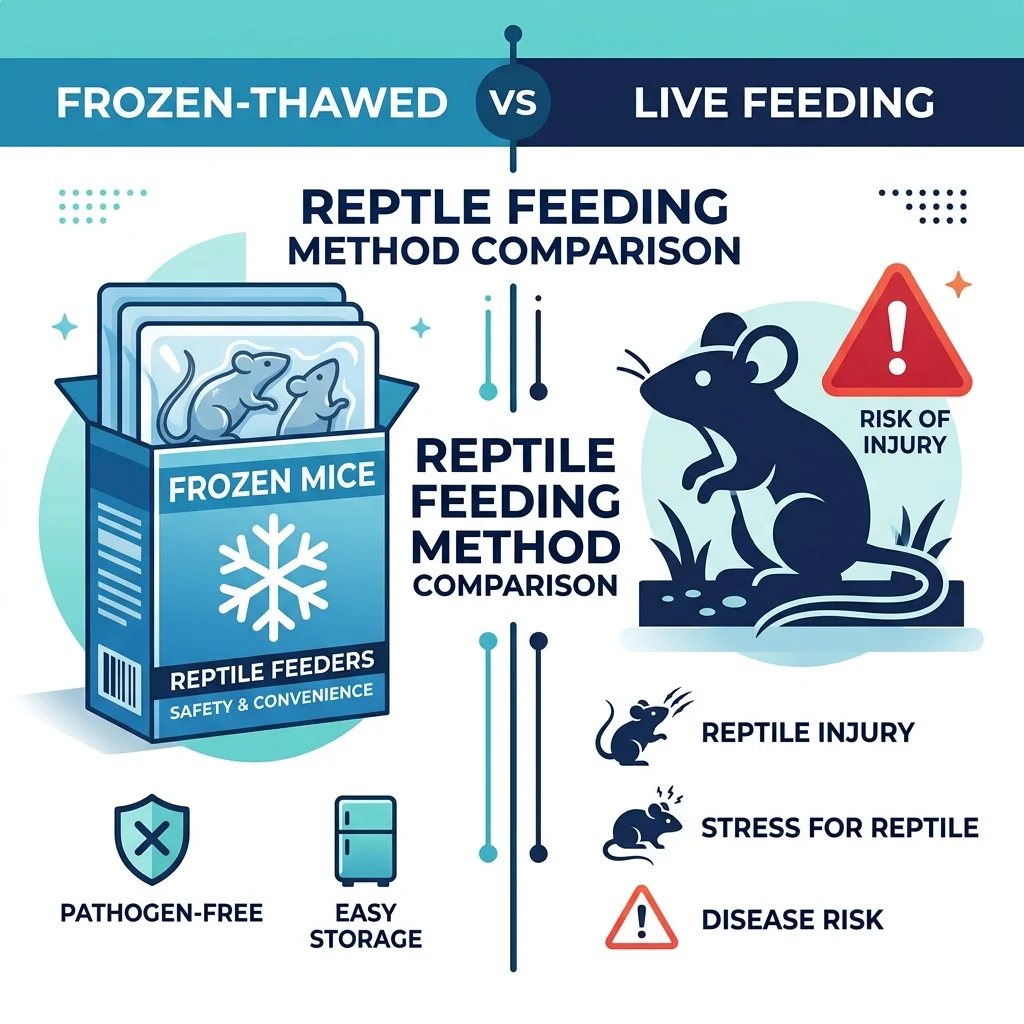
The live vs. frozen prey debate has been a central argument in reptile keeping communities for decades. Walk into any reptile forum, subreddit, or Facebook group and you'll find passionate advocates on both sides — keepers who insist their snake "won't eat anything but live" and keepers who haven't purchased a live feeder in 20 years. Both groups often have strong emotional investment in their position, which makes objective evaluation difficult.
This guide approaches the question differently: we examine the actual evidence — injury data, nutritional research, disease transmission studies, cost analysis, and the expert consensus from zoological nutritionists, exotic veterinarians, and long-term large-scale breeders. We present both sides honestly before arriving at a clear, evidence-based conclusion.
At Loxahatchee Rodents, we have a clear institutional position: frozen-thawed prey is superior. But we also understand that many keepers come to this question genuinely uncertain, and we want to give you the reasoning that supports the conclusion, not just the conclusion itself.
1. The Safety Question: Which Is Safer for the Snake?
This is the most important comparison, and the most clearly resolved by data.
Injury Risk from Live Prey
Live feeder rodents — mice, rats, and gerbils — are equipped with incisor teeth that grow continuously and can inflict serious wounds. A frightened mouse or rat will bite, scratch, and fight to survive. In an enclosed terrarium where the prey has no escape route, the struggle is concentrated and prolonged.
Documented injury types from live prey feeding:
| Injury Type | Severity | Frequency |
|---|---|---|
| Facial lacerations | Moderate to severe | Common |
| Eye wounds and blindness | Severe | Uncommon but documented |
| Tracheal injuries from bites to throat | Potentially fatal | Rare but documented |
| Spinal injuries from repeated bites | Severe | Rare |
| Infection from bite wounds | Moderate to fatal | Common outcome of bite injuries |
The critical factor: Most live-prey injuries occur not during the strike or constriction phase but during the brief period between introduction and initial strike — particularly in snakes that are hesitant strikers. A ball python that investigates a live mouse for several minutes before striking gives the mouse significant time to fight back.
Even after initial constriction, live prey can inflict injuries if the first constrict loop is poorly positioned and the animal struggles free. We have documented cases of rats biting through boa constrictor flesh during escape attempts from an incomplete initial wrap.
Injury Risk from Frozen-Thawed Prey
Zero. A properly thawed and warmed frozen prey item cannot bite, scratch, or injure your snake in any way. The prey is fully deceased before freezing and remains deceased through the thawing process.
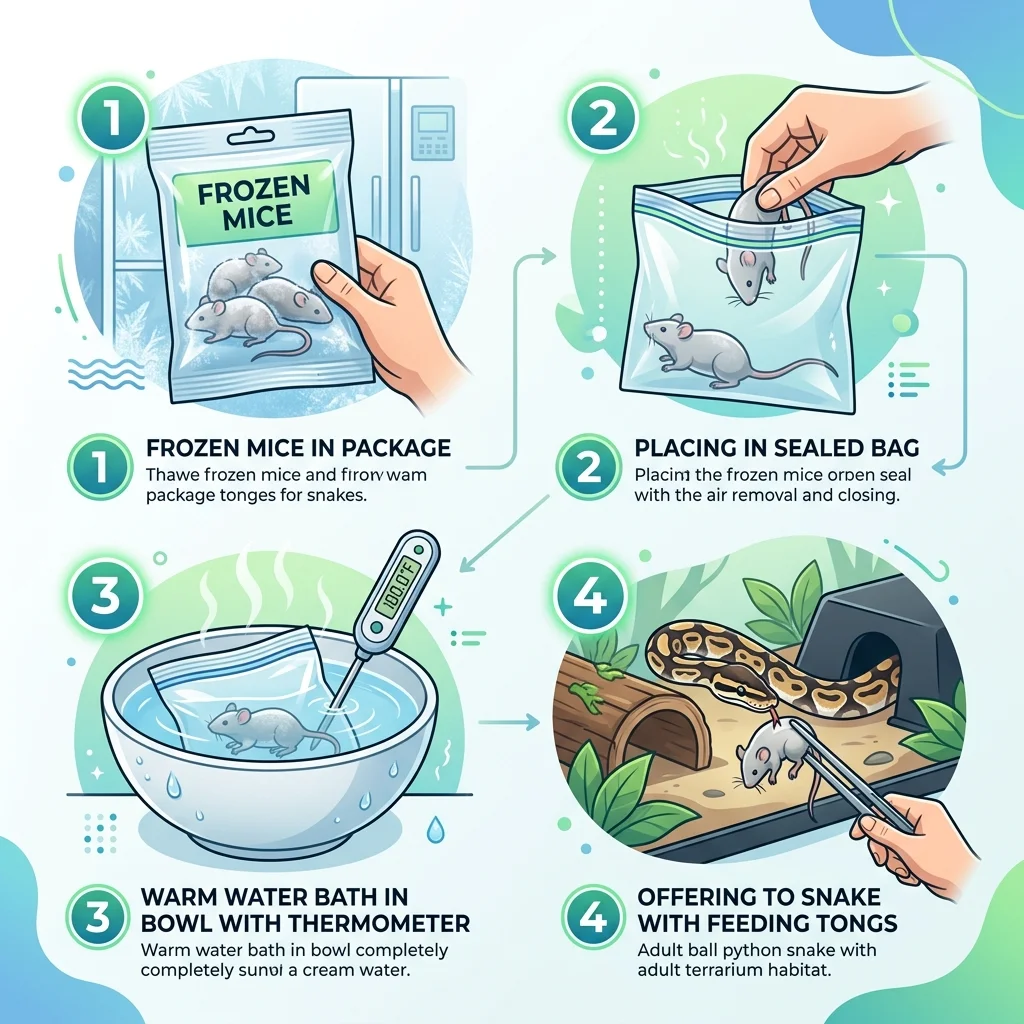
The only theoretical risk from frozen-thawed prey is thermal injury from incorrectly warmed prey — specifically, microwaved prey with hot spots or improperly warmed prey with an unexpectedly cold core that causes GI tract stress. Both of these risks are entirely preventable by following the correct thawing protocol. See our complete thawing guide.
Safety verdict: Frozen-thawed is categorically safer for the snake. This is not a close comparison.
2. The Nutritional Comparison: Is Live Prey More Nutritious?
This is one of the most persistent myths in reptile keeping, and it is definitively resolved by research.
The Myth of "Fresh Is Nutritionally Superior"
The belief that live prey is nutritionally superior to frozen-thawed prey persists for an intuitive but incorrect reason: we know from human food science that fresh food often retains more nutrients than stored food. This logic does not apply to whole-prey feeding in reptiles for several reasons:
Reason 1: Flash-freezing preserves nutritional content. When a quality frozen feeder supplier euthanizes prey at peak health and immediately flash-freezes it at -18°C, the nutritional content is locked in at that moment. Protein structure, fat content, calcium ratios, and vitamin levels are preserved by the rapid temperature drop that halts all enzymatic and bacterial activity.
Reason 2: The comparison point matters. The nutritional content of live prey at the moment of feeding depends entirely on what the live prey has eaten recently, the live prey's age and health, and how long the prey has been held in a pet store environment (often in suboptimal conditions). A freshly healthy frozen mouse from a quality breeder is nutritionally superior to a stressed, underfed live mouse that has been in a pet store for a week.
Reason 3: Freezing does not destroy protein or minerals. Unlike cooking (which denatures proteins and destroys some heat-sensitive vitamins), freezing preserves protein structure. Calcium from bones, phosphorus, iron, and most vitamins are unaffected by proper freezing.
What Research Shows
The most relevant study in this area (Nagy & Avery, 1982, and subsequent confirmations) found that the nutritional profiles of frozen-thawed mice were not statistically different from those of freshly killed mice of the same age and diet history when both were sourced from the same controlled colony. The key variable was diet and health of the prey animal, not whether it was offered live or frozen.
Nutritional verdict: Frozen-thawed prey from a quality supplier is nutritionally equivalent to live prey from a healthy colony. The source quality and animal health matter far more than live vs. frozen status.
For a detailed nutritional breakdown of feeder rodent profiles at different life stages, see our feeder rodent nutrition comparison.
3. Disease Risk: Which Carries More Pathogens?
This comparison consistently favors frozen-thawed prey.
Disease Risks from Live Prey
Live feeder rodents, particularly those from pet store supply chains, carry a range of pathogens that can be transmitted directly to snakes:
Bacterial pathogens:
- Salmonella spp.: Very common in pet store rodents; transmitted via fecal contact during feeding
- Campylobacter spp.: Similarly common; causes gastrointestinal disease in snakes
- Pasteurella spp.: Associated with bite wound infections
- Clostridium spp.: Present in gut flora; can cause GI disease when transferred in large quantities
Parasites:
- Pinworms (Aspiculuris tetraptera, Syphacia spp.): Extremely common in feeder mice; can establish in snake GI tracts
- Fur mites (Myobia musculi, Radfordia spp.): Can transfer to snake enclosures from live prey
- Tapeworm cysts: Present in some wild-sourced or poorly managed feeder colonies
Viral pathogens:
- Less well-documented for direct transmission during feeding, but viral material from immunocompromised prey animals has been identified in post-feeding snake fecal samples in research settings
Disease Risks from Frozen-Thawed Prey
Deep-freezing at -18°C kills or inactivates:
- Most external parasites: Mites and their eggs are killed at -18°C within 72 hours
- The majority of common bacteria: Significantly reduced bacterial load compared to live prey
- Pinworm eggs: Killed at -18°C within 48–72 hours
What freezing does NOT eliminate:
- All bacteria (freezing inhibits growth; it doesn't sterilize)
- Certain hardy parasite oocysts (Cryptosporidium is freeze-resistant)
- Prion-type pathogens (theoretically)
The net effect: Buying frozen prey from a well-managed, biosecure breeding facility like Loxahatchee Rodents — where colony health, biosecurity protocols, and freezing standards are maintained — results in prey with dramatically lower pathogen loads than typical pet store live prey.
Disease risk verdict: Frozen-thawed prey from a reputable supplier has significantly lower disease transmission risk than live pet-store prey.
4. Cost Analysis: Which Is More Economical?
The economics of live vs. frozen feeding depend on scale, but frozen-thawed is almost always more economical at any meaningful scale.
Live Prey Cost Structure
| Cost Factor | Detail |
|---|---|
| Per-unit cost | Higher — live prey sold individually or in small quantities |
| Travel cost | Pet store trips required; no delivery option for live |
| Storage cost | Zero (must be used immediately) |
| Waste | High — any purchased prey not immediately used must be maintained |
| Emergency supply | Zero — cannot "keep extras" with live |
| Colony maintenance cost | Very high if self-breeding live prey |
Frozen Prey Cost Structure
| Cost Factor | Detail |
|---|---|
| Per-unit cost | Lower — bulk pricing significantly reduces per-unit cost |
| Shipping cost | One-time per order (usually free above order minimum) |
| Storage cost | Small — dedicated chest freezer ($80–150 one-time purchase) |
| Waste | Very low — proper storage allows 6–12 month shelf life |
| Emergency supply | High — maintain 30–60 day buffer at all times |
| Scaling efficiency | Excellent — ordering in bulk saves 20–40% vs. per-unit purchase |
Practical comparison:
For a collection of 3 adult ball pythons each eating every 14 days:
- Live prey cost: ~$4/rat × 2 rats/month/snake × 3 snakes = ~$24/month
- Frozen prey cost (bulk): ~$2.50/rat × 2/month/snake × 3 snakes = ~$15/month + $8/month shipping amortized = ~$23/month
At small scale, the cost difference is modest. At larger scale (5+ snakes):
- Live prey: ~$40+/month
- Frozen prey: ~$25–30/month with bulk discount
Cost verdict: Frozen-thawed is more economical at any scale beyond 1 snake, and significantly more economical for collections of 5+ animals.
5. Convenience and Practicality
This is perhaps the most underrated factor in the comparison.
Live Prey: Practical Challenges
- Supply uncertainty: Pet stores may run out, have poor-quality animals, or not stock the right size
- Transportation: Live animals require careful transport; they can't be shipped economically
- Timing: You must purchase live prey close to feeding time — no inventory
- Late-night feeding: Ball pythons and other nocturnal species feed best after dark; pet stores are closed
- Travel: Any absence requires finding someone to purchase and feed live prey
- Size availability: Small pet stores often stock only limited size categories
Frozen Prey: Practical Advantages
- Bulk purchase: Order weeks or months of supply at once; no last-minute trips
- Any time: Thaw exactly when you need to feed; no store hours to contend with
- Size selection: Online suppliers stock every size category from pinky to jumbo
- Travel-ready: A house-sitter can easily follow thawing instructions; no live animal handling required
- Consistency: Same source, same quality, same size, every time
For guidance on building and managing a bulk frozen prey inventory, see our frozen rodent storage guide.
6. The Ethics Question
This is the most subjective comparison, but it deserves honest examination.
The Ethics of Live Feeding
Live feeding involves introducing a prey animal into an enclosed space where it cannot escape and will be killed — either by constriction (in constrictors) or by being swallowed alive (in snakes that swallow prey without constricting, such as garter snakes). The prey animal experiences stress and fear during this process.
Arguments for live feeding from an ethical standpoint:
- It is "natural" behavior
- The prey's death is typically rapid in an efficient constriction
- The snake's welfare benefit from natural feeding behaviors
Arguments against live feeding from an ethical standpoint:
- Confined prey has no opportunity to escape (not "natural" in that respect)
- The period between introduction and strike can be extended, prolonging prey stress
- The prey's welfare is negatively impacted without a clear benefit that cannot be achieved through frozen feeding
The counterpoint: Frozen feeder animals are produced through commercial breeding and euthanasia. The euthanasia method matters significantly. At Loxahatchee Rodents, we use CO₂ euthanasia — the method recognized by the American Veterinary Medical Association (AVMA) as appropriate for rodents. This results in rapid, low-stress death for the feeder animal. Compare this to the significantly more protracted stress of live feeding.
Ethical verdict: Frozen-thawed prey from suppliers using humane euthanasia methods is more ethically defensible than live feeding in most circumstances.
7. When Live Feeding Is Sometimes Justified
While the overall case for frozen-thawed is clear, there are specific circumstances where live feeding may be temporarily appropriate:
Severely emaciated snakes: An emaciated snake that has lost the ability to detect frozen prey through illness-related sensory dysfunction may respond to live prey when it refuses frozen. This should be a temporary, veterinarian-guided intervention, not a permanent strategy.
Transition support: A snake being transitioned from live to frozen may benefit from one or two "fresh kill" sessions (humanely euthanized prey offered immediately while still warm) as a bridge. This is live in the sense of not being frozen, but can use humane euthanasia rather than enclosure predation. See our switch snake from live to frozen guide.
Zoo and institutional settings: Some zoo settings use live feeding for specific educational or behavioral enrichment programs under controlled conditions with trained staff. This is an institutional decision made with animal welfare protocols in place.
What live feeding is NOT justified for: Regular, routine feeding of healthy captive snakes that can be transitioned to frozen. The risk-benefit analysis does not support live feeding as a standard husbandry practice.
8. The Expert Consensus
What do exotic veterinarians, herpetological society guidelines, and experienced professional breeders actually recommend?
The consensus is essentially unanimous among mainstream exotic animal medicine: frozen-thawed prey is the recommended standard for captive snake feeding.
Key positions:
- Association of Reptilian and Amphibian Veterinarians (ARAV): Recommends frozen-thawed prey as the standard of care for captive snakes
- British Veterinary Association (BVA): Formal guidance recommends frozen-thawed as the preferred option for captive reptile feeding
- American Veterinary Medical Association (AVMA): Does not endorse live feeding for routine captive care
- Major herpetological societies (USARK, etc.): While focused on reptile keeping rights, do not advocate for live feeding as preferable
Among large-scale professional breeders — people who produce hundreds to thousands of ball pythons, boas, and colubrids annually — the overwhelming majority use frozen-thawed prey exclusively. This is driven partly by economics (frozen is cheaper at scale), partly by biosecurity (fewer disease vectors into the breeding collection), and partly by labor efficiency (no live colony management required).
Expert consensus verdict: Frozen-thawed prey is the professional and veterinary consensus standard for captive snake feeding.
The Transition: Making the Switch
If you are currently feeding live prey and want to transition to frozen-thawed, our complete live-to-frozen transition guide covers every technique from basic temperature optimization through the fresh-kill bridge method. Every snake species can be successfully transitioned with the right approach and patience.
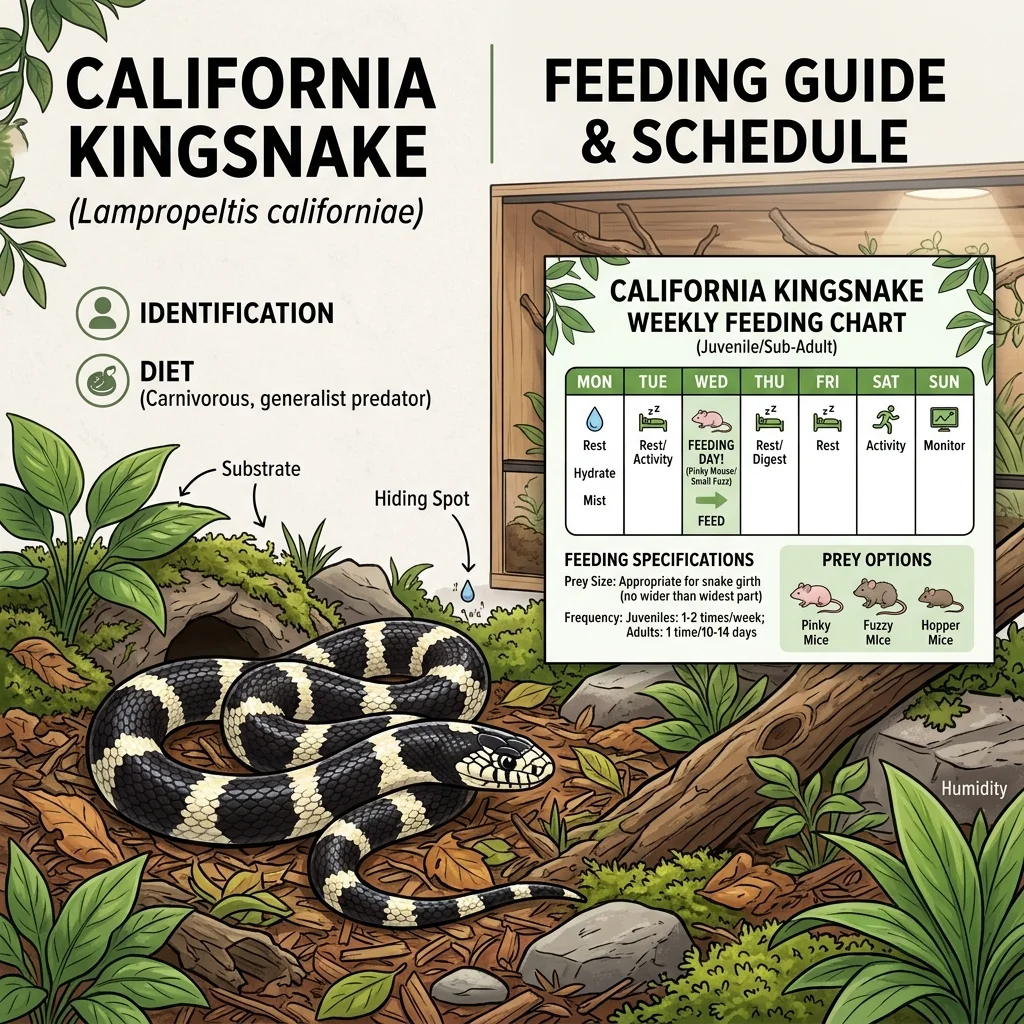
For species-specific frozen feeding guides, see our articles on ball pythons, corn snakes, boa constrictors, king snakes, and hognose snakes.
Frequently Asked Questions
Q: My snake has always eaten live and refuses frozen. Doesn't that prove live is better? A: It proves your snake is conditioned to live prey. Conditioning is not the same as preference based on nutritional need. With the transition techniques in our live-to-frozen guide, the vast majority of live-conditioned snakes accept frozen within 3–10 sessions.
Q: Won't my snake lose mental stimulation without live prey? A: The feeding-related mental stimulation in snakes — thermal detection, scent tracking, and the strike response — is equally engaged by properly warmed frozen prey. Snakes do not have complex cognitive needs for the "enrichment" of live prey hunting in the way that is sometimes anthropomorphically attributed to them.
Q: I've heard that frozen prey causes nutritional deficiencies. Is this true? A: No. This is a myth. Properly frozen-thawed whole prey from a quality supplier contains the same macronutrient and micronutrient profile as live prey from the same colony. See Section 2 of this guide for the research basis.
Q: Is it legal to feed live prey to snakes? A: Laws vary by jurisdiction. In some countries (notably the UK), live vertebrate feeding to pet reptiles is explicitly illegal or restricted. In the United States, it is generally legal but some states have individual regulations. Check your local laws.
Conclusion
The live vs. frozen debate, when evaluated honestly against available evidence, resolves clearly: frozen-thawed prey from a quality supplier is safer, nutritionally equivalent, less disease-prone, more economical, more convenient, and more ethically defensible than routine live feeding.
The remaining argument for live prey — that "some snakes won't eat frozen" — is not an argument for live feeding as a permanent strategy. It is an argument for learning the appropriate transition techniques, which exist, work reliably, and have been used by thousands of keepers to successfully transition even long-term live feeders.
For the complete toolkit to make the transition, see our live-to-frozen transition guide. Explore our complete reptile feeding guides library and our frozen mice size chart and rat size chart by weight in grams for prey sizing reference.
Written by Bill Galloway, Former Assistant Curator at Palm Beach Zoo and co-founder of Loxahatchee Rodents.
9. Addressing the Most Common Objections to Frozen-Thawed
Objection: "My snake is healthier on live prey — I can tell by its energy levels."
This is post-hoc reasoning — attributing the snake's health to live prey when the actual contributing factor is the keeper's high level of engagement and attention. Keepers who feed live tend to observe their animals more closely during feeding sessions, which leads to earlier detection of health issues. The health benefit is from the keeper's attentiveness, not from the live prey itself.
Objection: "I tried frozen once and my snake got sick."
Without controlled conditions, this is correlation, not causation. More likely causes of illness around a frozen prey introduction: prey that was thawed incorrectly (bacterial growth), prey that was of poor quality from the source, or prey that introduced pathogens that were already in the supply chain. These issues are solvable with quality sourcing and correct thawing protocol.
Objection: "Live feeding is more natural."
Captivity itself is not natural. The goal of captive husbandry is not to replicate nature — it is to meet the animal's biological needs in a safe and healthy way. Captive snakes in appropriate-sized enclosures are already living in a significantly modified environment. Adding frozen-thawed prey to this context does not create an inconsistency with other husbandry choices.
Objection: "My breeder said live is fine."
Many excellent breeders use live prey, particularly in high-volume production settings where transitioning hundreds of animals to frozen may not be practical. This is a production decision, not a husbandry recommendation. The best breeders will recommend frozen-thawed for individual pet keepers.
10. The Long View: 20 Years of Feeding Decisions
Consider the feeding decisions made over a ball python's 25-year lifespan:
- Approximately 600–900 feedings over a full lifetime
- Each live feeding: one potential injury event, one disease transmission opportunity, one stress event
- Each frozen-thawed feeding (correctly done): zero injury risk, reduced disease exposure, controlled nutrition
At scale — 900 feeding sessions over 25 years — the risk differential between live and frozen-thawed is not theoretical. It accumulates. A snake fed live prey for 25 years has had 900 injury opportunities. A snake fed frozen-thawed correctly has had none.
This is not an argument for fear of live prey — millions of snakes have been fed live prey without incident. It is an argument that the risk management calculation clearly favors frozen-thawed over the course of a lifetime.
For the resources to make the transition, see our live-to-frozen guide. For quality frozen feeder reference, see our frozen mice size chart, rat size chart by weight in grams, and boa constrictor feeding chart.
Written by Bill Galloway, Former Assistant Curator at Palm Beach Zoo and co-founder of Loxahatchee Rodents.