Key Takeaway
The most detailed rat size chart available, with exact weight ranges in grams for every stage from pinky rat to jumbo. Designed for precision-focused reptile keepers who weigh their feeders.
Table of Contents
- 1. Why Weight-Based Sizing Matters More Than Visual Estimates
- 2. The Complete Rat Size Chart by Weight in Grams
- Newborn Stage
- Juvenile Stage
- Young Adult Stage
- Adult Stage
- 3. Nutritional Content at Each Weight Stage
- 4. Matching Rat Size to Snake Species and Life Stage
- Ball Pythons (Python regius)
- Boa Constrictors (Boa constrictor)
- Ball Python Morphs: Do They Require Different Sizes?
- Larger Pythons and Boas
- 5. The 5% and 10% Rule: How to Calculate Prey Weight
- 6. Sourcing Rats at Each Weight Stage: Practical Considerations
- 7. Mice vs. Rats: The Gram-for-Gram Comparison
- 8. Quality Indicators for Frozen Rats at Every Size
- Frequently Asked Questions
- 9. Thawing Large Rats: Extended Protocol for Accuracy
- 10. Building a Rat Inventory: Practical Calculations
- 11. Weighing Your Snake: Tools and Technique
- Conclusion
Most frozen feeder rat charts give you broad categories — "small," "medium," "large" — and leave you guessing whether your 85-gram snake needs a weanling or a small rat. If you weigh your snake regularly (as you should), you already have a precise number to work with. This guide gives you the equally precise rat weight ranges to match it.
This is the most detailed rat weight-by-gram reference available for reptile keepers. Every classification is defined by exact weight ranges based on the industry standards used at Loxahatchee Rodents and cross-referenced with the major feeder suppliers in the market. We also include the precise caloric density, protein-to-fat ratios, and calcium content at each stage — because informed feeding decisions require more than just size matching.
Whether you keep ball pythons, boa constrictors, large ratsnakes, or monitor lizards, this chart gives you the precision foundation your feeding program needs.
1. Why Weight-Based Sizing Matters More Than Visual Estimates
The standard advice — "feed prey about the same diameter as the widest part of the snake's body" — is valuable and correct. But it has a practical limitation: the diameter of your snake's body varies along its length, it's difficult to measure precisely, and it doesn't account for the significant weight differences between different specimens at the same length.
A ball python that weighs 800g and one that weighs 1,200g at the same length (possible with different genetics and body condition) require meaningfully different prey items even if their body diameters look similar.
The weight-based approach is more precise:
- Weigh your snake on a digital kitchen scale (accurate to ±1g)
- Calculate 5–10% of body weight (5% for adults, 10% for juveniles)
- Match that weight to the rat size chart below
This approach removes guesswork and gives you a consistent, replicable metric for every feeding session.
2. The Complete Rat Size Chart by Weight in Grams
Note: Weight ranges reflect standards used at Loxahatchee Rodents, calibrated against the major feeder suppliers. Individual animals may vary ±10% based on genetics and colony management. All weights are live weight at time of euthanasia.
Newborn Stage
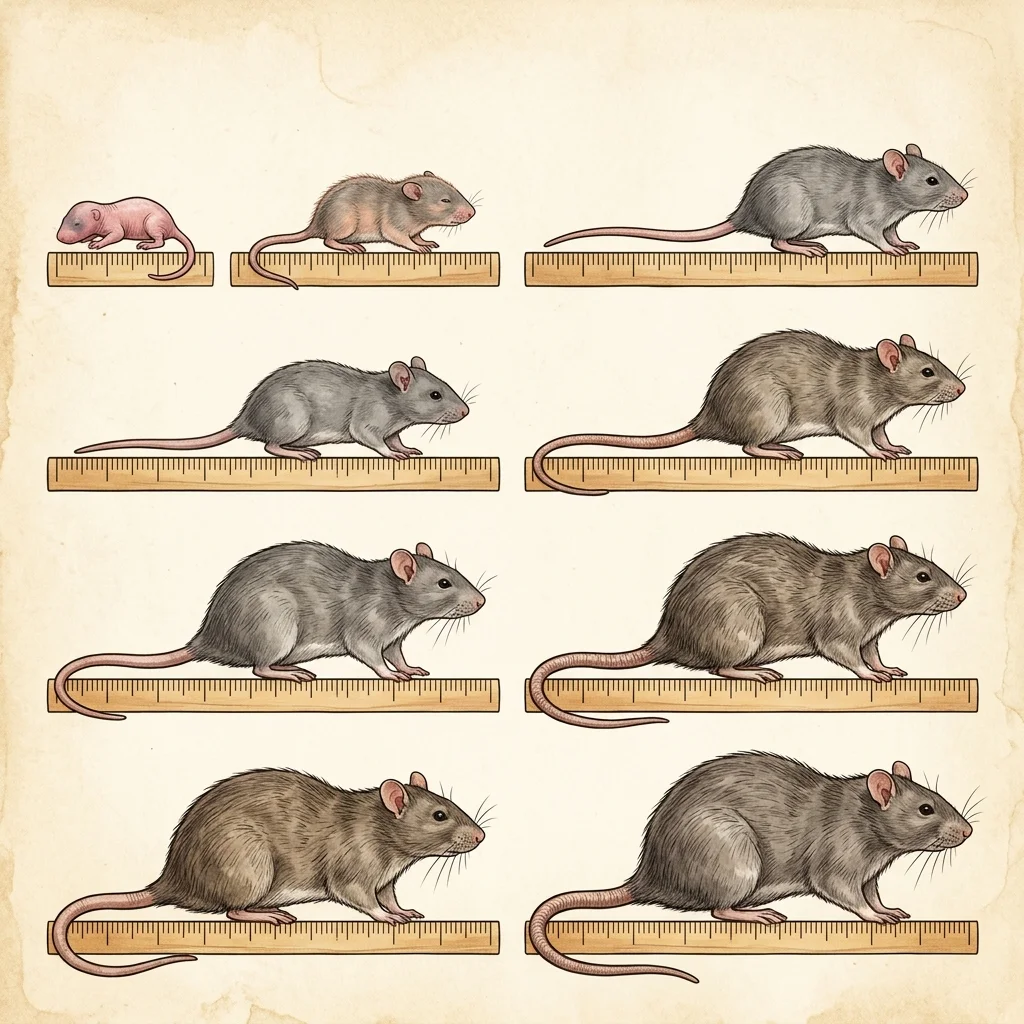
| Classification | Weight Range | Age | Key Physical Characteristics |
|---|---|---|---|
| Pinky Rat | 5–12g | 1–4 days | Hairless, pink skin, eyes sealed, approximately 2.5–3 inches |
| Fuzzy Rat | 13–19g | 5–13 days | Sparse fur just developing, eyes sealed, approximately 3–3.5 inches |
Juvenile Stage
| Classification | Weight Range | Age | Key Physical Characteristics |
|---|---|---|---|
| Rat Pup | 20–29g | 14–20 days | Fully furred, eyes recently opened, approximately 3.5–4 inches |
| Weaned Rat (Weanling) | 30–45g | 3–4 weeks | Full juvenile coat, independent from mother, approximately 4–5 inches |
Young Adult Stage
| Classification | Weight Range | Age | Key Physical Characteristics |
|---|---|---|---|
| Small Rat | 46–79g | 5–6 weeks | Early adult, growing rapidly, approximately 5–7 inches body length |
| Medium Rat | 80–149g | Young adult (6–10 weeks) | Full adult appearance, standard breeding colony adult, approximately 7–9 inches |
Adult Stage
| Classification | Weight Range | Age | Key Physical Characteristics |
|---|---|---|---|
| Large Rat | 150–249g | Mature adult | Peak adult size for standard colony, approximately 9–11 inches |
| Jumbo Rat | 250–350g | Late adult/retired breeder | Maximum size colony animal or large-genetics line, approximately 11–13 inches |
| Giant Rat | 350g+ | Retired breeder | Available from some specialty suppliers only, not all offer this size |
3. Nutritional Content at Each Weight Stage
Understanding the nutritional shift from pinky rats to jumbo rats helps you make better decisions, particularly for snakes with specific dietary needs (growing juveniles vs. adults at maintenance weight).
| Classification | Protein (% fresh weight) | Fat (% fresh weight) | Moisture (%) | Ca:P Ratio | Approx. kcal per gram |
|---|---|---|---|---|---|
| Pinky Rat (5–12g) | ~15% | ~3.5% | ~79% | ~1.2:1 | ~0.80 kcal/g |
| Fuzzy Rat (13–19g) | ~17% | ~4.5% | ~76% | ~1.3:1 | ~0.90 kcal/g |
| Rat Pup (20–29g) | ~18% | ~5.5% | ~74% | ~1.3:1 | ~0.92 kcal/g |
| Weanling (30–45g) | ~19% | ~7% | ~71% | ~1.3:1 | ~0.98 kcal/g |
| Small Rat (46–79g) | ~20% | ~9% | ~68% | ~1.3:1 | ~1.05 kcal/g |
| Medium Rat (80–149g) | ~21% | ~11% | ~65% | ~1.3:1 | ~1.12 kcal/g |
| Large Rat (150–249g) | ~22% | ~13% | ~62% | ~1.3:1 | ~1.18 kcal/g |
| Jumbo Rat (250–350g) | ~22% | ~15–18% | ~59% | ~1.3:1 | ~1.25 kcal/g |
Key observations:
- Protein increases consistently with age — larger rats provide more protein per gram
- Fat increases significantly with age — jumbo rats have 4–5x the fat content of pinky rats
- Moisture decreases with age — younger prey items have higher water content
- Caloric density increases with age — a gram of jumbo rat contains ~56% more calories than a gram of pinky rat
This has practical implications: for an overweight or obese snake, switching from medium to small rats (while maintaining 5% body weight per meal) reduces fat intake by approximately 18% per feeding. For a growing juvenile, keeping fat intake adequate by feeding at 10% body weight with weanling or small rats supports healthy development.
For a comprehensive comparison of feeder nutritional profiles including mice vs. rats, see our feeder rodent nutrition comparison.
4. Matching Rat Size to Snake Species and Life Stage
Ball Pythons (Python regius)
Ball pythons are the most common rat consumers in the hobby. This chart assumes the ball python is already on rats (transitioned from mice).
| Snake Weight | Life Stage | Recommended Rat | Rat Weight (5–10%) |
|---|---|---|---|
| 50–150g | Hatchling | Pinky to Fuzzy Rat | 5–15g |
| 150–350g | Early Juvenile | Fuzzy to Rat Pup | 15–35g |
| 350–600g | Juvenile | Rat Pup to Weanling | 35–60g |
| 600g–1.2kg | Sub-Adult | Weanling to Small Rat | 30–80g (5%) |
| 1.2–2.0kg | Adult Female | Small to Medium Rat | 60–120g (5%) |
| 800g–1.5kg | Adult Male | Small Rat | 40–75g (5%) |
| 2.0–4.0kg | Large Adult Female | Medium to Large Rat | 100–200g (5%) |
For the complete ball python feeding schedule and refusal troubleshooting, see our ball python not eating guide and ball python feeding schedule guide.
Boa Constrictors (Boa constrictor)
| Snake Weight | Life Stage | Recommended Rat | Rat Weight (5–10%) |
|---|---|---|---|
| 60–250g | Hatchling | Pinky to Fuzzy Rat | 6–25g |
| 250g–1.0kg | Juvenile | Rat Pup to Weanling | 25–100g |
| 1.0–3.0kg | Sub-Adult | Small to Medium Rat | 50–200g |
| 3–7kg | Adult Male | Medium Rat | 150–250g (5%) |
| 5–12kg | Adult Female | Large to Jumbo Rat | 250–450g (5%) |
For the complete boa feeding chart with schedule by age, see our boa constrictor feeding chart.
Ball Python Morphs: Do They Require Different Sizes?
Morph genetics affect color pattern, not digestive physiology. A spider ball python and a normal ball python of identical weight should receive identical prey. The key variable is always body weight, not morph. See our ball python morph feeding guide for a full discussion of this commonly misunderstood topic.
Larger Pythons and Boas
| Species | Adult Female Weight | Typical Prey | Prey Weight Range |
|---|---|---|---|
| Burmese Python (Python bivittatus) | 50–90kg | Jumbo Rat, Rabbit | 2–5% body weight |
| Reticulated Python (Malayopython reticulatus) | 50–100kg | Jumbo Rat, Rabbit, Pig | 2–5% body weight |
| Green Anaconda (Eunectes murinus) | 30–70kg | Jumbo Rat, Nutria | 2–5% body weight |
Note: For very large constrictors, rat weight alone may be insufficient for efficient feeding. Consult a reptile nutritionist or exotic veterinarian for feeding guidance on animals over 10kg.
5. The 5% and 10% Rule: How to Calculate Prey Weight
The most practical approach to using this chart:
Step 1: Weigh your snake with a digital kitchen scale accurate to ±1g. Do this on an empty stomach — ideally 3–5 days after the last meal to avoid counting digested food weight.
Step 2: Calculate the target meal weight:
- Juvenile (under 3 years): 10% of body weight
- Adult (3+ years): 5% of body weight
- During breeding season or seasonal fast: reduce by 20–30% or skip
Step 3: Match the calculated weight to the rat size chart above. If the calculation falls between two categories, choose the smaller one.
Example calculation:
- Adult female ball python, body weight: 1,850g
- 5% of 1,850g = 92.5g
- Chart reference: Medium Rat (80–149g)
- Select a medium rat in the 85–95g range for a precise match
This calculation takes approximately 60 seconds per feeding session and eliminates all guesswork about prey sizing.
6. Sourcing Rats at Each Weight Stage: Practical Considerations
Not all feeder rat suppliers stock all sizes consistently. This is a practical challenge that precision-focused keepers need to plan for.
Commonly available at most suppliers: Fuzzy Rat, Rat Pup, Weanling, Small Rat, Medium Rat
Less consistently stocked: Pinky Rat (small batch sizes), Large Rat, Jumbo Rat
Planning strategy:
- If your snake requires pinky rats, stock up when available — they have the same 6–12 month freezer lifespan as larger sizes
- If your snake is transitioning between sizes, buy a mixed order: 50% of your current size and 50% of the next size up, to transition gradually
- If you require jumbo or giant rats, identify your supplier's regular production schedule and order during availability windows
For our recommended supplier list and quality evaluation criteria, see our where to buy frozen mice and rats guide. For storage guidance to maximize your bulk order lifespan, see our frozen rodent storage guide.
7. Mice vs. Rats: The Gram-for-Gram Comparison
Some keepers wonder whether they should switch their snake from mice to rats or vice versa. The weight-based approach makes this comparison straightforward:
| Factor | Mice | Rats |
|---|---|---|
| Maximum adult weight (domestic) | ~60–70g (large adult mouse) | 350g+ (jumbo rat) |
| Protein % (adult) | ~19–21% | ~21–23% |
| Fat % (adult) | ~8–10% | ~11–18% |
| Calcium | Comparable per gram | Comparable per gram |
| Feeding efficiency (per gram of snake body weight) | Better for slim-bodied colubrids | Better for heavy-bodied pythons/boas |
Switch to rats when: Your snake's required meal weight exceeds 50g and the snake is a heavy-bodied species (python, boa). Rats become more economical and nutritionally optimal at this scale.
Stay on mice when: Your snake is a slim-bodied colubrid (corn snake, king snake, milk snake) — the lower fat density of mice is better suited to their physiology regardless of snake size. See our frozen mice size chart for mice sizing reference.
For a full comparison of all feeder options including mice, rats, African Soft Fur rats, and gerbils, see our feeder nutrition comparison.
8. Quality Indicators for Frozen Rats at Every Size
Quality matters across all rat sizes, but the larger the prey item, the more important quality becomes — a jumbo rat with freezer burn or cold-chain failure represents a more significant nutritional and financial loss than a pinky.
What to inspect at each size category:
Pinkies and Fuzzies:
- Pink coloration should be uniform — no gray or dark discoloration
- Should feel uniformly soft throughout after thawing
- Should have very little odor (newborn rats have almost no scent)
Pups and Weanlings:
- Should be fully furred with coat in good condition
- No freezer burn patches on extremities (ears, nose, tail — most vulnerable areas)
- Normal mild animal scent upon thawing
Adults (Small through Jumbo):
- Coat should be intact — not patchy or missing
- No large ice crystal formations visible on packaging
- Upon thawing: releases small amount of clear to pale fluid when gently pressed
- Smell: warm, natural animal musk — not rancid or ammonia-like
For the complete three-stage inspection protocol with detailed smell test guidance, see our how to identify spoiled frozen rodents guide.
Frequently Asked Questions
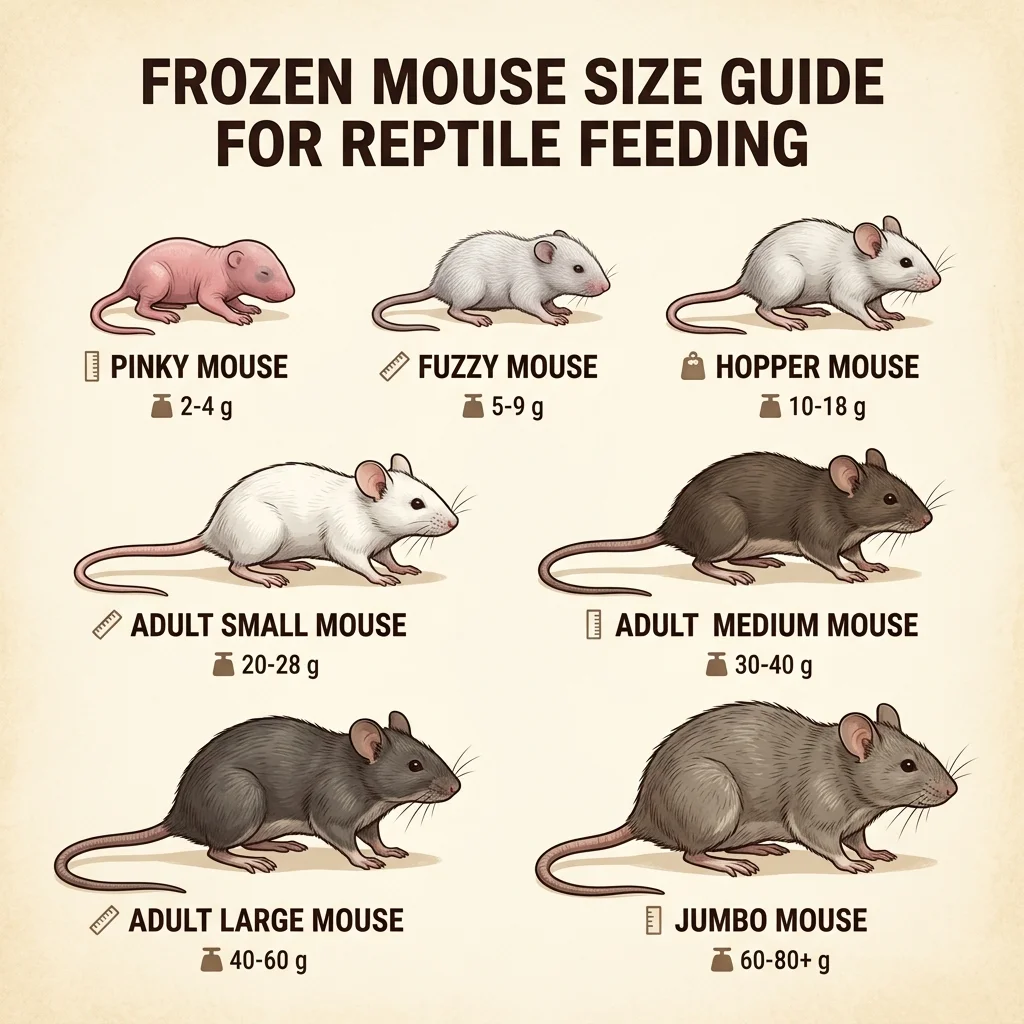
Q: The chart says "5–12g for pinky rat" but my supplier lists pinkies as 1–5g. Are these different? A: Some suppliers classify based on rat pinkies vs. mouse pinkies — rat pinkies are naturally larger than mouse pinkies at birth. Confirm which species you're ordering. Rat pinkies weigh 5–12g; mouse pinkies weigh 2–4g.
Q: Can I feed a snake two smaller rats instead of one larger one? A: Yes, this is sometimes appropriate for very large snakes that need prey weight that exceeds available single-item sizes. However, for most snakes, a single appropriately-sized meal is better than multiple smaller items in one session.
Q: My ball python weighs 1,200g but the chart says "small rat" (46–79g) at 5%. That seems small. A: The calculation: 5% of 1,200g = 60g, which falls in the upper range of Small Rat. This is correct. Ball pythons at maintenance weight do not need large meals — they are highly efficient digesters.
Q: How often should I update my prey size as my snake grows? A: Weigh your snake monthly (or at least quarterly) and recalculate. Prey size should be adjusted whenever the snake's body weight has increased by more than 15% since the last size adjustment.
9. Thawing Large Rats: Extended Protocol for Accuracy
When your snake has graduated to large or jumbo rats, the standard 15-minute warm water bath is insufficient to achieve a uniformly warm core. Follow this extended protocol:
Refrigerator Phase (24–36 hours): Large rats take significantly longer than mice or small rats to thaw completely in the refrigerator. Move the rat to the fridge 24–36 hours before the planned feeding — not just overnight. A large rat with a still-frozen core after only 12 hours in the refrigerator will never reach adequate core temperature even with a full water bath.
Warm Water Bath (25–35 minutes): Submerge the refrigerator-thawed rat in 100–105°F water in a watertight container. For rats over 200g, 30–35 minutes is needed. Maintain water temperature by adding warm water midway through.
The Core Squeeze Test: After the water bath, hold the rat firmly and press along its length from tail to mid-body. The abdomen and thorax should feel uniformly warm and pliable — no hard, cool spots. If you detect a cool core, return to the water bath for an additional 10 minutes.
Why the Cold Core Is a Regurgitation Risk: A snake swallowing a rat with a frozen or very cold core experiences an immediate and dramatic temperature drop internally. This thermal shock triggers a regurgitation response within minutes of the prey being fully swallowed. For the complete anti-regurgitation protocol, see our snake regurgitation guide.
Surface Temperature Target: 98–102°F as verified by an infrared thermometer gun. Verify at 3–4 points along the rat's surface (head, mid-body, hindquarters) to confirm uniform warmth before offering.
10. Building a Rat Inventory: Practical Calculations
For keepers with ball pythons or boas on a consistent rat-feeding program, building a properly sized inventory is one of the most effective ways to save money and ensure consistent availability.
Single Adult Ball Python Example:
- Snake weight: 1,500g adult female
- Prey: Medium rat ~75g (5% of body weight)
- Frequency: Every 14 days = approximately 2.14 rats/month
- 3-month supply = 6–7 medium rats + buffer = order 9–10
Collection of 3 Ball Pythons (Mixed Ages):
- BP 1: 800g juvenile — small rat every 10 days → 9 small rats/90 days
- BP 2: 1,500g adult — medium rat every 14 days → 6 medium rats/90 days
- BP 3: 2,500g adult female — large rat every 21 days → 4 large rats/90 days
- Total 90-day order: 9 small + 6 medium + 4 large + 20% buffer for refusals
Freezer Organization: Organize your rat inventory by size category and date received:
- Label each container with size and purchase date
- FIFO (First In, First Out): older stock at front, newest at back
- Monthly: do a quick count and compare to the expected consumption calculation
For detailed storage guidance including freezer temperature management and packaging inspection, see our frozen rodent storage guide.
11. Weighing Your Snake: Tools and Technique
Accurate snake weighing is the cornerstone of the weight-based feeding approach. Without accurate snake weight data, the 5% and 10% calculations are guesses rather than precision measurements.
Tools needed:
- Digital kitchen scale accurate to ±1g ($10–15 at most kitchen retailers)
- A tub, pillowcase, or cloth bag for containing the snake during weighing (tare the container weight)
- A weighing schedule: monthly for growing juveniles, quarterly for stable adults
Weighing technique:
- Use the scale's tare function to zero out the weight of the container
- Gently place the snake in the container
- Allow the snake to settle for 10–15 seconds before reading — a moving snake's weight fluctuates
- Record the weight in your feeding log
When to weigh:
- Always weigh before adjusting prey size
- Do not weigh immediately after feeding — the prey content adds to the reading
- Ideal weigh time: 3–5 days post-feeding (SDA is well underway and weight reflects the snake's actual mass, not the prey)
Interpreting weight trends:
- Consistent weight gain in juveniles: on track
- Stable weight in adults: on track
- Weight loss exceeding 5% in one feeding cycle: investigate cause (seasonal fast vs. illness)
- Weight gain in adults exceeding 10g/month over 6 months: consider reducing prey size
Conclusion
The precision approach to rat sizing — using gram weights rather than visual estimates — is the gold standard for reptile keepers who want the best outcomes for their animals. Combined with consistent feeding intervals and quality frozen-thawed prey, this approach gives your snake the nutritional foundation for a long, healthy life.
Use this chart alongside our frozen mice size chart and boa constrictor feeding chart for a complete reference library. For all feeding guides by species, explore our reptile feeding guides section.
Written by Jim Galloway, Senior Environmental Scientist and co-founder of Loxahatchee Rodents.