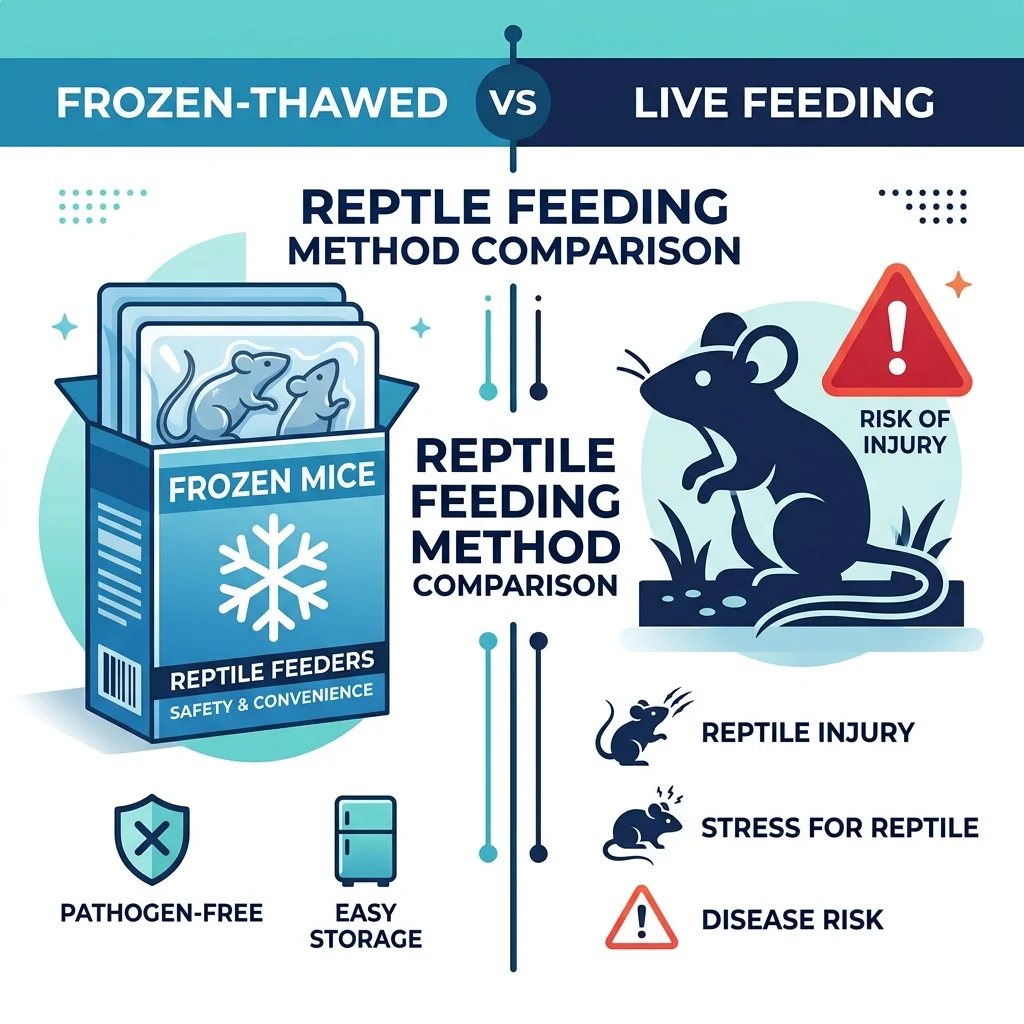
Key Takeaway
Learn exactly how to inspect frozen feeder mice and rats for spoilage, freezer burn, and quality degradation before feeding to your reptile. Includes visual, smell, and texture inspection protocols.
Table of Contents
- 1. Why Feeding Spoiled Feeders Is Dangerous
- 2. The Three-Stage Inspection Protocol
- Stage 1: Upon Delivery Inspection
- Stage 2: Freezer Storage Inspection
- Stage 3: Post-Thaw Inspection (Most Critical)
- 3. Recognizing Freezer Burn: The Detailed Guide
- 4. Recognizing Improper Freeze-Thaw Cycling
- 5. The Smell Test: Your Most Reliable Tool
- 6. What to Do If You've Fed a Suspect Feeder
- 7. Prevention Is Better Than Inspection
- Conclusion
One of the most overlooked aspects of frozen feeder safety is quality control at the point of use. Most reptile keepers focus heavily on sourcing and storage, which are absolutely important, but fail to perform a proper inspection of each feeder before offering it to their snake. This is a mistake that can have serious health consequences.
At Loxahatchee Rodents, we inspect every batch we produce and ship. But no matter how good the source quality is, things can go wrong during transit, in your home freezer, or if a feeder was accidentally left out and refrozen. This comprehensive guide gives you the knowledge to identify spoiled or degraded feeders before they reach your snake.
1. Why Feeding Spoiled Feeders Is Dangerous
A frozen feeder that has been improperly stored, partially thawed and refrozen, or held for too long doesn't just smell bad — it can cause serious health problems for your reptile.
Bacterial contamination: Partial thaw events allow bacteria in the gut and skin of the rodent to proliferate dramatically. Salmonella, Campylobacter, and Clostridium species are all capable of surviving freeze-thaw cycles and multiplying during the thaw phase. A snake that ingests heavily contaminated prey can develop serious, life-threatening gastrointestinal infections.
Fat rancidity: Oxidized fats (rancid fats) are not just unpalatable — they interfere with fat-soluble vitamin absorption and can cause oxidative stress in your snake's tissues over time. A snake fed frequently on rancid feeders will show subtle health deteriorations that are difficult to trace without knowing the history.
Protein denaturation: Severely freezer-burned or repeatedly cycled feeders lose protein quality. The amino acid profiles that make whole prey nutritionally complete are degraded through repeated freeze-thaw damage.
Behavioral impact: Even snakes that consume a low-quality feeder will often regurgitate it later. If this happens, implement the 14-day rest protocol from our snake regurgitation guide immediately.
2. The Three-Stage Inspection Protocol
Always inspect frozen feeders at three stages: upon delivery, upon removal from your freezer, and after thawing.
Stage 1: Upon Delivery Inspection
When your order arrives, inspect before putting anything in the freezer.
Temperature check:
- All feeders should be completely frozen solid with no soft spots
- The exterior of the shipping box should still be cold to the touch
- Dry ice or gel packs (if included) should not have completely sublimated/melted
- Any feeder that is soft, warm, or shows signs of partial thawing should be flagged
Packaging integrity:
- Check for torn, punctured, or open bags
- Check for excessive moisture inside packaging (sign of partial thaw)
- Verify that vacuum seals are still intact (if vacuum-sealed)
Odor check:
- Properly frozen feeders should have little to no odor when completely frozen
- A strong, rancid, or putrid smell on arrival (even while frozen) suggests a cold chain failure in transit
If feeders arrive partially thawed but still cool (below 40°F/4°C), you can feed them immediately following proper warming protocol — but do not refreeze them. If they arrived warm or thawed for more than 2 hours, contact the supplier and do not feed them to your reptile.
Stage 2: Freezer Storage Inspection
Approximately once per month, do a visual check of feeders in your freezer.
Look for:
- Frost buildup inside bags (indicates moisture migration from the rodent — early freezer burn)
- Visible gray or white discolored patches visible through the bag
- Bags that have become unsealed or developed pin-holes
- Any items that have migrated to the "forgotten back corner" — check dates on those first
Items older than their recommended storage period (see our frozen rodent storage guide) should be moved to the "use first" position or discarded.
Stage 3: Post-Thaw Inspection (Most Critical)
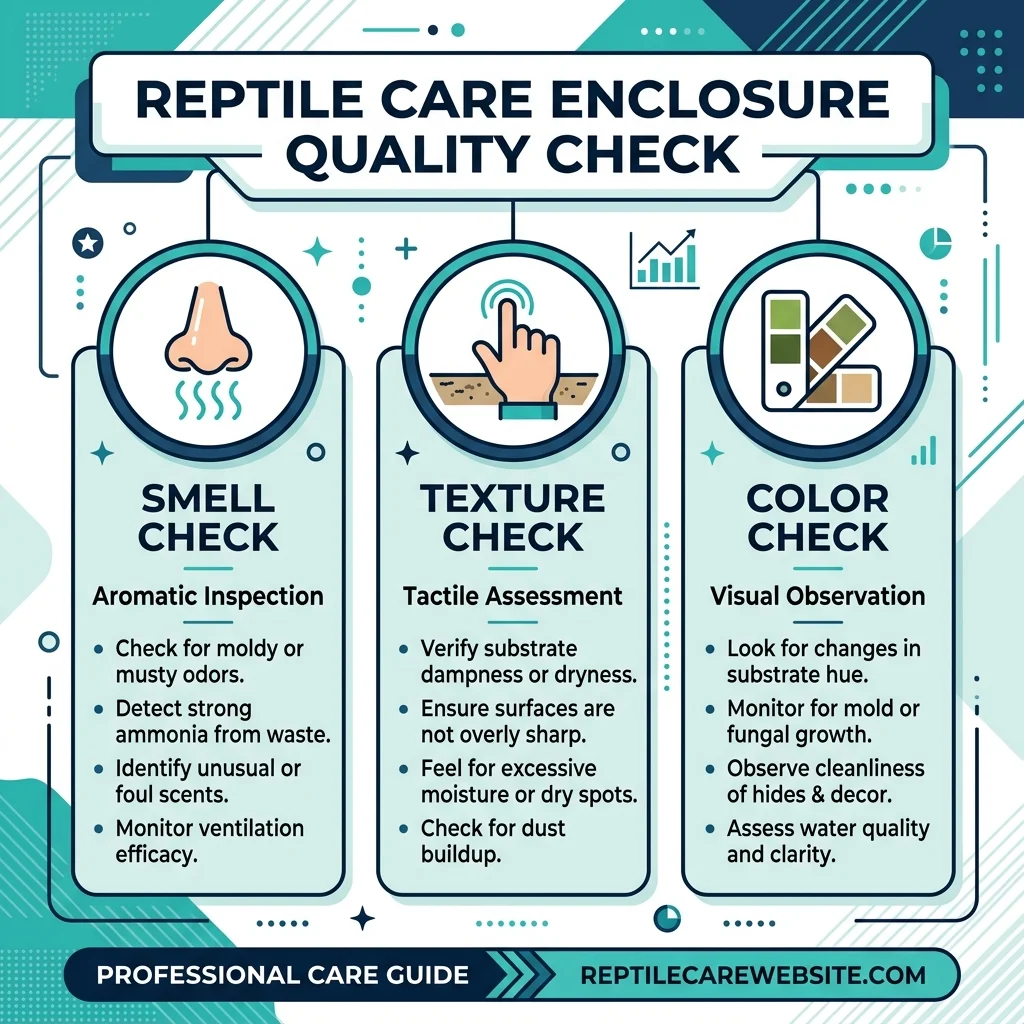
This is your final quality check before the feeder goes anywhere near your snake. After thawing using the correct protocol (see our complete thawing guide), perform a full sensory inspection:
Visual inspection:
- The skin should be its natural color — pale white/pink to gray-brown depending on species
- No green, black, or heavily brown discoloration
- Skin should be moist and slightly shiny
- No visible mold growth (appear as fuzzy or powdery spots)
Texture inspection:
- The body should feel pliable and soft throughout
- No hard, leathery, or excessively dry patches (freezer burn)
- When gently squeezed, the body should release a small amount of clear to light pink fluid — this is normal and indicates proper moisture content
- A feeder that releases no fluid at all is likely dehydrated due to improper storage
Smell inspection (Most Important):
- A properly thawed frozen feeder has a mild, musky animal scent — natural but not offensive
- Do NOT feed if you detect:
- A strong, sharp, ammonia-like smell
- A rotten, putrid, or fecal odor
- A rancid, sour, or "off" fat smell (like stale cooking oil)
- Any smell that makes you recoil — your instincts are correct here
3. Recognizing Freezer Burn: The Detailed Guide
Freezer burn is the most common quality issue with home-stored frozen feeders. It is caused by moisture sublimating (converting from ice directly to vapor) from the surface of the frozen rodent, leaving dehydrated, damaged tissue.
Visual signs of freezer burn:
- White or gray discolored patches on the skin, particularly on protruding parts (ears, extremities, nose, tail)
- Dried, leathery texture in affected areas — these areas will feel stiff even after thawing
- Large, irregular ice crystals on the surface of the feeder when still frozen (normal feeders should have only a fine frost coating)
- Sunken or shrunken areas where tissue has lost significant moisture
Severity assessment:
Mild freezer burn (generally safe to feed):
- Small patches (less than 10% of body surface) of discoloration
- No off odor after thawing
- Core texture remains normal
Moderate freezer burn (use caution):
- Larger patches (10–30% of body surface)
- Slightly reduced moisture release after thawing
- No off odor — if there is an odor, discard regardless
Severe freezer burn (discard):
- More than 30% of body surface affected
- Extremely dry or leathery texture throughout
- Any associated off odor
4. Recognizing Improper Freeze-Thaw Cycling
If a feeder was accidentally thawed and refrozen, it will show characteristic signs:
Physical signs:
- Ice crystals that are unusually large and irregularly shaped inside the bag
- The feeder feels mushy or overly soft compared to a properly stored one
- Large amounts of fluid released upon thawing (much more than normal)
- Skin that appears slightly macerated (softened and breaking down)
Smell signs:
- Often has a faint but distinct "off" odor even before full thawing is complete
- This smell intensifies as thawing progresses
Rule: If you have any reason to believe a feeder has been thawed and refrozen, discard it regardless of visual appearance. The bacterial load in a refrozen-thawed feeder can be dangerously high even when the feeder looks acceptable.
5. The Smell Test: Your Most Reliable Tool
Of all the inspection methods, smell is the most reliable indicator of feeder quality. The olfactory system detects compounds produced by bacterial activity and fat oxidation long before visual signs appear.
Here is a simple protocol for the smell test:
- Remove the thawed feeder from its bag or container
- Hold it approximately 6 inches from your nose
- Take a slow, deliberate sniff
- A good feeder should smell like: mild, slightly warm animal musk — similar to a hamster or mouse cage but with a warm, cooked quality
- Anything that smells sharp, rancid, sour, ammonia-like, or genuinely offensive should be discarded
Trust your nose. Your olfactory system is an evolutionary tool designed precisely to detect food that is unsafe. If it smells wrong to you, it is wrong for your snake.
6. What to Do If You've Fed a Suspect Feeder
If you realized after feeding that the prey item may have been spoiled or of questionable quality, monitor your snake closely for the next 24–72 hours:
Normal post-feeding behavior:
- Snake retreats to warm hide
- Visible bulge from the meal
- Reduced activity for 48–72 hours
- May refuse to be handled (protect digestion response)
Signs of a problem (contact a vet):
- Regurgitation within 24 hours of feeding
- Unusual lethargy lasting more than 4 days
- Soft, watery, or unusually foul-smelling stool
- Loss of appetite at subsequent feeding
- Mucus or unusual discharge from cloaca
If regurgitation occurs, immediately follow the 14-day protocol from our regurgitation guide and consult an exotic veterinarian to rule out bacterial gastroenteritis.
7. Prevention Is Better Than Inspection
The best quality control strategy is to prevent quality issues from occurring in the first place:
- Buy from reputable suppliers who flash-freeze at -18°C or colder and use proper packaging. See our supplier review guide.
- Store correctly in a dedicated chest freezer at -18°C. See our complete storage guide.
- Rotate stock on a FIFO basis — use oldest items first.
- Never refreeze a thawed feeder.
- Inspect upon delivery before any item enters your freezer.
- Perform monthly freezer audits to catch packaging failures early.
Conclusion
Inspecting frozen feeders before offering them to your reptile is a simple habit that can prevent serious illness. By performing a three-stage inspection — upon delivery, in storage, and after thawing — and trusting your senses (especially smell), you can ensure that every meal you offer your snake is of the highest possible quality.
For more expert guidance, explore our complete reptile feeding guides, and visit our home page to learn more about Loxahatchee Rodents' 25+ years of commitment to producing safe, high-quality frozen feeders.
Written by Jim Galloway, Senior Environmental Scientist and co-founder of Loxahatchee Rodents.