Key Takeaway
Learn the safest, most effective step-by-step methods to thaw frozen mice for your snake. Avoid bacteria buildup and ensure your snake gets a healthy meal.
Table of Contents
- 1. Why Proper Thawing is Critical for Snake Health
- The Risks of Improper Thawing
- 2. The Best Method: The Refrigerator to Warm Water Technique
- Step 1: Slow Thaw in the Refrigerator
- Step 2: The Warm Water Bath
- Step 3: The Temperature Check
- 3. The "Quick Thaw" Method (For Emergencies)
- Cold Water Submersion
- 4. Dangerous Methods You MUST Avoid
- The Microwave
- Boiling Water
- Room Temperature Thawing (The Countertop Method)
- 5. Pro Tips for Picky Eaters
- Conclusion
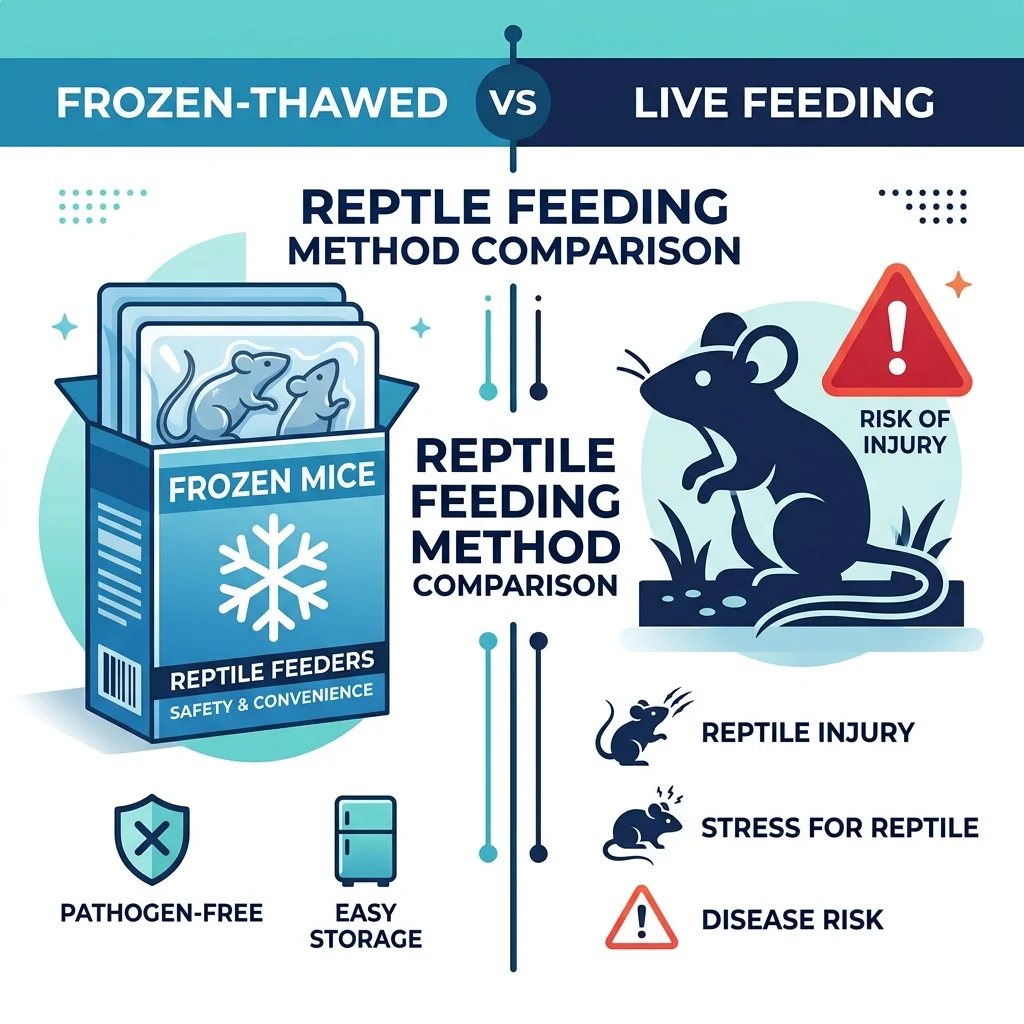
When it comes to feeding your pet snake, choosing frozen-thawed rodents is generally considered the safest and most humane method (see our frozen vs live feeding comparison). However, knowing how to thaw frozen mice for snakes properly is critical. If done incorrectly, you risk bacterial blooms, nutritional degradation, or even injuring your snake with a frozen core or boiling hot exterior.
In this comprehensive guided article, we will break down the exact step-by-step methods to safely thaw frozen mice, the methods you should absolutely avoid, and the science behind safe reptile feeding.
1. Why Proper Thawing is Critical for Snake Health
Reptiles, particularly snakes, rely heavily on their environment and diet for immune support and digestion. When you feed a frozen mouse, the thawing process must mimic a natural, healthy meal.
The Risks of Improper Thawing
- Bacterial Growth: Leaving a mouse out at room temperature for too long allows harmful bacteria (like Salmonella and E. coli) to multiply rapidly.
- Cold Core Hazard: If the inside of the mouse is still frozen, it can cause severe internal tissue damage to your snake, or result in regurgitation.
- Cooking the Protein: Using boiling water or a microwave can literally cook the mouse. Snakes lack the enzymes to digest cooked meat, leading to fatal impactions.
2. The Best Method: The Refrigerator to Warm Water Technique
This is the gold standard method recommended by exotic veterinarians and professional breeders like the team at Loxahatchee Rodents.
Step 1: Slow Thaw in the Refrigerator
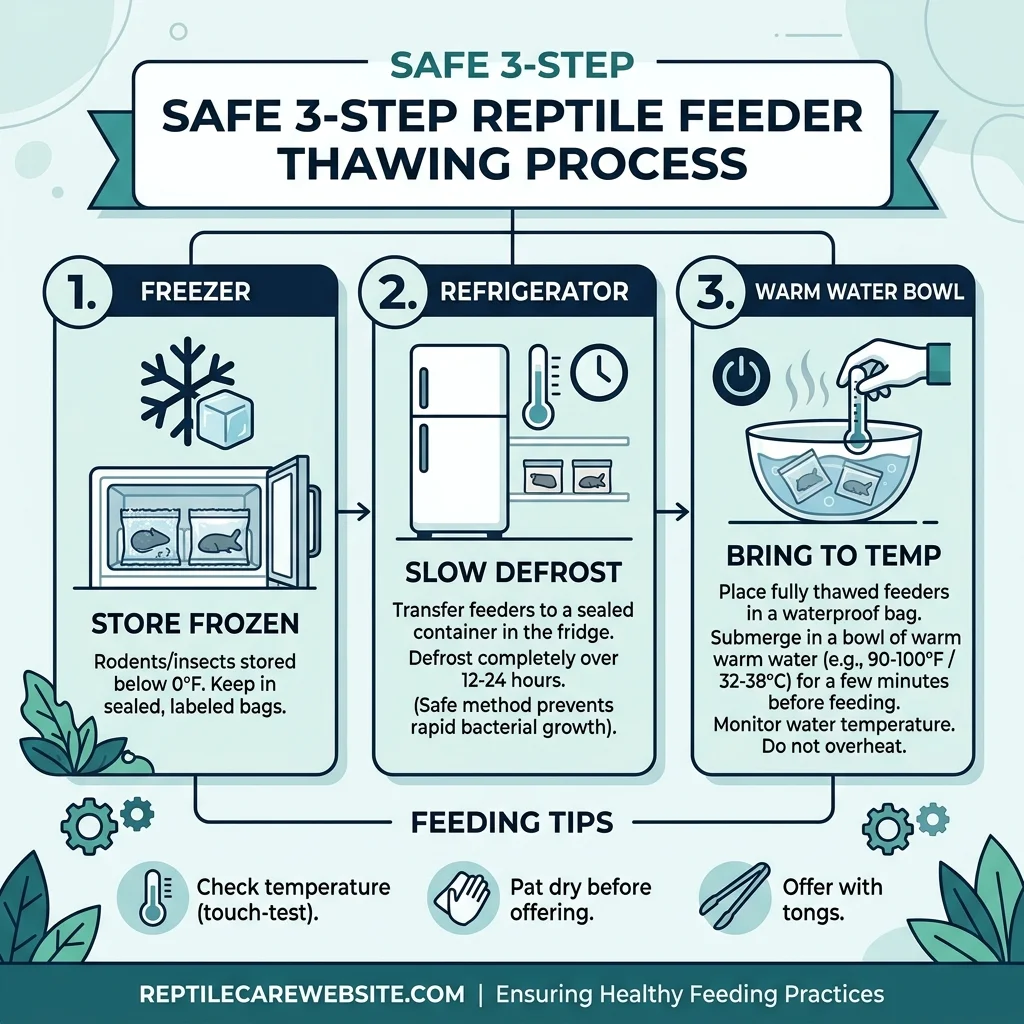
Transfer the frozen mouse from the freezer to the refrigerator 12 to 24 hours before feeding time.
- Why? This allows the meat to thaw slowly and evenly, preventing the rapid bacterial growth associated with room-temperature thawing. Place the mouse in a dedicated, sealed plastic bag to prevent cross-contamination with your human food.
Step 2: The Warm Water Bath
Once the mouse is completely thawed in the fridge (it should be squishy to the touch, with no hard center), it's time to warm it up to mimic the body temperature of a live prey item.
- Fill a bowl with warm (not boiling!) tap water. The water temperature should be around 100°F to 105°F (37°C - 40°C).
- Keep the mouse inside its sealed, watertight plastic bag (Ziploc works perfectly). You do not want the mouse to get wet, as the scent of a wet mouse can deter picky eaters like Ball Pythons.
- Submerge the bagged mouse in the warm water for 10 to 15 minutes.
Step 3: The Temperature Check
Remove the mouse from the bag. Use an infrared temperature gun to check the surface temperature of the mouse. It should read around 98°F - 100°F. Gently squeeze the midsection of the mouse to ensure there are no cold, hard lumps remaining.
3. The "Quick Thaw" Method (For Emergencies)
Sometimes you forget to take the mouse out the night before. While the fridge method is best, you can do a safe quick-thaw.
Cold Water Submersion
- Place the frozen mouse in a watertight, sealed bag.
- Submerge the bag in a bowl of cold tap water.
- Change the cold water every 30 minutes until the mouse is completely thawed. (This usually takes 1-2 hours depending on the size of the rodent).
- Once fully thawed, proceed with the Warm Water Bath step mentioned above to heat the prey.
4. Dangerous Methods You MUST Avoid
Under no circumstances should you use the following methods:
The Microwave
Never microwave a frozen mouse. Microwaves heat unevenly, meaning the outside could be boiling hot (and cooking) while the inside remains frozen solid. Furthermore, the pressure buildup can cause the mouse to explode, creating a biological hazard in your kitchen.
Boiling Water
Dropping a mouse into boiling water cooks the proteins. As mentioned, snakes cannot digest cooked meat. It will also degrade the essential vitamins and nutrients your snake needs to survive.
Room Temperature Thawing (The Countertop Method)
Leaving a mouse on the kitchen counter to thaw allows it to sit in the "Danger Zone" (40°F - 140°F) for hours. This is the optimal temperature range for explosive bacterial growth, which can cause severe gastrointestinal infections in your snake.
5. Pro Tips for Picky Eaters
If your snake is refusing the thawed mouse, try these expert tips:
- Brain the Mouse: (Warning: graphic) Using a sterile pin, puncture the skull of the thawed mouse. The scent of the brain fluid is a powerful appetite stimulant for many snakes.
- Scenting: If you are transitioning a snake from live to frozen-thawed, try rubbing the thawed mouse with soiled bedding from a live mouse enclosure.
- The Hair Dryer Trick: After warming the mouse in water, take a hair dryer and gently blow warm air over the mouse right outside the snake's enclosure. This wafts the scent directly to the snake and ensures the surface temperature is perfectly warm.
Conclusion
Thawing frozen mice for your snake doesn't have to be complicated, but it does require strict adherence to hygiene and temperature control. Always prioritize a slow, cold thaw followed by a gentle warming bath. By providing perfectly prepared, high-quality frozen rodents from trusted suppliers like Loxahatchee Rodents, you ensure your reptile lives a long, healthy, and vibrant life.