Key Takeaway
An in-depth comparison of frozen vs live feeding for snakes. Discover the safety, ethical, and nutritional differences to make the best choice for your reptile.
Table of Contents
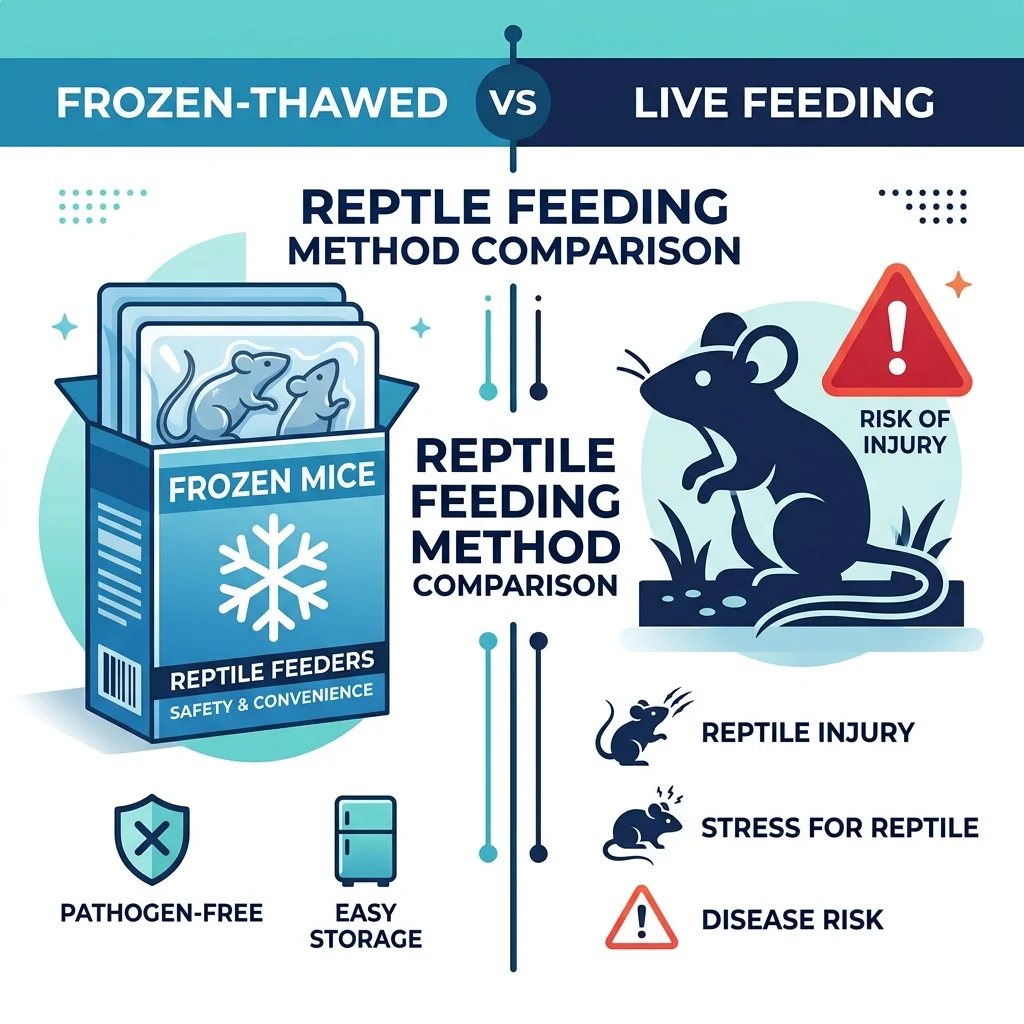
The debate of Frozen vs Live Feeding is one of the oldest and most passionate discussions in the reptile keeping community. For new snake owners, choosing the right diet path can feel overwhelming (see our breakdown of if snakes can eat frozen mice).
In this objective, expert-driven guide, we will break down the pros, cons, science, and ethics of both methods to help you make an informed decision for your scaly companion.
1. The Case for Live Feeding
In the wild, snakes hunt live prey. Proponents of live feeding argue that it provides mental stimulation, enrichment, and satisfies the snake's natural predatory instincts.
Advantages of Live Prey
- Strong Feeding Response: The heat signature, scent, and movement of a live rodent immediately trigger a snake's instinctual strike response. Picky eaters, such as Ball Pythons or Green Tree Pythons, often accept live prey much more readily.
- No Prep Time: There is no thawing, heating, or preparation required. You simply place the rodent in the enclosure.
Disadvantages of Live Prey
- Extreme Danger to the Snake: This is the critical drawback. Rodents possess razor-sharp incisors. A rat fighting for its life can easily bite through a snake's eye, spine, or scales. Live-feeding injuries are gruesome and common.
- Parasite Transmission: Live rodents from pet stores can carry internal parasites, mites, and diseases that can be transferred directly to your snake.
- Ethical Concerns: Many keepers and animal rights organizations view the live feeding of rodents in a confined space (where they have no chance to escape) as unnecessarily cruel.
2. The Case for Frozen-Thawed Feeding
Frozen-thawed (F/T) feeding involves purchasing rodents that have been humanely euthanized and flash-frozen, then safely thawing and warming them before feeding.
Advantages of Frozen Prey
- 100% Safe for the Snake: A dead mouse cannot bite back. You completely eliminate the risk of expensive veterinary bills and tragic injuries to your pet.
- Convenience and Cost: Buying frozen rodents in bulk online from trusted suppliers (see our RodentPro review for a top source) is significantly cheaper than buying individual live mice weekly. They can be stored for up to six months.
- Parasite Control: The deep-freezing process kills a vast majority of internal parasites and mites.
- Humane: Feeder rodents are euthanized using painless CO2 chambers, eliminating the terror and pain of constriction.
Disadvantages of Frozen Prey
- Preparation Required: You must remember to thaw the mouse properly, which takes time.
- Transitioning Difficulties: Some snakes accustomed to live prey will obstinately refuse frozen-thawed food initially.
3. Nutritional Comparison: Is Live Healthier?
A persistent myth is that live prey is far more nutritious than frozen prey. Extensive veterinary research has shown that this is false.
As long as the rodent was healthy, fed a high-quality diet, and was flash-frozen immediately after euthanasia, the nutritional profile (protein, fat, calcium, and vitamins) remains virtually identical to a live rodent. Freezing locks in the nutrients.
4. The Industry Consensus
If you ask exotic veterinarians, zoo curators, and professional breeders, the consensus is overwhelming: Frozen-thawed is the superior, safer, and more ethical choice.
While live feeding is occasionally necessary as a last resort for an emaciated snake that refuses all other food, it should not be the standard practice for a typical pet snake.
Conclusion
When weighing Frozen vs Live Feeding, the safety of your pet must come first. The risk of a live rodent maiming or killing your snake far outweighs the convenience of not having to thaw a meal. By mastering the art of warming and "jiggling" frozen prey with tongs, you can simulate a live hunt while keeping your beloved reptile perfectly safe.