Key Takeaway
A comprehensive Ball Python feeding guide developed from 25 years of professional breeding experience. Learn what, when, and how to feed your Royal Python.
Table of Contents
Ball Pythons (Python regius) are arguably the most popular pet snakes in the world. They are docile, beautifully patterned, and generally hardy. However, they are also infamous for their "feeding strikes" and picky eating habits.
This Ball Python Feeding Guide is your ultimate resource, developed from decades of professional breeding experience, to help you understand what, when, and how to feed your snake.
1. What Do Ball Pythons Eat?
In the wild, Ball Pythons are ambush predators that feed primarily on small mammals and ground-dwelling birds. In captivity, their diet should consist entirely of whole rodents.
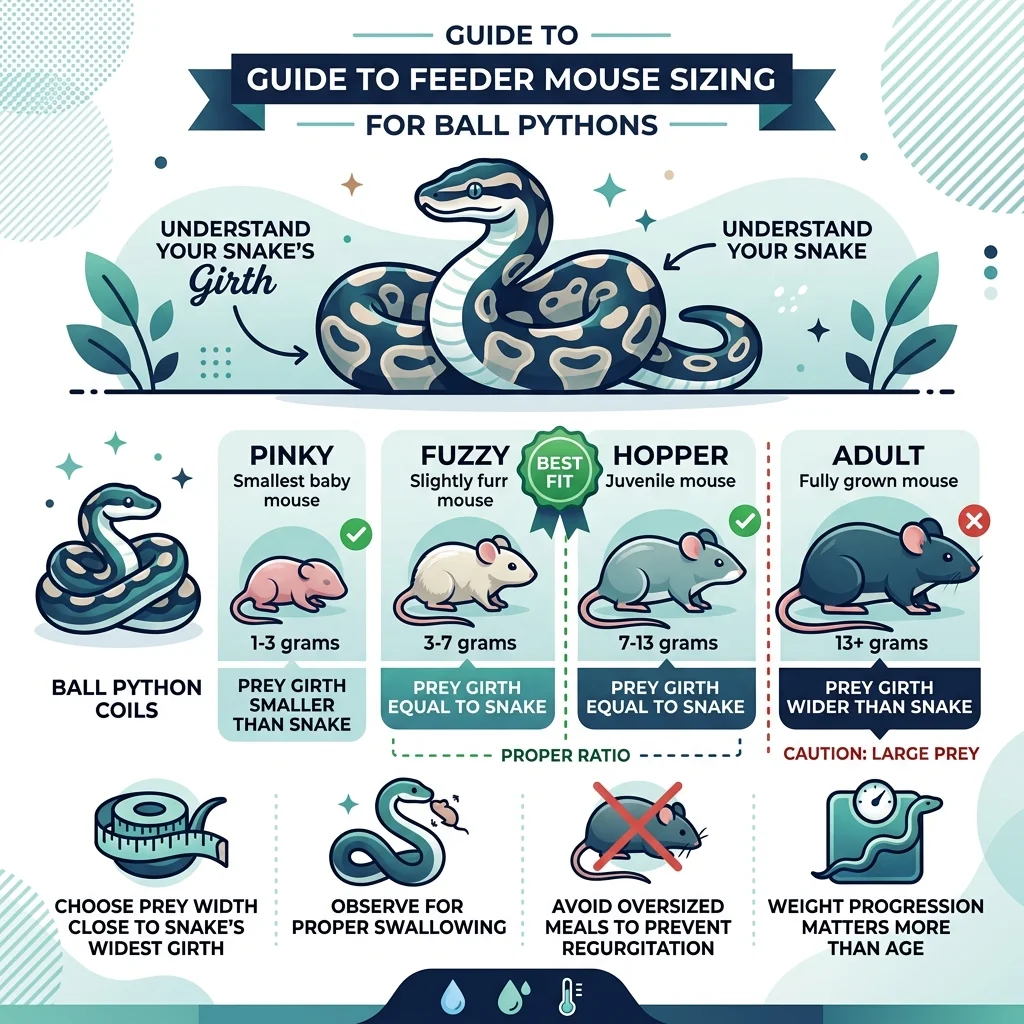
- Mice: Suitable for hatchlings and juveniles.
- Rats: The ideal staple diet for growing and adult Ball Pythons. Rats provide a higher protein and fat ratio essential for their heavy-bodied build (see our guide on what size mouse or rat for Ball Pythons).
- African Soft-Furred Rats (ASFs): Their natural prey in the wild. These are highly recommended for extremely picky eaters.
Expert Tip: Always feed frozen-thawed rodents to eliminate the risk of your snake being injured by live prey. For a safe step-by-step process, see our guide on how to thaw frozen mice correctly. If you are still deciding on a feeding method, read our breakdown of Frozen vs Live Feeding.
2. The Complete Ball Python Feeding Schedule
A common mistake among keepers is overfeeding or underfeeding. Our weight-based schedule is aligned with AZA professional zoological standards and veterinary-approved husbandry:
| Life Stage | Snake Weight | Prey Size | Frequency |
|---|---|---|---|
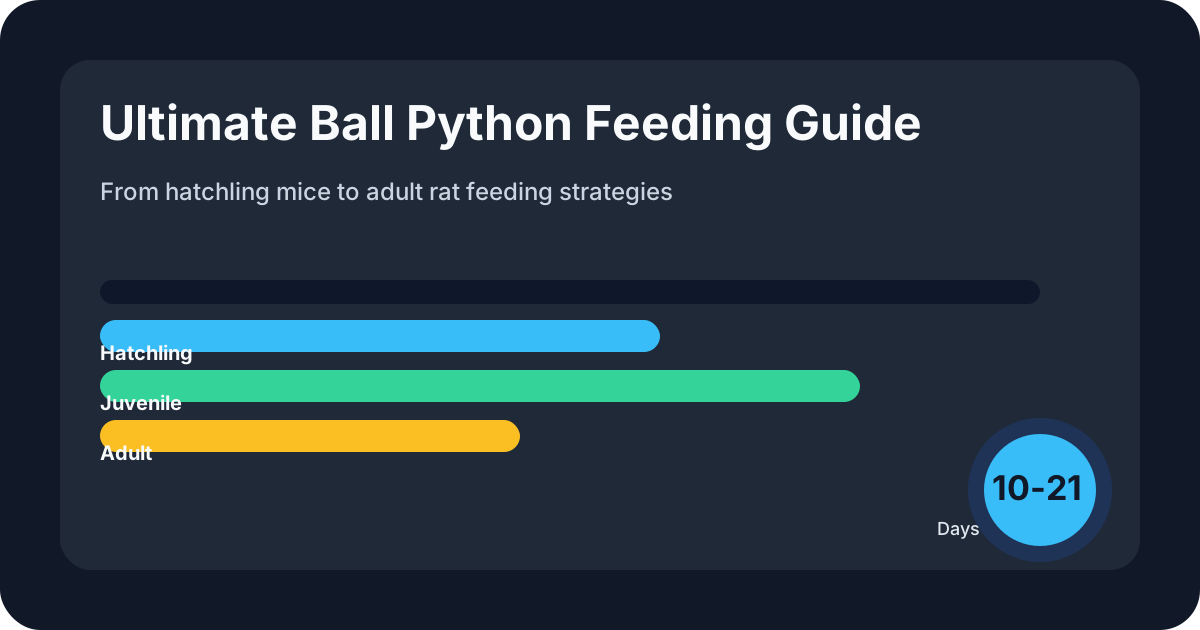
| Hatchling | Up to 300g | Hopper mice or Rat pinkies/fuzzies | Every 5 to 7 days |
| Juvenile | 300g – 1000g | Adult mice, Rat pups, or Weaned rats | Every 7 to 10 days |
| Adult | 1000g+ | Small to Medium rats | Every 14 to 21 days (learn more about how often to feed a Ball Python) |
Goal for Adults: Maintenance. Overfeeding an adult leads to fatty liver disease and a significantly shortened lifespan. For a detailed breakdown of rodent measurements, refer to our frozen rat size chart.
3. How to Execute the Perfect Feed
- Thaw Properly: Thaw the frozen rodent in the refrigerator overnight.
- Warm Thoroughly: Place the rodent in a watertight bag and submerge it in 100°F water for 15 minutes.
- Use Tongs: Never use your hands. Use 10-inch or 12-inch metal feeding tongs for safety.
- The "Zombie Dance": Hold the rodent by the scruff of the neck with the tongs. Gently jiggle it slightly above the substrate to simulate live movement.
- Privacy is Key: Ball Pythons are shy eaters. Once the snake strikes and coils, cover the enclosure and leave the room.
4. Why is My Ball Python Not Eating? (The Fast)
Do not panic if your snake goes on a "hunger strike". If your husbandry (temperature and humidity) is correct, a healthy Ball Python can safely fast for 3–6 months.
Common Reasons for Fasting:
- Winter/Breeding Season: Many males stop eating during winter months to focus on searching for mates.
- Shedding ("In Blue"): Snakes feel vulnerable during a shed cycle and will usually refuse food.
- Improper Husbandry: If the "hot spot" in the enclosure is below 88°F, they cannot digest food and will refuse to eat.
- Stress: Excessive handling or a high-traffic room can stress a snake into fasting.
Conclusion
Feeding a Ball Python is a test of patience and observation. By sticking to an age-appropriate schedule and providing high-quality frozen-thawed prey, your Royal Python can thrive for decades.
This guide was authored by the experts at Loxahatchee Rodents, drawing on over 25 years of experience in zoological care and environmental science.