Key Takeaway
Avoid obesity and malnutrition by learning exactly how often you should feed your Ball Python based on its age, weight, and life stage.
Table of Contents
Reptile metabolism operates entirely differently from mammalian metabolism. A dog or cat needs to eat every day; a snake does not. In fact, overfeeding a captive Ball Python is one of the leading causes of premature death in the hobby due to fatty liver disease (hepatic lipidosis).
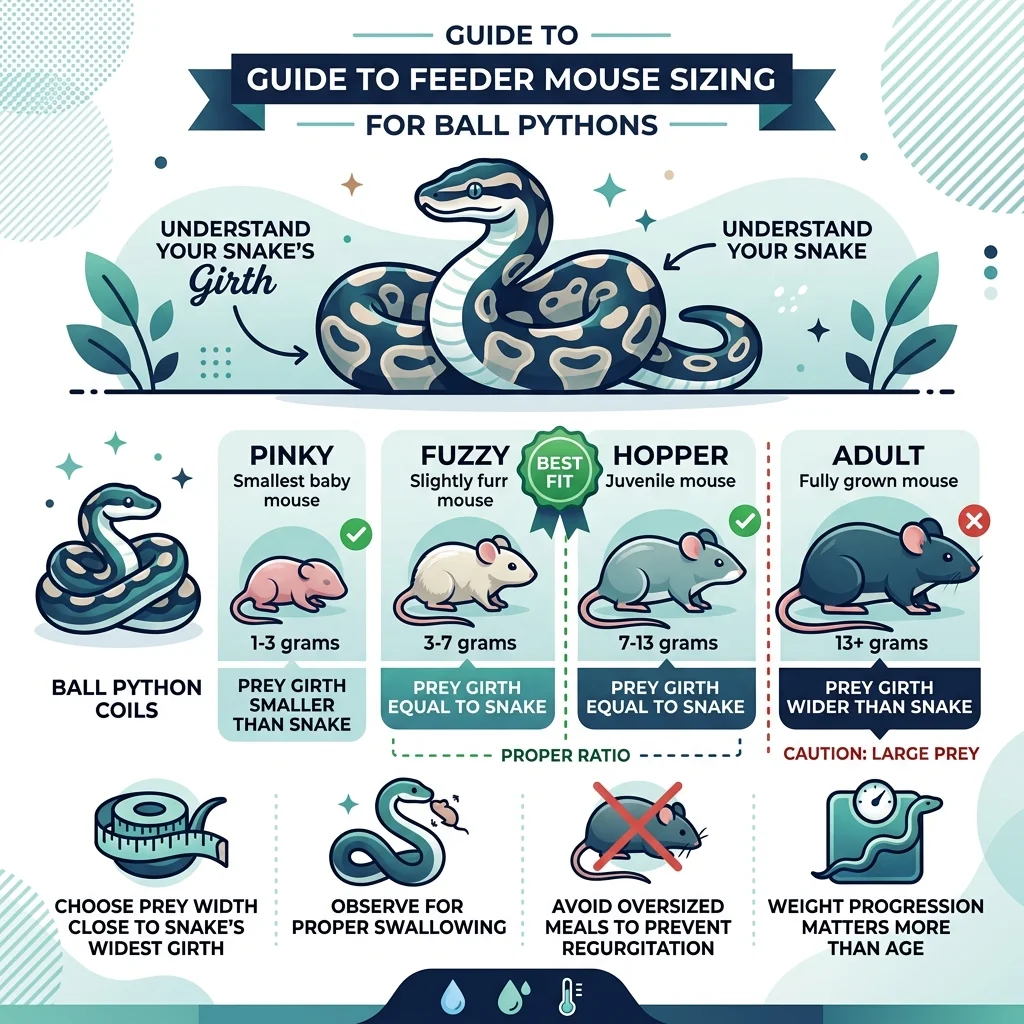
Understanding how often to feed a Ball Python requires adjusting the schedule as the snake ages. Here is the definitive guide (for more details on the transition from mice to rats, check our what size mouse for Ball Python guide).
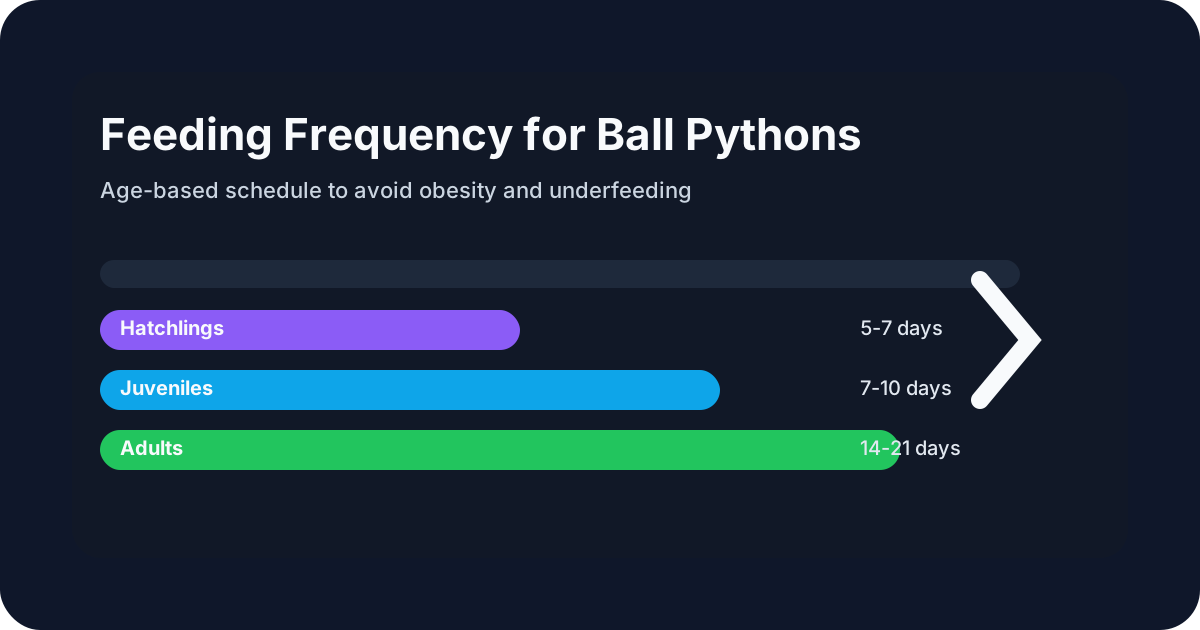
1. Hatchlings (0 to 6 Months)
Frequency: Every 5 to 7 days.
Hatchling Ball Pythons are in their most rapid stage of growth. They require a steady influx of protein and calcium to develop healthy bones and muscle mass.
- Feed a prey item that is 10-15% of their body weight (refer to our Ball Python feeding guide for a full weight chart).
- If the hatchling refuses a meal, do not try again the next day. Wait the full 5-7 days before offering again to prevent stressing the animal.
2. Juveniles (6 Months to 1.5 Years)
Frequency: Every 7 to 10 days.
Once your snake crosses the 300-gram mark, their growth rate begins to stabilize. Feeding them every 5 days at this stage can lead to "power feeding," a dangerous practice that forces rapid growth but drastically shortens the snake's lifespan.
- Transition from weekly feedings to a 10-day cycle as they approach the 800-gram mark.
3. Adults (1.5 Years and Older)
Frequency: Every 14 to 21 days.
Adult Ball Pythons (typically over 1000g) have incredibly slow metabolisms. In the wild, they are opportunistic ambush predators that may go weeks or months between meals.
- A single Small or Medium rat every 2 to 3 weeks is more than enough to maintain a healthy body weight.
- Breeding Females: The only exception is females actively building follicles for breeding; they may be fed every 7-10 days until ovulation.
4. Signs You Are Overfeeding
How do you know if you are feeding too often? Look for these physical signs of obesity:
- Scale Spreading: If you can see the skin between the scales on the snake's sides when it is resting in a straight line, it is overweight.
- "Squishy" Body: A healthy Ball Python should feel like a solid tube of muscle, shaped slightly like a rounded triangle. If the snake feels soft, squishy, or perfectly round like a sausage, it is obese.
- Fat Rolls: Fat deposits near the tail (cloaca) indicate severe obesity.
Conclusion
Less is often more when it comes to feeding adult snakes. By stretching out the feeding schedule as your Ball Python matures, you mimic its natural biological rhythms and ensure a long, healthy life. Always monitor their body condition and weigh them monthly to ensure they are maintaining, not gaining excess fat. And remember, always choose frozen vs live feeding for the safety of your pet.