Key Takeaway
Find the exact frozen mouse size for your corn snake by age and weight. Expert-verified chart from hatchling pinkies to adult mice — no more guessing.
Table of Contents
- Quick Reference: Corn Snake Mouse Size Chart
- Essential Chart Notes
- The Golden Rule: How to Size a Mouse for Your Corn Snake
- The Biomechanics of Swallowing
- How to Measure Your Snake’s Girth
- Post-Meal Visual Cues
- Corn Snake Mouse Size by Life Stage (Explained)
- Hatchlings (0–8 Weeks): The Fragile Starting Phase
- Juveniles (2–12 Months): Fast Growth & Feeder Progression
- Sub-Adults (12–18 Months): Slowing Metabolism
- Adults (18 Months+): Maintenance & Weight Management
- Weight-Based Feeding: The Scientific 10–15% Rule
- Step-by-Step Weight Sizing Example
- Sizing Conversions at a Glance
- Practical Weighing Tips
- Frozen vs. Live: Science-Backed Feeder Safety
- 1. Mechanical Trauma and Infection Risk
- 2. Parasite Control and Facility Biosecurity
- 3. Nutritional Consistency
- 4. Logistics and Environmental Cold Chain
- How to Thaw Frozen Mice Correctly
- Step-by-Step Thawing Protocol
- Crucial Thawing Mistakes to Avoid
- When Your Corn Snake Refuses Frozen Mice
- Common Causes & Solutions
- Advanced Behavioral Feeding Techniques
- How to Choose a Quality Frozen Feeder Supplier
- Premium Supplier Checklist
- Red Flags to Avoid
- Frequently Asked Questions (FAQ)
- What size mouse should I feed my corn snake?
- How often should I feed my corn snake?
- Can I feed my corn snake frozen mice from the grocery store?
- When should I upgrade my corn snake to a larger mouse size?
- Do corn snakes ever need to eat rats?
- My corn snake's frozen mouse has a green tinge. Is it safe?
- Summary: Corn Snake Mouse Sizing at a Glance
- Suggested Site Internal Links
New and experienced keepers alike know the moment: standing in front of a reptile-supplier freezer, faced with pinkies, fuzzies, hoppers, and adult mice — and having no idea which to pick. Choosing the wrong feeder size is a leading cause of regurgitation, chronic feeding stress, and stalled growth in corn snakes (Pantherophis guttatus).
Unlike heavy-bodied pythons, corn snakes are slim, active colubrids with a faster metabolism and highly specialized jaw mechanics. This guide provides an expert-verified quick reference chart, the physical "golden rules" for prey sizing, and evidence-minded herpetological advice on safe thawing, evaluating supplier quality, and troubleshooting feeding refusals.
Quick Reference: Corn Snake Mouse Size Chart
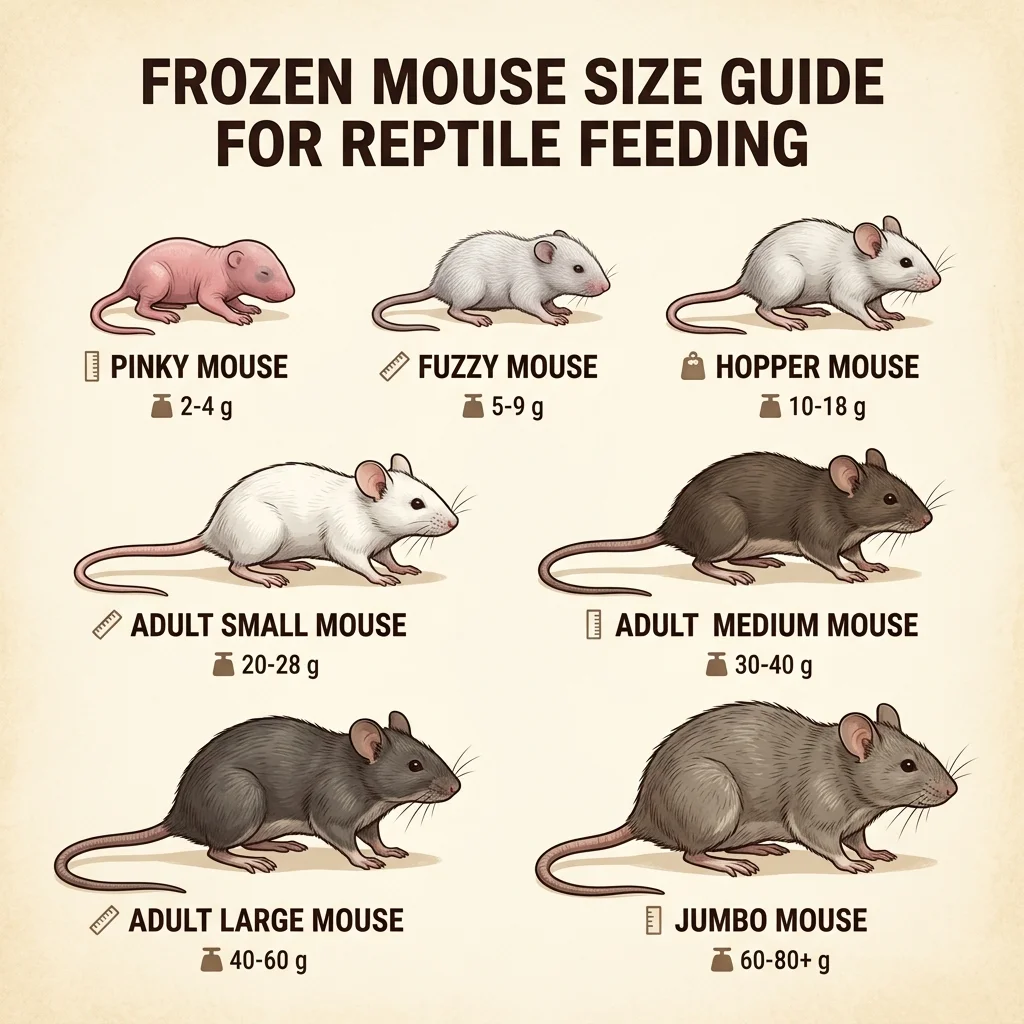
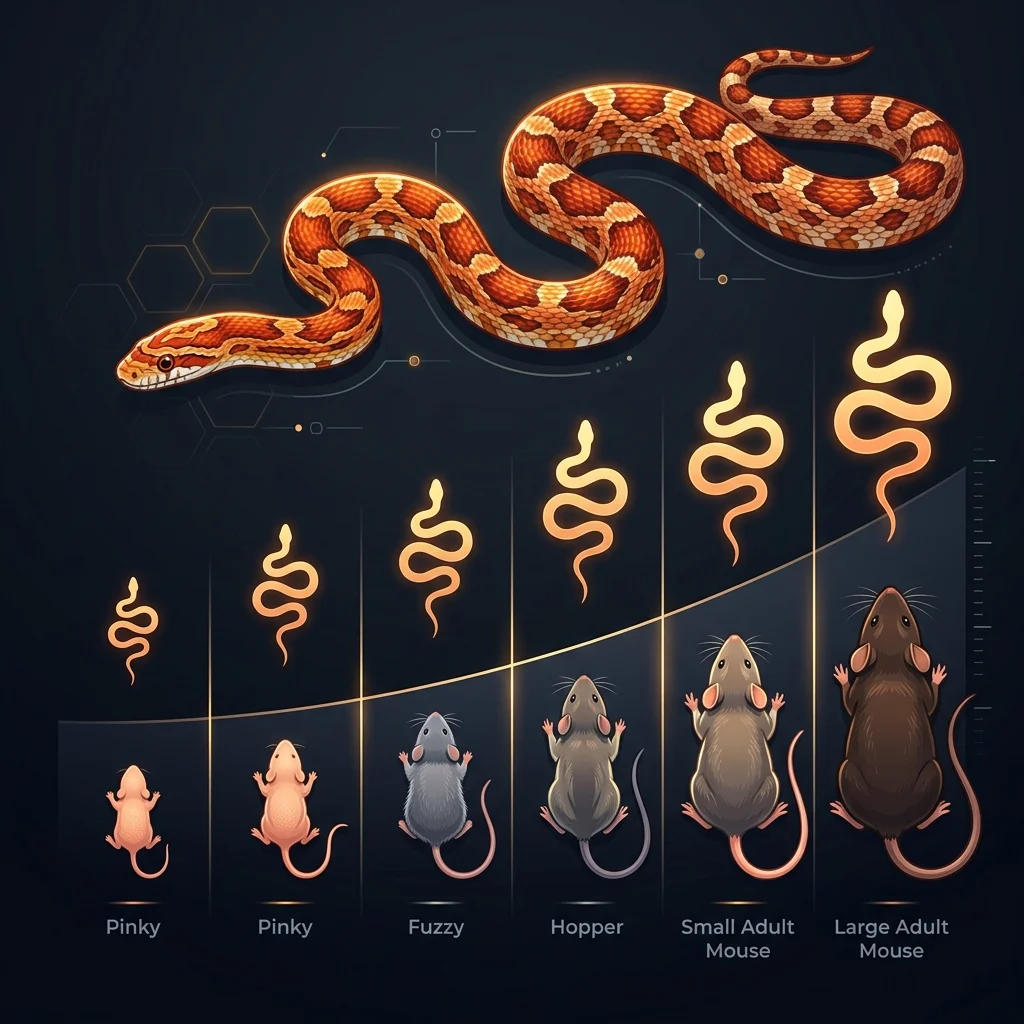
This quick reference table maps your corn snake’s age, length, and body weight directly to the appropriate frozen mouse size, feeder weight range, and feeding schedule.
| Life Stage | Length (approx.) | Snake Weight (approx.) | Recommended Mouse Size | Mouse Weight Range | Feeding Frequency |
|---|---|---|---|---|---|
| Hatchling (0–8 weeks) | 20–30 cm | 8–15 g | Pinky Mouse (XS–S) | 1.5–3 g | Every 5–7 days |
| Juvenile (2–4 months) | 30–45 cm | 15–30 g | Pinky (L) / Fuzzy (S) | 3–5 g | Every 5–7 days |
| Early Juvenile (4–6 months) | 45–60 cm | 30–60 g | Fuzzy Mouse (M–L) | 5–7 g | Every 7 days |
| Active Juvenile (6–12 months) | 60–90 cm | 60–120 g | Hopper Mouse | 7–12 g | Every 7–10 days |
| Sub-Adult (12–18 months) | 90–120 cm | 120–250 g | Weanling / Small Adult | 13–18 g | Every 10–14 days |
| Young Adult (18–36 months) | 120–150 cm | 250–500 g | Standard Adult Mouse | 18–30 g | Every 14 days |
| Large Adult (3+ years) | 150–180 cm | 500–900 g | Large Adult Mouse | 25–35 g | Every 14–21 days |
Essential Chart Notes
- Avoid Feeding Rats: We strongly recommend avoiding the routine use of feeder rats for corn snakes. Unlike heavier-bodied pythons (see our frozen rat size chart), corn snakes are built for a leaner diet. Regularly feeding rats — which have a significantly higher lipid (fat) and bone density profile than mice — raises the risk of severe obesity and hepatic lipidosis (fatty liver disease).
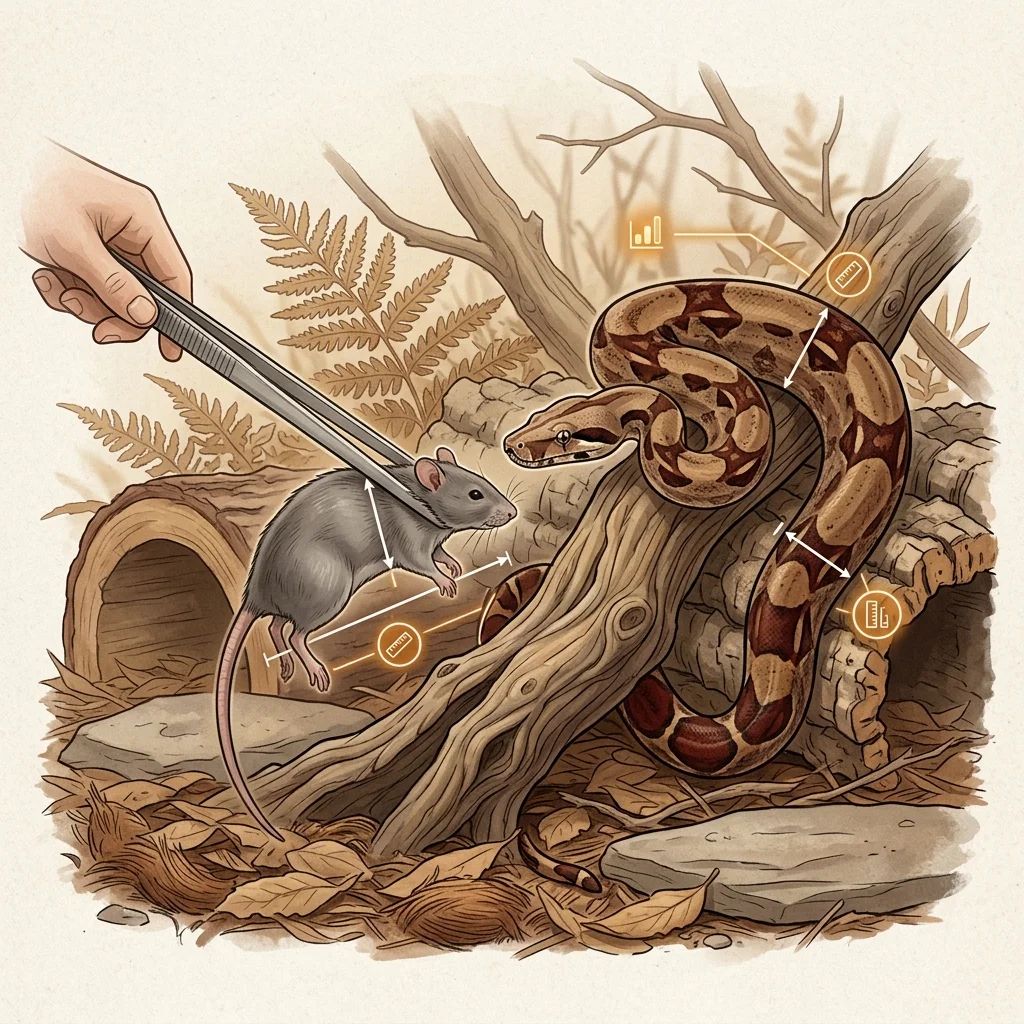
- The Girth Rule: The ideal prey size should be approximately 1.0 to 1.5 times the snake's mid-body diameter at its thickest point.
- Sizing Variations: Sizing classifications and weights can vary slightly by breeder and manufacturer. Always weigh a new batch of feeder rodents on a digital gram scale to verify exact sizing before offering them to your reptile.
The Golden Rule: How to Size a Mouse for Your Corn Snake
While age and length provide general brackets, you should always size your prey according to the snake’s actual body girth (diameter) and weight. Sizing prey too large stresses swallowing mechanics, strains the delicate tissue of the esophagus, and increases the likelihood of regurgitation, which is a severe physiological setback.
       Visual Sizing Guide (Cross-Section)

      [ Thinned Prey ]      [ Ideal Prey ]      [ Too Large ]
         (  0.8x  )          ( 1.0–1.25x )       (  1.5x+  )

          ◯    ◯              ◯     ◯            ◯      ◯
        Snake  Prey         Snake  Prey        Snake   Prey
      (Too Small)           (Perfect Match)     (High Risk)
The Biomechanics of Swallowing
Corn snakes possess a highly specialized, kinetic skull. Their mandibles (lower jaws) are not fused in the front; instead, they are joined by an elastic, stretchable ligament. Furthermore, the quadrate bone at the back of the skull acts as a double-jointed hinge, allowing the jaws to open both vertically and horizontally.
However, unlike heavy-bodied Boidae or Pythonidae, colubrids have thinner, less elastic skin and a narrower digestive tract. A prey item exceeding 1.5× the snake's mid-body diameter forces the ribs to flare excessively, compressing the lungs and putting immense pressure on the cardiovascular system during the swallowing process.
How to Measure Your Snake’s Girth
- Relaxed State: Allow your corn snake to crawl in a relaxed, straight posture on a flat surface. Do not measure when the snake is coiled, tense, or actively defensive.
- Flexible Measurement: Wrap a flexible sewing tape measure or a piece of soft string gently around the thickest portion of the snake's mid-body (typically the middle third of the trunk).
- Calculate Diameter: If using a string, mark the overlap, measure the length with a flat ruler to obtain the circumference, and divide by $\pi$ (3.14) to calculate the approximate diameter.
- Visual Cross-Check: For a quick, day-to-day check, simply hold a thawed, dried mouse next to the thickest part of your snake's body. The mouse should look roughly equal to, or slightly larger than, that section of the snake.
Post-Meal Visual Cues
Monitoring your corn snake after it swallows is the best way to verify if your sizing choices are correct:
- Correct Size: A slight, rounded, natural-looking lump is visible in the middle third of the snake's body. This lump should gradually smooth out and disappear within 24 to 48 hours as the snake digests the meal in its basking spot.
- Too Large: An obvious, highly distended, tense bulge is visible. The skin between the scales may look stretched, exposing the pale skin underneath. The snake may appear lethargic, show no interest in moving, or regurgitate the meal within 12 to 48 hours. If this occurs, consult our snake regurgitation guide immediately to initiate the necessary fasting and recovery protocols.
- Too Small: No visible lump is present post-feeding. The snake remains highly active, roaming the enclosure and actively hunting ("looking for more") within 24 hours. The snake’s weight gain will be extremely slow or stagnant.
Corn Snake Mouse Size by Life Stage (Explained)
As corn snakes grow from delicate hatchlings into robust adults, their nutritional needs, digestive capacity, and bone structures change dramatically.
Hatchlings (0–8 Weeks): The Fragile Starting Phase
Hatchling corn snakes typically emerge from the egg measuring 20–30 cm and weighing a mere 8–15 grams. Their internal organs, digestive enzymes, and immune systems are in a crucial development phase.
- Feeder Selection: Offer exclusively Extra-Small or Small Pinky Mice (1.5–3 g). Pinky mice are newborn rodents that have very soft bones (mostly cartilage), minimal fur, and high concentrations of easily digestible proteins.
- The First Feed: Do not rush the first feeding. Wait until the hatchling has fully absorbed its yolk sac, shed its skin for the first time (usually 7 to 10 days post-hatch), and settled into its new environment.
- Husbandry Tip: Use soft-tipped feeding tongs. Present the pinky warm (approx. 35–37°C). Never force-feed a healthy hatchling; if it refuses, remove the prey and wait 3 to 5 days before trying again to avoid inducing chronic stress.
Juveniles (2–12 Months): Fast Growth & Feeder Progression
In their first year, corn snakes experience rapid skeletal and muscular growth. As their weight increases, their feeding requirements must progress to support this high metabolic demand.
- Feeder Progression:
- 2–4 Months (15–30 g): Transition from Large Pinkies to Small Fuzzy Mice (3–5 g). Fuzzies have a light coating of fur and slightly more developed skeletal structures, which provide crucial calcium.
- 4–6 Months (30–60 g): Move to Regular Fuzzy Mice (5–7 g) as the snake's mid-body girth expands.
- 6–12 Months (60–120 g): Upgrade to Hopper Mice (7–12 g). Hopper mice are fully furred young rodents that are active but small. Their bones are beginning to undergo calcification, offering an excellent calcium-to-phosphorus ratio to support the snake's rapid bone elongation.
- Feeding Cue: If your juvenile digests a fuzzy mouse and shows no visible mid-body lump after 18 to 24 hours, it is time to upgrade to the next size up.
Sub-Adults (12–18 Months): Slowing Metabolism
By 12 to 18 months, your corn snake's rapid growth phase begins to plateau. The skeleton has reached near-adult length, and the focus shifts to muscle development and maintaining optimal body condition.
- Feeder Selection: Weanling Mice or Small Adult Mice (13–18 g).
- Frequency Shift: Spacing out meals is critical during this stage. Shift from a weekly schedule to every 10 to 14 days. Feeding large prey too frequently during this transitional phase is a common cause of juvenile obesity.
Adults (18 Months+): Maintenance & Weight Management
Fully mature adult corn snakes generally range from 120 to 180 cm in length and weigh between 250 and 900 grams. Their primary nutritional need is weight maintenance.
- Feeder Selection: Standard Adult Mice (18–30 g) or Large Adult Mice (25–35 g) for exceptionally large specimens.
- Preventing Obesity: Adult corn snakes are highly efficient energy spenders. In captivity, without the need to hunt over miles of territory, they are incredibly prone to obesity. A healthy corn snake should have a soft, rounded, slightly tri-lobed "M" shape when viewed in cross-section. A round, tube-like "O" shape with visible fat rolls near the tail indicates overconditioning.
- Schedule: Feed once every 14 to 21 days. Consult a reptile veterinarian if your adult snake shows signs of excessive weight gain.
Weight-Based Feeding: The Scientific 10–15% Rule
For the absolute highest level of precision, herpetologists and veterinarians recommend using a weight-based feeding system. Eyeballing prey sizes can lead to subtle underfeeding or chronic overfeeding.
Ideal Prey Weight = Snake Weight × (10% to 15%)
By weighing both your snake and its food, you can mathematically ensure a safe, healthy diet:
Step-by-Step Weight Sizing Example
-
Scenario: You have a juvenile corn snake that weighs 80 grams on your digital scale.
-
Calculation:
- Minimum prey weight (10%): 80 g × 0.10 = 8.0 g (Targeting 8.0 g)
- Maximum prey weight (15%): 80 g × 0.15 = 12.0 g (Targeting 12.0 g)
-
Selection: Look at your size chart. A Hopper Mouse (7–12 g) is the perfect match.
Sizing Conversions at a Glance
- 20 g Snake: Target a 2.0–3.0 g prey (Large Pinky / Small Fuzzy)
- 50 g Snake: Target a 5.0–7.5 g prey (Fuzzy Mouse)
- 100 g Snake: Target a 10.0–15.0 g prey (Hopper or Small Weanling)
- 300 g Snake: Target a 30.0–45.0 g prey (Standard Adult Mouse or two small fuzzies if transitioning)
- 600 g Snake: Target a 60.0–90.0 g prey (Large Adult Mouse or two medium mice — feed with caution)
Practical Weighing Tips
- Weigh Regularly: Weigh growing juveniles once a week (before feeding) and adult corn snakes once a month. Keep a running paper or digital log to track their growth curves.
- Identify Stalls early: A sudden weight plateau or weight loss is often the first clinical indicator of internal parasites, respiratory infections, or husbandry issues before physical symptoms appear.
- Avoid Post-Meal Weighing: Never weigh or handle your snake for at least 48 hours after a meal. The physical stress of handling can trigger immediate regurgitation.
Frozen vs. Live: Science-Backed Feeder Safety
While some old-school keepers still advocate for live feeding, modern veterinary medicine and herpetological associations overwhelmingly recommend frozen-thawed (F/T) feeders.
1. Mechanical Trauma and Infection Risk
Live rodents are not passive prey. When cornered inside a terrarium, a live mouse will bite, scratch, and fight for its life. Even a small mouse can inflict deep lacerations, gouge eyes, or sever delicate nerves along the snake's spine.
These wounds easily become infected with environmental bacteria like Pseudomonas aeruginosa, leading to subcutaneous abscesses, scale rot, or fatal septicemia. Frozen-thawed feeding completely eliminates this risk, ensuring your snake never faces physical harm during mealtime.
2. Parasite Control and Facility Biosecurity
Feeder rodents raised in substandard or unregulated outdoor facilities are common hosts for external parasites like snake mites (Ophionyssus natricis) and internal parasites like pinworms, roundworms, and coccidia.
Deep freezing is a critical biosecurity step. Maintaining feeder rodents at a constant deep-freeze temperature of -20°C (-4°F) for a minimum of 30 days effectively destroys the cellular structure of most parasite eggs, larvae, and protozoan cysts. To learn more about how professional facilities maintain pathogen-free environments, read our detailed guide on biosecurity in rodent facilities.
3. Nutritional Consistency
Reputable, professional feeder suppliers raise their rodents on standardized, lab-grade, vegetarian diets optimized for rodent development. This ensures that the frozen mice you purchase possess a highly consistent, balanced ratio of amino acids, fatty acids, calcium, and vitamins.
Wild-caught or hobby-bred feeders raised on cheap agricultural scraps have highly volatile nutrient profiles, which can lead to chronic nutritional deficiencies.
4. Logistics and Environmental Cold Chain
Frozen feeders can be purchased in bulk online, saving significant money and ensuring you always have the correct size range as your juvenile grows. However, maintaining the cold chain is vital.
If feeders partially thaw during shipping due to poor packaging, bacterial populations (such as Salmonella enterica) can multiply rapidly. When refrozen, these bacterial toxins remain in the tissues. Always choose a supplier that ships with insulated coolers and adequate dry ice to ensure the rodents arrive rock-solid. Review our guide on cold chain integrity for shipping standards.
How to Thaw Frozen Mice Correctly
Improper thawing is a leading cause of food poisoning, gut rot, and feeding refusal in captive reptiles. Follow this strict, herpetologically approved protocol to ensure a safe, appetizing meal.
Step-by-Step Thawing Protocol
   [ STEP 1: Cold Thaw ]       [ STEP 2: Warm Bath ]        [ STEP 3: Dry & Serve ]
    密封袋 + 冰箱/冷水             35–37°C 温水                  吹风机吹干 + 镊子夹取
   (Prevents Bacteria)          (Simulates Body Heat)          (Appetizing & Clean)
- The Sealed Cold Thaw: Place the required number of frozen mice inside a zip-lock plastic bag and seal it completely. Submerge the sealed bag in a bowl of cold tap water, or place it in the refrigerator overnight. Never thaw rodents exposed directly to water or at room temperature on the counter, as this promotes rapid bacterial growth on the skin while the core remains frozen.
- The Warm Water Bath: Once the mouse is fully thawed and pliable (no hard, frozen core when squeezed gently), submerge the sealed bag in warm water heated to 35–37°C (95–98.6°F) for 10 to 15 minutes. This warms the rodent to simulate the natural body temperature of live prey.
- Temperature Verification: Use an infrared temperature gun to verify that the core temperature of the mouse sits between 35°C and 37°C. Snakes possess highly sensitive thermoreceptors; a prey item with a cold center will be rejected or can cause digestive cramping.
- Dry Thoroughly: Remove the mouse from the bag and gently pat it dry with paper towels, or use a hair dryer on a low, cool setting. Wet, soggy fur is highly unappetizing to corn snakes and can cause substrate to stick to the prey, which risks impaction.
Crucial Thawing Mistakes to Avoid
- No Microwaves: Never use a microwave to thaw or warm a feeder rodent. Microwaves heat unevenly, creating extreme "hot spots" that can severely burn your snake's mouth and esophagus. Additionally, microwaving cooks the delicate internal proteins, causing the abdomen to rupture during feeding.
- No Boiling Water: Do not submerge rodents in boiling or hot water. This denatures the proteins, makes the skin extremely fragile (causing it to tear open during a strike), and can cause thermal injuries.
- Never Refreeze: Once a feeder rodent has been thawed, never refreeze it. The initial thawing process causes cellular lysis, which accelerates bacterial decay once the prey cools down again. Discard any unused thawed feeders.
When Your Corn Snake Refuses Frozen Mice
It is incredibly common for a corn snake to occasionally refuse a meal. Understanding the underlying physiological and environmental causes will help you resolve the issue without stress.
Common Causes & Solutions
- Improper Enclosure Temperatures: Corn snakes are ectothermic animals; they rely entirely on external thermal gradients to regulate their metabolism and produce digestive enzymes (such as pepsin). If their enclosure is too cold, they will instinctively refuse food to prevent the prey from rotting in their stomach.
- The Fix: Ensure your enclosure features a strict temperature gradient: a warm basking spot of 30–32°C (86–90°F), an ambient range of 24–27°C (75–80°F), and a cool side of 21–23°C (70–74°F). Monitor these daily using digital probe thermometers.
- The Shedding Cycle (Ecdysis): When a corn snake enters its shed cycle, fluid builds up beneath the old layer of skin, turning its eyes a dull, opaque blue. During this phase, the snake’s vision is severely impaired, making it feel vulnerable and defensive. Most corn snakes will refuse food during this time.
- The Fix: Do not offer food while your snake is "in blue." Wait until the snake has shed its skin completely, then offer a meal 24 to 48 hours later.
- Recent Arrival or Handling Stress: Moving to a new enclosure is a highly stressful experience for a reptile. A stressed snake has elevated cortisol levels, which actively suppresses its appetite.
- The Fix: Allow a newly acquired corn snake 7 to 14 days of complete isolation in its enclosure before attempting the first feed. Do not handle the snake during this period, and ensure the terrarium has at least two snug, enclosed hiding boxes.
Advanced Behavioral Feeding Techniques
If your husbandry is perfect but your snake still refuses frozen-thawed prey, try these proven techniques to stimulate their natural feeding drive:
- The "Braining" Method: Use a clean, sterile razor blade to make a small, shallow incision on the top of the thawed mouse's skull. This exposes olfactory fluids and cerebral lipids, releasing a highly concentrated scent that strongly stimulates the snake's predatory instinct.
- Tong-Feeding & Simulation: Do not simply lay the thawed mouse on a plate in the enclosure. Use long metal tongs to hold the mouse by the tail or hips. Gently wiggle it around the enclosure floor near the snake's hide to simulate natural, live movement.
- Scent Transfer: If your snake was previously fed live prey, you can rub the thawed mouse against a dirty piece of live rodent bedding or a wet chick feather (short-term) to transfer an appealing scent to the frozen-thawed feeder.
- Clinical Warning: If your corn snake refuses food for more than 3 to 4 consecutive feeding cycles, or if the refusal is accompanied by visible weight loss, lethargy, wheezing, or abnormal stools, consult an ARAV-certified reptile veterinarian immediately to rule out internal parasites or respiratory disease.
How to Choose a Quality Frozen Feeder Supplier
The overall health of your corn snake is directly dependent on the quality of the food it consumes. When purchasing frozen feeders, look for suppliers who adhere to strict laboratory and agricultural standards.
Premium Supplier Checklist
- Transparent Cold Chain: The supplier should ship their rodents in thick, heavy-duty molded styrofoam coolers packed with solid blocks of dry ice. They should guarantee that the product arrives rock-solid frozen, even during peak summer temperatures.
- Lab-Grade Diet: The breeding colony should be raised on a scientifically formulated, sterilization-extruded, vegetarian lab-grade diet. Avoid suppliers who feed their colony cheap dog food or unsterilized agricultural grain waste.
- AVMA-Approved Euthanasia: Verify that the supplier uses humane carbon dioxide (CO₂) gas euthanasia, which is the gold standard approved by the American Veterinary Medical Association (AVMA). This ensures the prey dies peacefully without stress, preventing the buildup of lactic acid and stress hormones in the muscle tissues.
- Closed Colony Biosecurity: Choose suppliers who operate strict, closed-colony breeding facilities with HVAC HEPA air filtration and quarantine protocols to prevent the introduction of viral pathogens and mites.
- Precise Sizing Categories: The product packaging should feature clearly labeled weight ranges in grams, ensuring you receive consistent, predictable sizes in every bag.
Red Flags to Avoid
- Urine-Stained Bellies: If the thawed mice have bright yellow or brownish urine stains on their bellies, it indicates the breeding cages were overcrowded and filthy. The rodents were forced to lay in their own ammonia-rich waste, which compromises their tissue quality.
- Feces Frozen to Fur: Indicates poor hygiene, lack of cage maintenance, and sloppy processing at the facility of origin.
- Green Discoloration or Rancid Odor: A distinct greenish tinge on the abdomen or a putrid smell upon thawing indicates that lipid oxidation or tissue decomposition began before the animal was frozen, or that the cold chain was broken. Do not feed these to your snake.
Frequently Asked Questions (FAQ)
What size mouse should I feed my corn snake?
Size your prey primarily according to your snake's girth and weight, rather than age. Choose a mouse that is 1.0 to 1.5 times the mid-body diameter of the snake, or approximately 10% to 15% of the snake's body weight in grams. For hatchlings, use pinky mice; juveniles eat fuzzies and hoppers; adults eat small, medium, or large adult mice.
How often should I feed my corn snake?
- Hatchlings & juveniles (under 1 year): Feed every 5 to 7 days to support rapid skeletal growth.
- Sub-adults (12–18 months): Feed every 10 to 14 days as their growth rate plateaus.
- Adults (over 18 months): Feed once every 14 to 21 days for weight maintenance.
Can I feed my corn snake frozen mice from the grocery store?
No. Grocery store meats are processed exclusively for human consumption and consist of lean muscle tissue. Snakes are obligate carnivores that require whole-prey nutrition. They must consume the bones, organs, fur, and connective tissues of the feeder rodent to receive essential calcium, phosphorus, vitamins, and minerals. Always source your feeders from a dedicated, professional reptile feeder supplier.
When should I upgrade my corn snake to a larger mouse size?
Upgrade to the next size up when your snake digests its current prey size easily, leaving no visible mid-body lump after 24 hours, and when its body weight matches the next weight bracket. Always let your digital gram scale guide your sizing upgrades rather than relying on age brackets alone.
Do corn snakes ever need to eat rats?
Rarely. Corn snakes are slim-bodied colubrids and their digestive systems are optimized to process mice. Standard adult mice provide all the necessary protein, fat, and minerals they need for life. Regularly feeding heavy-bodied rats is unnecessary and significantly increases the risk of obesity, cardiovascular stress, and liver disease.
My corn snake's frozen mouse has a green tinge. Is it safe?
No. Never feed a green-tinged mouse to your snake. A green spot or discoloration (especially on the belly) indicates that the rodent's digestive tract ruptured, tissue decomposition began before it was frozen, or it suffered from severe freezer burn. Discard it immediately, sanitize your prep area, and notify your supplier.
Summary: Corn Snake Mouse Sizing at a Glance
- Priority Metric: Always prioritize body weight (using the 10–15% rule) and mid-body girth (1.0–1.5× diameter) over age brackets when choosing feeder sizes.
- Stick to Mice: Keep your corn snake on a high-quality mouse diet throughout its entire life. Avoid feeder rats to protect them from obesity and liver issues.
- Verify Supplier Standards: Only buy from reputable suppliers who use lab-grade diets, AVMA-approved humane euthanasia, and insulated shipping.
- Thaw Safely: Always cold-thaw rodents in a sealed bag, warm them gently in warm water (35–37°C), and dry them thoroughly before serving. Never use a microwave or boiling water.
- Troubleshoot Carefully: Check your enclosure’s thermal gradient first if your snake refuses food. Never handle your snake for 48 hours post-feeding to avoid regurgitation.
Suggested Site Internal Links
- Learn how to identify and prevent nutritional issues in our Reptile Nutritional Deficiencies Guide.
- Understand the physical chemistry of reptile digestion in The Science of Reptile Digestion.
- Read our reviews of the top boutique and national suppliers in Where to Buy Frozen Mice Online.
- Struggling with a stubborn feeder? Read our detailed troubleshooting guide on How to Thaw Frozen Mice Safely.
Written by Jim Galloway, Senior Environmental Scientist and co-founder of Loxahatchee Rodents. Jim combines over 25 years of herpetological breeding experience with rigorous environmental science methodology to establish the highest standards of reptile nutrition and care.