Key Takeaway
A veterinary-level guide to recognizing and preventing dangerous nutritional deficiencies like Metabolic Bone Disease (MBD), hypovitaminosis, and thiaminase toxicity in snakes through a high-quality whole prey diet.
Table of Contents
- 1. Metabolic Bone Disease (Calcium/Phosphorus Imbalance)
- The Biochemistry of MBD
- Symptoms of MBD in Snakes
- Prevention and Feeder Selection
- 2. Hypovitaminosis A (Vitamin A Deficiency)
- The Mechanism of Deficiency
- Symptoms in Snakes
- Prevention
- 3. Thiaminase Toxicity and Vitamin B1 Deficiency
- The Mechanism of Toxicity
- Symptoms in Snakes
- Prevention and Safe Feeding
- 4. Obesity and Hepatic Lipidosis (Nutritional Excess)
- The Pathology of Overfeeding
- Symptoms in Snakes
- Prevention and Dietary Management
- 5. Hypovitaminosis E and Steatitis
- The Pathology
- Symptoms
- Prevention
- 6. Dietary Rehabilitation: Rescuing a Deficient Snake
- The Refeeding Syndrome Danger
- The Protocol
- 7. Frequently Asked Questions
- 8. The Role of Trace Minerals (Zinc, Iodine, Iron)
- Zinc Deficiency
- Iodine Deficiency
- Iron Deficiency (Anemia)
- 9. The Danger of "Prey Item Monotony"
- How to Introduce Variety
- 10. The Importance of Hydration in Nutrient Transport
- The Role of Water
- Symptoms of Dehydration
- Ensuring Proper Hydration
- Conclusion
One of the greatest advantages of keeping snakes compared to other reptiles (like insectivorous lizards, which require constant, meticulous dusting of their food with calcium and vitamin powders) is that snakes consume "whole prey." A whole rodent, when properly raised, contains a complete nutritional package designed by millions of years of evolution: muscle for protein, fat for energy, bones for calcium, and organs for essential vitamins.
However, assuming that all whole prey is nutritionally complete is a dangerous, pervasive misconception in the reptile keeping community. "Whole prey" is only as nutritious as the diet that prey animal consumed while it was alive. If a feeder rodent was malnourished during its life, fed on cheap agricultural grain devoid of vitamins, the snake that eats it will eventually become malnourished as well.
At Loxahatchee Rodents, we formulate our feeder diets specifically to build the nutritional profiles of our rodents. This exhaustive, veterinary-level guide details the most common nutritional deficiencies in captive snakes, the exact biochemistry of how they occur, how to recognize the clinical symptoms, and how to prevent them entirely through proper diet selection.
1. Metabolic Bone Disease (Calcium/Phosphorus Imbalance)
Metabolic Bone Disease (MBD), scientifically referred to as Nutritional Secondary Hyperparathyroidism (NSHP), is arguably the most well-known nutritional disorder in reptiles. While less common in snakes than in bearded dragons or chameleons (because snakes eat vertebrate prey with bones rather than soft-bodied insects), it still occurs, particularly in fast-growing species or gravid females.
The Biochemistry of MBD
MBD is not simply a "lack of calcium." It is a complex systemic failure caused by an improper ratio of Calcium to Phosphorus (Ca:P) in the blood, often combined with a lack of Vitamin D3 (though dietary D3 requirements in snakes are debated).
The ideal Ca:P ratio for reptiles is approximately 1.5:1 to 2:1. Phosphorus is abundant in muscle tissue (meat), while calcium is concentrated in the skeleton. When a snake consumes a meal with high phosphorus and low calcium, the phosphorus binds with the calcium in the bloodstream, lowering the snake's overall blood-calcium levels.
To survive, the snake's parathyroid gland detects this drop and releases parathyroid hormone (PTH). PTH acts as a chemical signal that forces the snake's body to literally dissolve its own bones, pulling calcium out of the skeletal structure and dumping it into the bloodstream to keep the heart and nervous system functioning. Over time, the skeleton becomes dangerously porous and weak.
Symptoms of MBD in Snakes
Because snakes don't have limbs to break (the most obvious sign of MBD in lizards), the symptoms in snakes can be insidious and easily missed until the disease is advanced.
- "Rubber Jaw": The jawbones become soft and pliable. The snake may have difficulty closing its mouth entirely or its lower jaw may appear slightly dropped.
- Spinal Deformities: Kinks, dips, or unnatural bends in the spine become visible. These are actually micro-fractures in the vertebrae that heal incorrectly.
- Neurological Tremors: Calcium is required for muscle contraction and nerve firing. A severe lack of calcium causes uncoordinated movements, twitching, or tremors.
- Inability to Constrict: The snake loses muscle tone and cannot successfully coil around and constrict its prey.
- Egg Binding (Dystocia): Gravid females require massive amounts of calcium to calcify the shells of their eggs. If deficient, the eggs may be malformed, and the female's uterine muscles may lack the calcium required to contract and push the eggs out, resulting in a fatal egg-binding situation.
Prevention and Feeder Selection
Preventing MBD in snakes is entirely reliant on feeding appropriately sized, mature rodents with dense, calcified skeletons.
- The Danger of Pinkies: Pinky mice (neonates) have uncalcified cartilage rather than solid bone. They have a massive amount of phosphorus (from milk and rapid cell growth) but very little calcium. Feeding a snake exclusively pinkies for too long will inevitably cause MBD.
- As detailed in our feeder nutrition comparison, transitioning to fuzzy/hopper mice or weanling rats provides the dense bone mass and the perfect 1.5:1 Ca:P ratio required for skeletal health.
2. Hypovitaminosis A (Vitamin A Deficiency)
Vitamin A (retinol) is a fat-soluble vitamin that is absolutely critical for epithelial health. Epithelial tissues are the linings of the body: the skin, the respiratory tract, the gastrointestinal tract, and the surface of the eyes. In snakes, Vitamin A is primarily obtained by digesting the liver of their prey.
The Mechanism of Deficiency
If the feeder rodent was raised on a low-quality, nutrient-poor diet (like cheap dog food or unfortified grain), its liver will be depleted of Vitamin A. The snake cannot extract what isn't there. Over months or years of feeding these vitamin-void rodents, the snake's epithelial tissues begin to break down, thickening and losing their protective mucus layers.
Symptoms in Snakes
- Chronic Dysecdysis (Shedding Problems): The most common early sign. The snake will repeatedly have patchy sheds.
- Retained Eye Caps (Spectacles): The specialized scale covering the eye fails to shed, building up layer upon layer, eventually causing blindness.
- Swollen Eyes: The tissue around the eye (the conjunctiva) becomes inflamed and swollen.
- Respiratory Infections (RI): This is the most dangerous consequence. Because the epithelial lining of the lungs and trachea breaks down, the snake loses its primary defense against airborne bacteria. A snake with Hypovitaminosis A is highly susceptible to chronic, recurrent respiratory infections.
Prevention
Source your feeders from breeders who use high-quality, heavily fortified lab-grade diets. The quality of the feeder's diet directly dictates the vitamin density of its organs. See our guide on evaluating feeder quality to ensure you are buying nutrient-dense prey.
3. Thiaminase Toxicity and Vitamin B1 Deficiency
This is a specific, acute risk for snakes that consume fish (such as Garter Snakes, Water Snakes, and Ribbon Snakes), but it highlights a vital principle of reptile nutrition.
The Mechanism of Toxicity
Certain species of fish—most notably goldfish, rosy red minnows, and many species of carp and catfish—contain an active enzyme called thiaminase.
When a snake consumes these fish, the thiaminase enzyme is released into the snake's digestive tract. Thiaminase aggressively seeks out and destroys Vitamin B1 (thiamine) before the snake can absorb it. Vitamin B1 is essential for carbohydrate metabolism and the normal functioning of the central nervous system.
Over time, feeding a diet rich in thiaminase leads to a complete depletion of Vitamin B1 in the snake's brain and nervous tissue, leading to a fatal neurological condition.
Symptoms in Snakes
- "Stargazing": The snake stares blankly upward or throws its head back over its spine, unable to right itself. This is a sign of severe central nervous system failure.
- Loss of Equilibrium: The snake rolls over continuously and cannot determine which way is up.
- Seizures and Tremors: Uncontrollable muscle spasms culminating in death.
Prevention and Safe Feeding
If you keep piscivorous (fish-eating) snakes, you must exclusively feed fish species known to be thiaminase-free. Safe feeder fish include:
- Silversides
- Guppies
- Platies
- Mollies
- Trout/Salmon (raw, unseasoned)
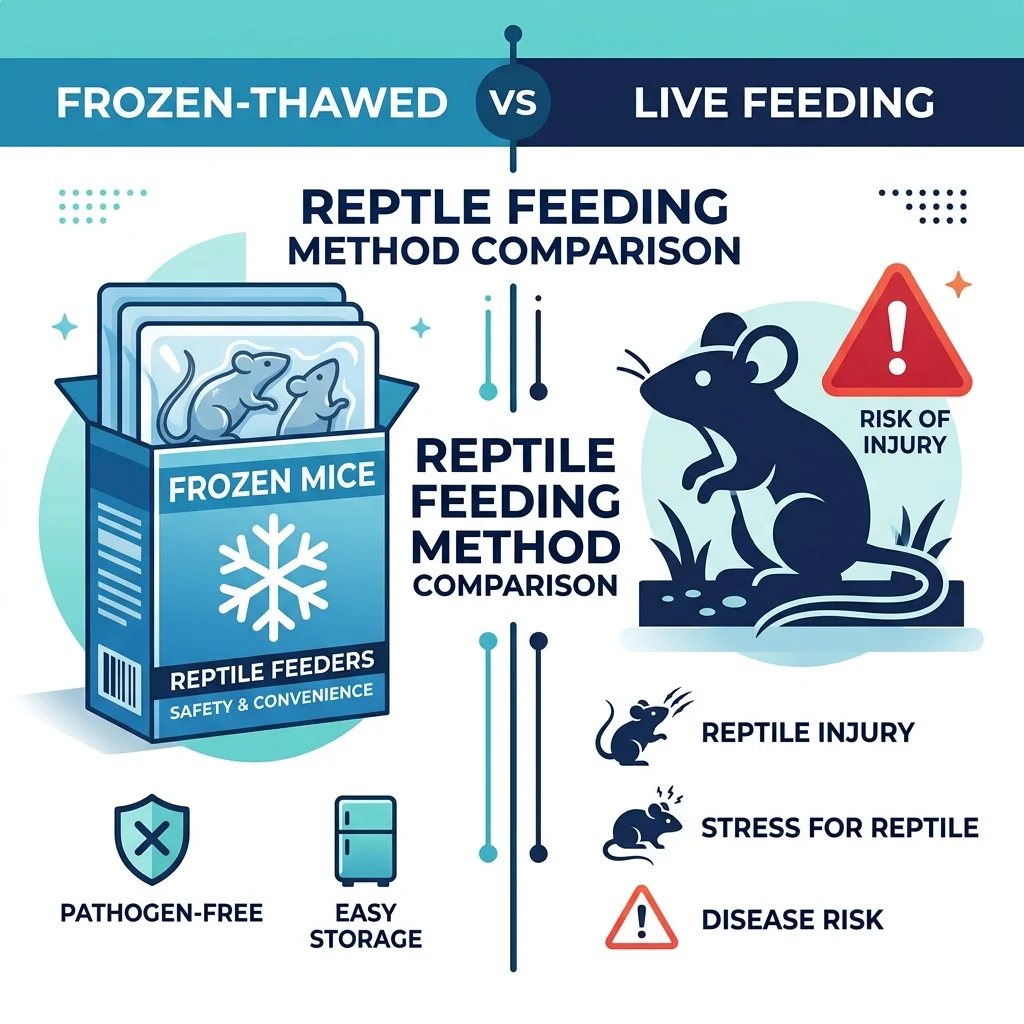
Alternatively, the safest nutritional route is to scent frozen-thawed pinky mice with safe fish to transition the snake to a complete rodent diet, eliminating the risk of thiaminase entirely.
4. Obesity and Hepatic Lipidosis (Nutritional Excess)
Nutritional problems in modern herpetoculture are rarely about starvation; they are overwhelmingly about excesses. Obesity is a silent epidemic in captive reptiles, particularly in thick-bodied, slow-metabolism species like Ball Pythons, Blood Pythons, and Boa Constrictors.
The Pathology of Overfeeding
In the wild, a Ball Python might eat 10 to 15 times a year. In captivity, keepers often feed them every 7 days without fail, year-round. This constant influx of calories, combined with the lack of exercise in an enclosure, leads to massive fat storage.
When a snake becomes obese, it doesn't just store fat under the skin; it stores it around its internal organs. The most dangerous consequence is Hepatic Lipidosis (Fatty Liver Disease). The liver becomes completely overwhelmed trying to process the excess dietary lipids (fats). The liver cells become engorged with fat, swelling the organ until it begins to fail. The liver loses its ability to filter toxins from the blood, leading to a slow, toxic death.
Symptoms in Snakes
- "Scale Spread": The body is so engorged with fat that the skin stretches, revealing the bare skin between the individual scales.
- "Hips": Large, soft fat deposits form at the base of the tail, near the cloaca.
- Round Profile: Arboreal and semi-arboreal snakes (like Boas) should have a distinct "loaf of bread" or slightly triangular body shape. An obese snake will be perfectly round like a sausage.
- Lethargy: The snake rarely leaves its hide and refuses to explore.
Prevention and Dietary Management
Preventing obesity requires strict adherence to appropriate feeding schedules and prey sizes, as outlined in our Ball Python feeding guide.
Furthermore, you must match the prey's fat content to the snake's metabolic needs. Jumbo adult rats and retired breeder mice have extremely high fat-to-protein ratios. Transitioning to leaner prey items, such as African Soft Fur rats (ASFs) or weanling rats, provides excellent protein for muscle maintenance without the dangerous excess fat.
5. Hypovitaminosis E and Steatitis
Vitamin E is a potent antioxidant. It protects the fat cells in the body from oxidizing (breaking down).
The Pathology
Steatitis (Yellow Fat Disease) occurs when a snake consumes fats that have gone rancid, or when its diet lacks sufficient Vitamin E to protect its own fat stores. The snake's internal fat deposits become inflamed, hard, and necrotic (dead).
This is almost exclusively caused by feeding frozen rodents that have suffered severe freezer burn due to a lack of cold-chain integrity. When a rodent is improperly frozen or stored for too long, its fats oxidize. Consuming oxidized fats rapidly depletes the snake's Vitamin E reserves.
Symptoms
- Hard, painful lumps under the skin (inflamed fat deposits).
- Extreme pain upon handling.
- Refusal to eat.
Prevention
Never feed a snake a rodent that shows signs of severe desiccation, yellowing of the skin, or extreme freezer burn. Always source your feeders from suppliers who use thick, vacuum-sealed packaging and fast-freezing techniques.
6. Dietary Rehabilitation: Rescuing a Deficient Snake
If you take in a rescue snake suffering from MBD or extreme emaciation, rehabilitation must be handled with extreme care.
The Refeeding Syndrome Danger
You cannot simply feed a starving snake a massive meal. Doing so causes "Refeeding Syndrome." The sudden influx of carbohydrates and proteins causes a massive spike in insulin. The insulin forces electrolytes (like potassium and phosphorus) out of the blood and into the cells so rapidly that the blood levels crash, leading to instant cardiac arrest.
The Protocol
- Hydration First: A starving snake is always severely dehydrated. Proper temperatures and electrolyte soaks are required for days before any food is offered.
- Micro-Meals: The first meals should be incredibly small—perhaps 10% of the normal prey size for a snake of that length.
- Liquid Nutrition: In severe cases, exotic veterinarians will tube-feed liquid carnivore critical care formulas before introducing solid prey.
- Targeted Supplementation: MBD cases may require liquid calcium glubionate injections administered by a vet. Do not attempt to randomly dust prey items with massive amounts of calcium powder, as you can cause hypercalcemia (calcium toxicity), which calcifies the internal organs.
7. Frequently Asked Questions
Q: Do I need to dust my frozen mice with calcium or vitamin powder? A: Generally, no. If you are feeding high-quality, whole vertebrate prey (mice, rats, ASFs), the diet is complete. Over-supplementing a snake can cause hypervitaminosis (vitamin toxicity), which is just as dangerous as a deficiency. Supplementation is usually only required for egg-laying females, rapidly growing giant species, or rescue animals under veterinary direction.
Q: Can a snake get MBD from a lack of UVB lighting? A: This is heavily debated. Unlike diurnal lizards (like bearded dragons) which must have UVB light to synthesize Vitamin D3 in their skin to absorb calcium, snakes seem capable of obtaining all their required Vitamin D3 directly from the liver of their prey. While low-level UVB lighting is beneficial for a snake's circadian rhythm and psychological enrichment, a lack of UVB will not cause MBD in a snake that is eating a complete whole-prey diet.
Q: My snake ate a mouse with a tumor. Will it get cancer? A: No. Cancer is not contagious in this manner. The snake's incredibly potent stomach acid will rapidly break down the tumor cells exactly like any other protein tissue. However, a feeder with tumors indicates poor genetic line management by the breeder.
Q: Can I feed my snake raw chicken or grocery store meat instead of whole rodents to save money? A: Absolutely not. Grocery store meat is just muscle tissue. It lacks the bones (calcium), liver (Vitamin A), and internal organs required for a complete diet. Feeding a snake exclusively on muscle meat will induce severe Metabolic Bone Disease and multi-system organ failure within months. Whole vertebrate prey is the only acceptable diet for captive snakes.
Q: If my snake is slightly overweight, should I starve it to help it lose weight? A: Never starve a snake. Fasting for prolonged periods can cause liver damage (hepatic lipidosis) as the body suddenly tries to process its massive fat stores too quickly. Instead, reduce the frequency of feedings (e.g., from every 7 days to every 14 days) and switch to a leaner prey item, such as African Soft Fur rats, which provide protein without the excess fat of domestic rats.
Q: Are vitamin drops added to the water bowl effective? A: No. Snakes drink very infrequently, meaning they rarely ingest enough of the treated water to benefit. Furthermore, most vitamins degrade rapidly when exposed to light and oxygen in an open water bowl. The water bowl will also become a breeding ground for bacteria as the sugars in the vitamin drops ferment. Always rely on high-quality whole prey for nutrition, not water additives.
8. The Role of Trace Minerals (Zinc, Iodine, Iron)
While Calcium and Phosphorus get the most attention in reptile husbandry, trace minerals are equally vital. A snake requires these elements in microscopic amounts, but a deficiency can lead to catastrophic metabolic failures.
Zinc Deficiency
Zinc is crucial for skin health, scale formation, and the healing of wounds. It also plays a massive role in the immune system.
- Symptoms: Poor wound healing, chronic skin infections, blister disease (often confused with scale rot), and frequent, incomplete sheds.
- The Cause: High levels of calcium can actually inhibit zinc absorption. If a keeper unnecessarily dusts their snake's prey with excessive calcium powder, they can inadvertently induce a zinc deficiency.
Iodine Deficiency
Iodine is required by the thyroid gland to produce hormones (thyroxine) that regulate the snake's metabolism and growth.
- Symptoms: Goiter (a massive swelling in the throat area where the thyroid gland is located), stunted growth in juveniles, and extreme lethargy.
- The Cause: This is extremely rare in snakes fed whole rodents, as mammals store sufficient iodine. However, it can occur in specialized snakes fed entirely on certain types of insects or unsupplemented muscle meat.
Iron Deficiency (Anemia)
Iron is the core component of hemoglobin, the protein in red blood cells that carries oxygen from the lungs to the rest of the body.
- Symptoms: Pale, white mucous membranes (check the inside of the snake's mouth), extreme weakness, and an inability to sustain the massive metabolic spike (SDA) required for digestion.
- The Cause: Feeding rodents that were severely anemic (often due to heavy blood-sucking parasite loads like mites or fleas on the feeder colony). This reiterates the importance of biosecure feeder colonies.
9. The Danger of "Prey Item Monotony"
In the wild, snakes are opportunistic predators. Even a specialized rodent-eater like a Ball Python might consume a variety of species: different types of gerbils, young birds, or varying species of African rats.
In captivity, we often feed a snake the exact same species of domestic rat, raised on the exact same diet, for 20 years. This is known as Prey Item Monotony.
While a high-quality lab rat is a complete diet, feeding only one type of prey for a lifetime can magnify any tiny nutritional imbalances in that specific feeder source. For example, if your supplier's rat diet is slightly low in Vitamin E, feeding those rats exclusively for a decade will eventually cause a cumulative deficiency in your snake.
How to Introduce Variety
- Rotate Suppliers: If you are unsure of your supplier's quality, occasionally buying from a different premium breeder can introduce slight variations in the nutritional profile.
- Rotate Prey Species: As discussed in our feeder nutrition comparison, rotating between domestic rats, mice, and African Soft Fur (ASF) rats provides a much broader spectrum of amino acids and fat profiles.
- Avian Prey: For species that accept them (like Carpet Pythons, Boa Constrictors, and many Colubrids), occasionally offering appropriately sized quail or chicks provides excellent lean protein and a vastly different micronutrient profile.
10. The Importance of Hydration in Nutrient Transport
Nutrition does not exist in a vacuum; it requires water. You can feed your snake the most nutrient-dense, perfectly raised rat on the planet, but if the snake is chronically dehydrated, it will still suffer from nutritional issues.
The Role of Water
Water is the universal solvent. It is required to transport water-soluble vitamins (like the B-complex vitamins) across the intestinal wall and into the bloodstream. Furthermore, dehydration severely impairs kidney function, preventing the snake from effectively clearing the massive amounts of uric acid generated by digesting a high-protein meal.
Symptoms of Dehydration
- Sunken eyes.
- Wrinkled, loose skin that lacks elasticity (if you gently pinch the skin, it stays "tented" instead of snapping back).
- Retained sheds.
Ensuring Proper Hydration
Always provide a large, clean water bowl. Ensure the enclosure humidity is appropriate for the species, as many snakes absorb trace amounts of moisture through their cloaca and respiratory tract.
Conclusion
Preventing nutritional deficiencies in snakes is conceptually simple but practically demanding: it relies entirely on the quality of their whole-prey diet. "You are what you eat" applies doubly to reptiles, as they are eating the entirety of another animal.
By investing in premium, well-fed, properly frozen, and biosecure rodents, you are bypassing the need for complex supplementation regimes. You are providing your snake with the complete, evolutionary correct nutritional foundation it needs for a long, healthy, and vibrant life.