Key Takeaway
A comprehensive buyer's guide on how to visually and scientifically inspect frozen feeder rodents. Discover the warning signs of lipid oxidation, freezer burn, poor hygiene, and improper cold-chain management.
Table of Contents
- 1. Visual Inspection: The Coat, Hygiene, and Housing
- What to Look For (High Quality)
- Red Flags (Low Quality)
- 2. The Science of Freezer Burn and Desiccation
- The Mechanism of Freezer Burn (Sublimation)
- Lipid Oxidation (Rancidity)
- Spotting Freezer Burn
- 3. Packaging Material Science: The Defense Against Sublimation
- The Problem with Ziploc Bags
- Vacuum Sealing and Mil Thickness
- 4. Cold-Chain Integrity and the "Thaw Test"
- The Importance of the Cold Chain
- What to Look For During Thawing (High Quality)
- Red Flags During Thawing (Low Quality)
- 5. Ethical Euthanasia Methods
- Carbon Dioxide (CO2) Asphyxiation
- Cervical Dislocation
- Unacceptable Methods
- 6. Sizing Consistency and Grading
- The Importance of Weight Sorting
- 7. The Supply Chain Audit: Questions to Ask Your Supplier
- 8. Frequently Asked Questions
- 9. The Deep Science of Freezing: Cellular Lysis
- Why Cellular Lysis Matters to Your Snake
- 10. Evaluating the Packaging: Gas Flushing
- How Gas Flushing Works
- The Benefits of Nitrogen Flushing
- 11. The Ethics of Feeder Production
- Signs of Ethical Breeding
- How to Evaluate Ethics
- 12. The Ultimate Checklist for Unboxing
- Conclusion

When feeding your reptile a whole-prey diet, the long-term health, vitality, and lifespan of your animal is entirely dependent on the quality of the prey it consumes. Unfortunately, the frozen feeder industry in the United States and abroad is largely unregulated. There is no FDA oversight for reptile food, and quality varies drastically—and dangerously—between suppliers.
At Loxahatchee Rodents, we believe transparency and education are the best tools for reptile keepers. Whether you buy from us or another supplier, you need to know exactly how to inspect your feeders like a professional zoological curator.
This exhaustive buyer's guide details the science of freezer burn, the ethics of euthanasia, the material science of packaging, and how to visually and olfactorily evaluate every single frozen rodent before you feed it to your animal.
1. Visual Inspection: The Coat, Hygiene, and Housing
The very first thing you should assess when opening a bag of frozen rodents is their external cleanliness. The condition of the fur tells a vivid, undeniable story about how the animal lived, what it was fed, and how it was processed.
What to Look For (High Quality)
- Vibrant, Clean Fur: The coat should be smooth, bright, and clean. White mice and rats should be genuinely white, not stained yellow, brown, or grey.
- Clean Extremities: The paws, tails, and ears should be clean and free of caked-on debris or feces.
- Plump Appearance: The animals should look robust and well-fed, with good muscle mass along the spine.
Red Flags (Low Quality)
- Feces Frozen to the Fur: This is the most glaring warning sign in the industry. It indicates extreme overcrowding, infrequent cage cleaning, and a total lack of biosecurity. If the outside of the rodent is covered in feces, the inside is carrying a massive bacterial load.
- Urine Staining (Yellow Bellies): Severe yellow staining on the belly indicates the animal was living in soiled, ammonia-rich bedding. Prolonged ammonia exposure causes severe respiratory distress and chemical burns to the skin.
- Bite Marks, Scabs, or Missing Digits: These are indicators of aggressive colony dynamics, extreme overcrowding, and stress. Stressed rodents produce high levels of cortisol, which negatively impacts their meat quality.
- Emaciation: If you can clearly see the spine and hip bones protruding sharply, the animal was starved or suffering from a severe internal parasite load before processing.
2. The Science of Freezer Burn and Desiccation
Freezer burn is not just an aesthetic issue; it is a chemical degradation of the prey's nutritional value.
The Mechanism of Freezer Burn (Sublimation)
Freezer burn occurs through a process called sublimation—where frozen water transitions directly from a solid (ice) into a gas (water vapor) without passing through the liquid phase. In a poorly sealed bag, the moisture inside the rodent's tissues slowly sublimates and migrates out of the meat, forming ice crystals on the outside of the animal or inside the bag. As the moisture leaves, the tissues become dehydrated, shriveled, and tough.
Lipid Oxidation (Rancidity)
When the moisture leaves the tissues, it exposes the fat cells (lipids) to oxygen. Oxygen causes the fats to break down, a process known as lipid oxidation. Oxidized fats are rancid. When a snake consumes oxidized fats, it rapidly depletes its own Vitamin E reserves to combat the free radicals produced by the rancid fat. Over time, feeding freezer-burned rodents leads to severe nutritional deficiencies, specifically Steatitis (Yellow Fat Disease), which causes painful, inflamed fat deposits inside the snake.
Spotting Freezer Burn
- Desiccation: Look at the extremities (tails, ears, and paws). If they appear shriveled, brittle, papery, white, or opaque, the rodent has freezer burn.
- "Snow" in the Bag: Excessive loose ice crystals rattling around inside the bag indicates that moisture has been pulled out of the rodents due to temperature fluctuations or poor sealing.
3. Packaging Material Science: The Defense Against Sublimation
The primary defense against freezer burn is the quality of the packaging. Not all plastic bags are created equal.
The Problem with Ziploc Bags
Many amateur breeders sell rodents in standard grocery-store zipper bags. These bags are highly permeable to oxygen and moisture vapor. Within 3 to 4 weeks in a standard chest freezer, rodents in these bags will suffer severe freezer burn.
Vacuum Sealing and Mil Thickness
Professional suppliers use heavy-duty vacuum-sealed bags. The vacuum process removes the air (oxygen), halting lipid oxidation. However, the thickness of the bag (measured in "mils") is critical.
- A 2-mil bag is thin and easily punctured by the frozen claws or teeth of a rat, breaking the vacuum seal during shipping.
- A 3-mil to 4-mil bag (the industry standard for quality) is thick enough to resist punctures and creates a long-term barrier against sublimation.
When you receive your order, check if the bags are still tightly vacuum-sealed tight around the rodents. If the bags are loose and filled with air upon arrival, the seal has failed, and the clock on freezer burn has started.
4. Cold-Chain Integrity and the "Thaw Test"
The true test of a supplier's quality control happens when you actually thaw the rodent. The thawing process reveals how the animal was handled between the moment of euthanasia and the moment it arrived at your door.
The Importance of the Cold Chain
The "cold chain" is the unbroken series of refrigerated and freezing steps that preserve the product. If a supplier processes a massive batch of rodents but leaves them sitting in a warm warehouse for hours before moving them to the freezer, bacteria in the rodents' guts will begin decomposing the animal from the inside out. If the rodents are shipped with insufficient dry ice and partially thaw in transit, they will spoil before you refreeze them.
What to Look For During Thawing (High Quality)
- When properly thawed using safe thawing methods (cold water or refrigerator), the rodent should feel soft and pliable. The joints should articulate smoothly, similar to a freshly euthanized animal.
- The smell should be mild and earthy—distinctly rodent, but absolutely not repulsive or sour.
Red Flags During Thawing (Low Quality)
- The "Bloat": If the rodent's belly swells significantly like a balloon during thawing, gas-producing bacteria (like Clostridium) are actively breaking down the tissues. This means the animal sat at room temperature for too long before being frozen. Discard it immediately.
- A Foul, Sour Odor: This is the smell of putrefaction. If a thawed rodent smells like rotting meat, the bacterial load is dangerously high. Feeding it can cause explosive diarrhea and regurgitation.
- Tissue Degradation ("Mushiness"): If the belly skin splits open easily with gentle handling, or the limbs feel like mush rather than firm muscle, the structural proteins have broken down due to severe aging, repeated freeze-thaw cycles, or decomposition.
- Green Bellies: A distinct green discoloration on the abdomen indicates that the gallbladder has ruptured or the intestines have begun rotting into the surrounding tissue.
5. Ethical Euthanasia Methods
The method used to euthanize the feeder rodent not only matters for animal welfare, but it also directly impacts the physical quality of the feeder. The American Veterinary Medical Association (AVMA) provides strict guidelines for the humane euthanasia of laboratory animals.
Carbon Dioxide (CO2) Asphyxiation
This is the gold standard for commercial feeder production. When applied correctly (using a gradual displacement rate in a specialized chamber), CO2 acts as an anesthetic, putting the animal to sleep before respiration ceases.
- Benefits for the Feeder: It leaves no chemical residue in the tissues, causes no physical trauma (no broken bones or ruptured organs), and is highly efficient for large batches.
Cervical Dislocation
This involves manually separating the spinal cord from the skull. While AVMA approved for small numbers of rodents when performed by highly skilled technicians, it is impractical for commercial scale.
- Drawbacks: It causes massive physical trauma. The neck is broken, blood often pools in the head or throat, and it can result in ruptured internal organs if done incorrectly, which speeds up decomposition.
Unacceptable Methods
Any supplier using drowning, freezing alive (which causes slow, agonizing crystallization of the blood), or blunt force trauma should be immediately boycotted. Not only are these methods horrifyingly cruel, but the massive stress and adrenaline released by the animal taints the meat, and the physical trauma ruins the structural integrity of the feeder.
6. Sizing Consistency and Grading
When you order a pack of "Medium Rats," you rely on that sizing to be accurate to prevent underfeeding or regurgitation in your reptile. A quality supplier treats feeder grading with precision.
The Importance of Weight Sorting
Reptile feeding is based on weight percentages (e.g., feeding a Ball Python a meal that is 10% to 15% of its body weight). A reputable supplier sorts their rodents by gram weight, not just by "eyeballing" them.
- High Quality: All rodents in a 10-pack of Medium Rats (90g-149g) should look virtually identical in length and girth.
- Low Quality: Wild variations within the same bag (e.g., one massive 140g rat mixed with several 95g rats). This makes adhering to a strict feeding schedule impossible.
7. The Supply Chain Audit: Questions to Ask Your Supplier
Don't be afraid to demand excellence from the company feeding your prized animals. If a supplier cannot or will not answer these basic questions, take your business elsewhere.
- "Do you breed your own rodents, or are you a broker?" Brokers buy frozen rodents from various unknown third-party breeders (often culls from laboratories) and re-bag them. They have zero control over the diet, biosecurity, or euthanasia methods used. Direct breeders control the entire process.
- "What specific diet do you feed your colonies?" Look for answers that name a specific lab-grade formulated block (like Mazuri or Teklad), rather than generic "grain and seeds."
- "Are your colonies closed?" A closed colony is essential for disease prevention.
- "What is your transit time for dry ice?" They should guarantee frozen arrival using a specific weight of dry ice calculated for the transit days.
8. Frequently Asked Questions
Q: My frozen rats have a tiny amount of blood around the nose. Are they bad? A: A very small amount of blood around the nose is normal. It is caused by the sudden pressure changes in the capillaries during the freezing process. However, large amounts of blood pooling in the bag indicates physical trauma prior to freezing.
Q: If I find one bad rodent in a bag of 10, should I throw the whole bag away? A: If the issue is freezer burn or a broken seal, the other 9 are likely compromised as well. If one is severely bloated and smells foul (indicating it died prior to the rest of the batch being processed), it is highly recommended to discard the bag, as cross-contamination of bacteria is likely.
Q: Can I refreeze a rodent if my snake refuses to eat it? A: Absolutely not. Once a rodent has been thawed to room temperature, the bacteria in its gut multiply exponentially. If you refreeze it, you freeze that massive bacterial load. The next time you thaw it, it will spoil almost immediately. Discard any refused prey.
Q: Why do ASFs (African Soft Furs) seem to get freezer burn faster than rats? A: ASFs have very thin skin and significantly less subcutaneous fat than domestic rats. This makes them highly susceptible to rapid moisture loss. They require thicker vacuum bags and tighter seals to preserve their quality.
Q: Can I use a regular refrigerator freezer to store bulk rodents long-term? A: It is not recommended for more than 2 to 3 months. Regular refrigerator-freezers are "frost-free." They achieve this by going through daily warming cycles to melt ice off the internal coils. These constant, slight temperature fluctuations accelerate sublimation and lipid oxidation. For bulk, long-term storage of a year or more, you must use a dedicated, non-defrosting chest freezer, as outlined in our cold chain integrity guide.
Q: What is the white, chalky substance sometimes found on frozen rodents? A: If it is on the outside of the fur, it is severe freezer burn (sublimation). If it is on the belly or vent area and wipes off easily, it is likely dried urates (rodent urine) that occurred during the euthanasia process. While urates are natural, a high amount of them frozen to the animal indicates the supplier did not properly clean or process the animals before bagging them.
Q: Does the color of the rat (white vs. colored) affect its nutritional quality? A: No. The color of the coat is purely genetic and has zero bearing on the nutritional profile of the animal. However, white (albino) rodents are often preferred by large-scale commercial breeders because it is much easier to instantly spot feces, urine staining, or physical trauma on a white coat, allowing for stricter quality control during packaging.
9. The Deep Science of Freezing: Cellular Lysis
To truly evaluate feeder quality, you must understand what physically happens to the animal's cells during the freezing process.
When a rodent is placed in a freezer, the water inside its cells begins to form ice crystals.
- Slow Freezing (The Danger): If a massive block of warm rodents is placed into a standard chest freezer, the core of that block might take 24 to 48 hours to freeze solid. During this slow freeze, the ice crystals grow massive and jagged. These massive crystals act like microscopic knives, puncturing and destroying the cell walls of the rodent's muscles and organs (a process called cellular lysis).
- Fast Freezing (The Standard): Professional facilities use blast freezers or specialized commercial freezing racks that drop the temperature of the rodent to below 0°F (-18°C) in a matter of hours. This rapid freeze creates tiny, microscopic ice crystals that do not rupture the cell walls.
Why Cellular Lysis Matters to Your Snake
If a rodent suffered from cellular lysis due to slow freezing, you will notice it during the thawing process. As the jagged ice crystals melt, all the intracellular fluids (water, proteins, and water-soluble vitamins) leak out of the ruptured cells. The rodent will feel incredibly mushy, and the bag will fill with bloody fluid (called "purge"). Your snake loses a massive amount of nutrition in that purged fluid, and the mushy, degraded tissue is highly prone to rupturing during constriction or swallowing, creating a massive, unhygienic mess in your enclosure.
10. Evaluating the Packaging: Gas Flushing
While vacuum sealing is the standard for preventing freezer burn, the very best suppliers utilize an advanced technique called Gas Flushing (Modified Atmosphere Packaging or MAP).
How Gas Flushing Works
Before the bag is sealed, the ambient air (which contains 21% oxygen) is completely sucked out and replaced with an inert gas, usually 100% Nitrogen. The bag is then sealed.
The Benefits of Nitrogen Flushing
- Zero Oxidation: Because there is absolutely no oxygen in the bag, lipid oxidation (rancidity) is biologically impossible. The fats remain pristine.
- Physical Protection: Unlike a tight vacuum seal, which violently compresses the rodents together (often breaking frozen tails or crushing skulls), a gas-flushed bag remains slightly inflated. This cushion of nitrogen gas protects the physical integrity of the rodents during shipping, ensuring they arrive looking perfect, rather than like a crushed block of ice.
If your supplier uses gas flushing, it is a massive indicator that they are investing heavily in the absolute highest standards of product preservation.
11. The Ethics of Feeder Production
Evaluating a supplier is not solely about the physical product; it is also about the ethical standards of the facility. As reptile keepers, we have a moral obligation to ensure that the animals dying to feed our pets are treated with dignity and respect during their lives.
Signs of Ethical Breeding
- Environmental Enrichment: Professional facilities do not just toss rats in a barren tub. They provide deep bedding for burrowing, chewing blocks to wear down continuously growing incisors, and nesting materials for nursing mothers.
- Breeding Rest Periods: Unethical breeders force females to produce litters back-to-back until they die of exhaustion. Ethical facilities provide mandatory rest periods for females to recover their calcium reserves and body weight between litters. This not only is more humane, but it ensures the female produces much healthier, more nutritionally dense offspring.
- Immediate Culling of Sick Animals: If a rodent becomes ill or injured, ethical facilities immediately euthanize it rather than allowing it to suffer or, worse, allowing it to die and then freezing it to sell.
How to Evaluate Ethics
You can evaluate these ethics visually. Feeders from ethical facilities look robust, clean, and physically sound. Feeders from "puppy mill" style rodent operations look haggard, severely scarred from fighting in overcrowded tubs, and frequently arrive with feces matted into their fur.
12. The Ultimate Checklist for Unboxing
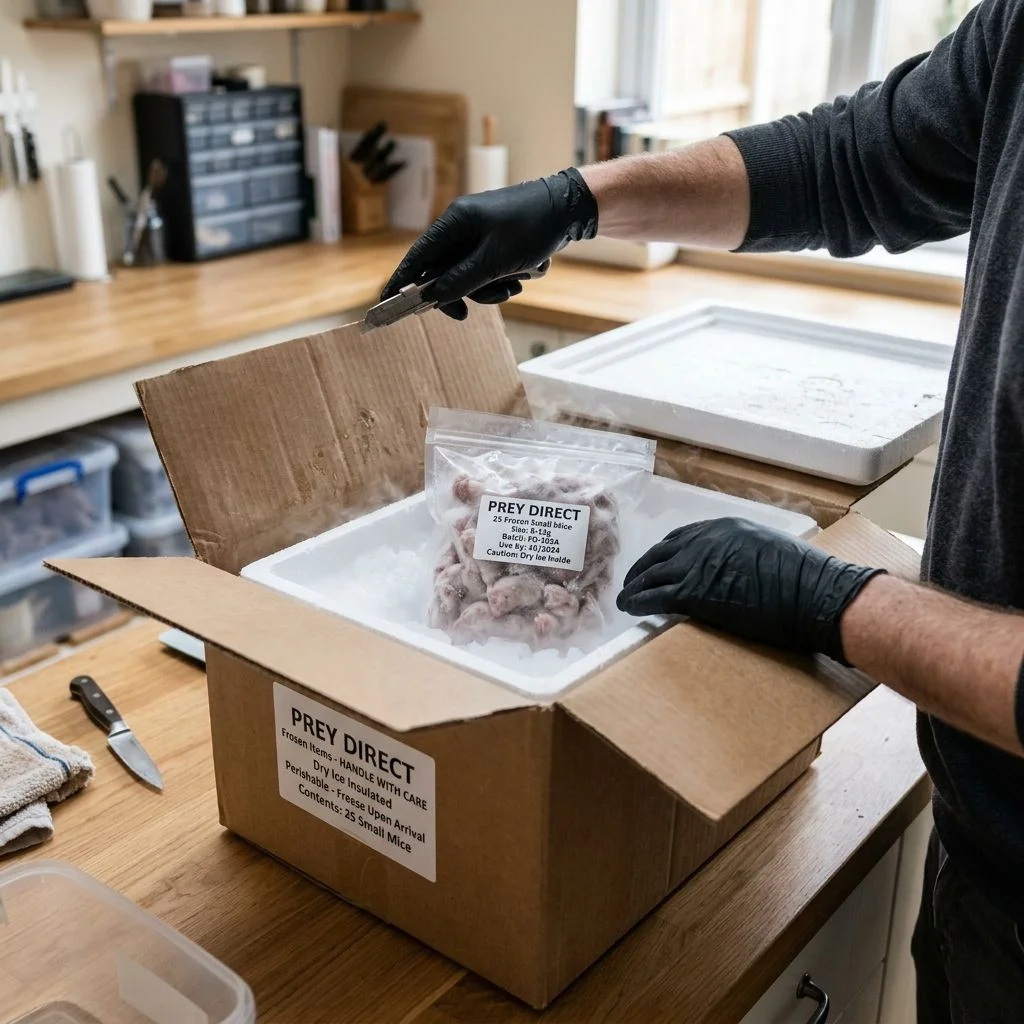
When your dry-ice shipment arrives, follow this strict protocol to evaluate the quality before the rodents go into your freezer:
- Check the Dry Ice: Is there still solid dry ice in the cooler? If it is completely evaporated and the rodents are soft, the cold chain was broken. Contact the supplier immediately.
- Inspect the Seals: Gently squeeze the bags. If air leaks out, the vacuum seal is broken, and freezer burn will begin immediately. Use these bags first.
- The Visual Sweep: Look through the clear plastic. Do you see excessive yellow staining? Feces? Massive size discrepancies?
- The Thaw Test: Take one rodent from the batch and thaw it in cold water. Does it feel firm? Does it smell earthy and normal?
If the batch passes these four tests, you have found a reliable, high-quality supplier.
Conclusion
You spend significant time, money, and passion optimizing your reptile's enclosure setup, humidity, and husbandry; do not compromise on the fuel that powers their entire biological system.
By applying these visual, olfactory, and scientific tests to every batch of frozen feeders you buy, you can ensure your snake is receiving safe, clean, and nutritionally complete meals. If your current supplier consistently fails these quality checks, do not accept mediocrity. It is time to find a breeder who prioritizes animal welfare, biosecurity, and cold-chain integrity. Your reptiles deserve nothing less.