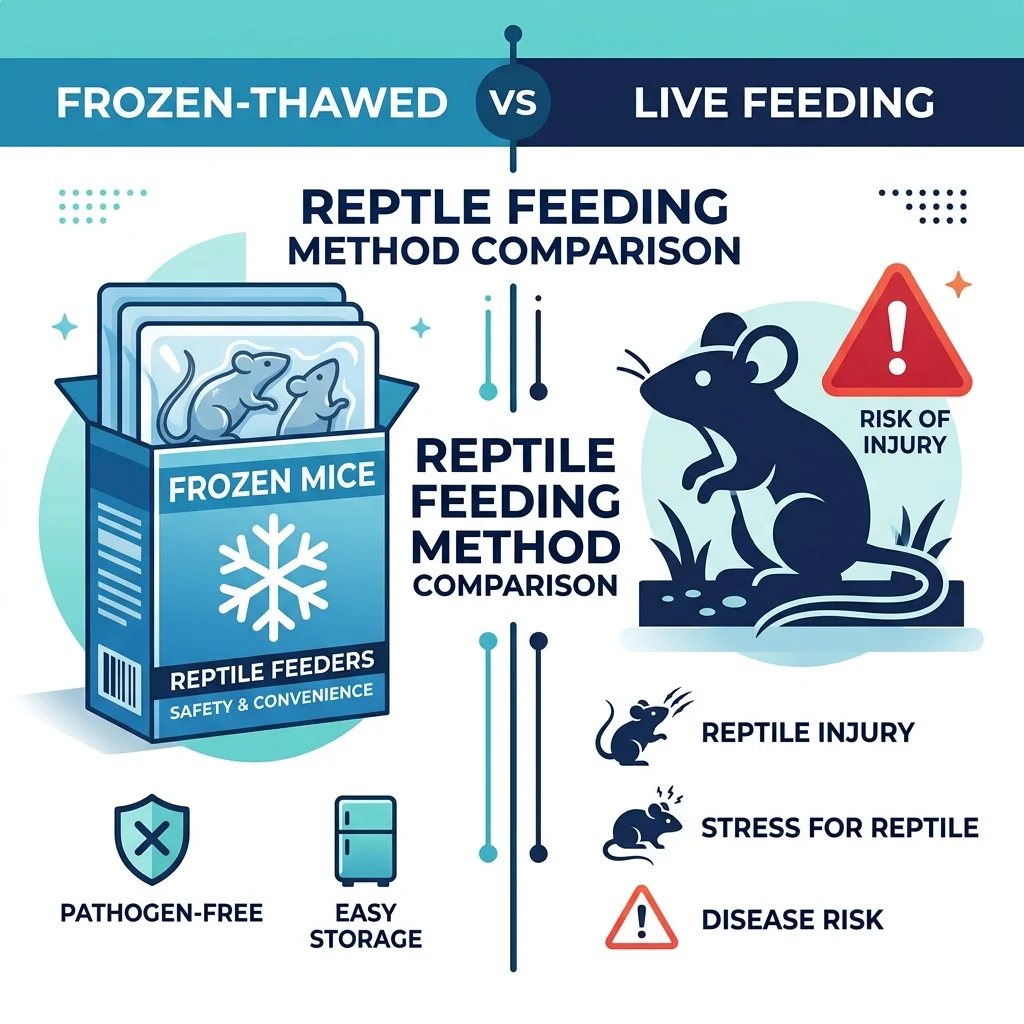
Key Takeaway
Discover the critical science of cold chain management for frozen reptile feeders. Learn how maintaining a stable temperature from production to delivery prevents nutritional degradation and protects your snakes from dangerous pathogens.
Table of Contents
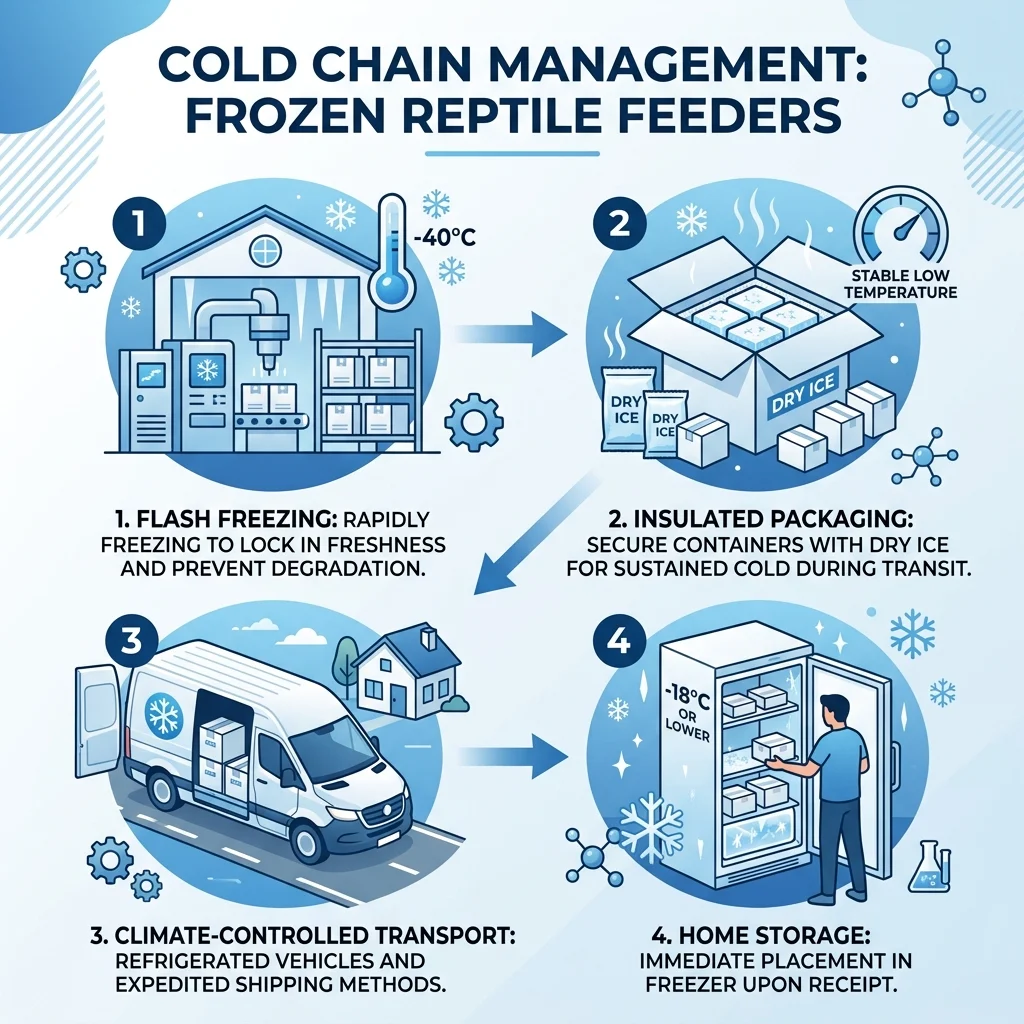
In the reptile keeping community, we often discuss the type of prey and the frequency of feeding, but rarely do we delve into the science of the cold chain. For anyone using frozen-thawed feeders, the cold chain is the invisible thread that ensures the mouse or rat you offer your snake is biologically safe and nutritionally intact.
A "Cold Chain" refers to the temperature-controlled supply chain that includes uninterrupted storage and distribution activities. When this chain breaks, even for a few hours, the consequences for reptile health can be significant.
1. The Science of Cold Chain Management
Cold chain integrity isn't just about keeping things "frozen." It's about keeping them at a stable, deep-freeze temperature (ideally -18°C / 0°F or colder) from the moment of euthanasia until the moment of thawing.
At Loxahatchee Rodents, we utilize industrial flash-freezing technology. Unlike a standard home freezer that may take hours to freeze a rodent to the core, flash-freezing drops the temperature in minutes. This prevents the formation of large ice crystals that puncture cell walls, which is why flash-frozen feeders retain their texture and moisture better than those frozen slowly.
2. Nutritional Retention: Why Temperature Matters
Many keepers are surprised to learn that frozen food still undergoes chemical changes. The rate of these changes is dictated by temperature.
Vitamin Degradation
Research into whole-prey nutrition shows that certain vitamins are highly sensitive to temperature fluctuations.
- Vitamin E: A critical antioxidant for reptile immune function. It degrades rapidly when fats in the feeder begin to oxidize due to sub-optimal freezing temperatures.
- Thiamine (Vitamin B1): Essential for neurological health. Thiaminase activity (an enzyme that breaks down Thiamine) can occur if the feeder is held at "soft freeze" temperatures (above -10°C).
By maintaining a rigorous cold chain, we ensure that the feeder nutrition profiles remain as close to live prey as possible.
3. Microbial Safety and Pathogen Control
The primary risk of a cold chain failure is the proliferation of pathogens. While freezing does not kill all bacteria, it stops them from multiplying.
The Danger Zone: Bacteria like Salmonella and Listeria can multiply rapidly between 4°C and 60°C (40°F - 140°F). If a shipping box sits on a hot porch for too long and the internal temperature rises above 4°C, a "partial thaw" occurs. Even if you refreeze the items, the bacterial load has already increased.
According to the CDC guidelines on reptile safety, Salmonella is a significant concern for both reptiles and their owners. Maintaining the cold chain is the first line of defense against zoonotic outbreaks in your collection.
4. The Hidden Impact of Refreezing
Refreezing is the "cardinal sin" of the cold chain. When a rodent thaws and is then refrozen:
- Cellular damage increases: The second freeze creates even larger ice crystals, leading to a "mushy" texture upon the second thaw.
- Moisture migration: Water moves from the muscle tissue to the surface, increasing the risk of severe freezer burn.
- Bacterial "Bloom": Each thaw cycle allows for a new burst of bacterial growth.
If you suspect your feeders have been refrozen, consult our guide on how to identify spoiled frozen rodents immediately.
5. How to Verify Your Supplier's Cold Chain
As a keeper, you can't see the supplier's facility, but you can judge their cold chain by the results.
- Shipping Infrastructure: Do they use thick-walled styrofoam or high-density insulated liners? Do they use enough dry ice to last 48+ hours?
- Arrival State: Feeders should be rock-solid. If they arrive "slushy" or soft, the cold chain has failed.
- Vacuum Sealing: While not strictly part of the temperature chain, vacuum sealing prevents oxygen from reaching the feeder, significantly slowing down the fat oxidation mentioned in Section 2.
For a detailed look at what to expect from a professional delivery, see our frozen rodent shipping guide.
6. Your Role: Maintaining the Chain at Home
The cold chain doesn't end at your doorstep; it ends in your snake's enclosure.
- Immediate Storage: Move feeders from the shipping box to your freezer immediately.
- Proper Thawing: Never thaw at room temperature for extended periods. Use the refrigerator method or a controlled warm water bath. Learn the correct techniques in our complete thawing guide.
- Dedicated Freezer: If possible, use a dedicated freezer that isn't opened as frequently as your kitchen freezer to minimize temperature spikes. See our storage guide for more tips.
Conclusion
Cold chain integrity is the foundation of safe reptile feeding. By understanding the science of temperature stability and choosing suppliers who prioritize industrial-grade freezing and shipping protocols, you are directly contributing to the longevity and health of your reptiles.
Written by Jim Galloway, Senior Environmental Scientist and co-founder of Loxahatchee Rodents. Jim has over 25 years of experience in zoological nutrition and environmental safety.