Key Takeaway
Everything you need to know about how frozen feeder rodents are shipped safely, what to look for when your order arrives, and how to handle common shipping issues.
Table of Contents
- 1. The Cold Chain: What It Means and Why It Matters
- 2. How Frozen Feeders Are Packaged for Shipping
- Insulation: The First Line of Defense
- Coolants: Dry Ice vs. Gel Packs
- 3. Transit Time and Temperature Modeling
- Standard Transit Scenarios
- Seasonal Considerations
- 4. What to Expect When Your Package Arrives
- The Arrival Inspection Protocol
- Refreezing Partially Thawed Feeders: The Rule
- 5. What to Do When a Shipment Arrives Compromised
- Documenting the Claim
- Contacting the Supplier
- When the Carrier Is Responsible
- 6. How to Evaluate a Supplier's Shipping Quality
- 7. Optimizing Delivery to Your Location
- 8. Large-Volume Ordering for Breeding Operations
- Conclusion
Ordering frozen feeder rodents online is one of the most convenient and cost-effective ways to source high-quality prey for your reptile collection. But between the supplier's freezer and your front door lies a critical phase: frozen shipping. This phase is entirely dependent on proper cold chain management, and understanding it will help you evaluate suppliers, anticipate seasonal challenges, and know exactly what to do when a shipment arrives.
At Loxahatchee Rodents, we have been shipping frozen feeder rodents for over two decades. This guide explains exactly how our process works and what you should expect from any quality frozen feeder supplier.
1. The Cold Chain: What It Means and Why It Matters
The "cold chain" refers to the unbroken sequence of refrigerated and frozen handling, storage, and transportation that keeps a perishable product at or below a safe temperature from production to consumption.
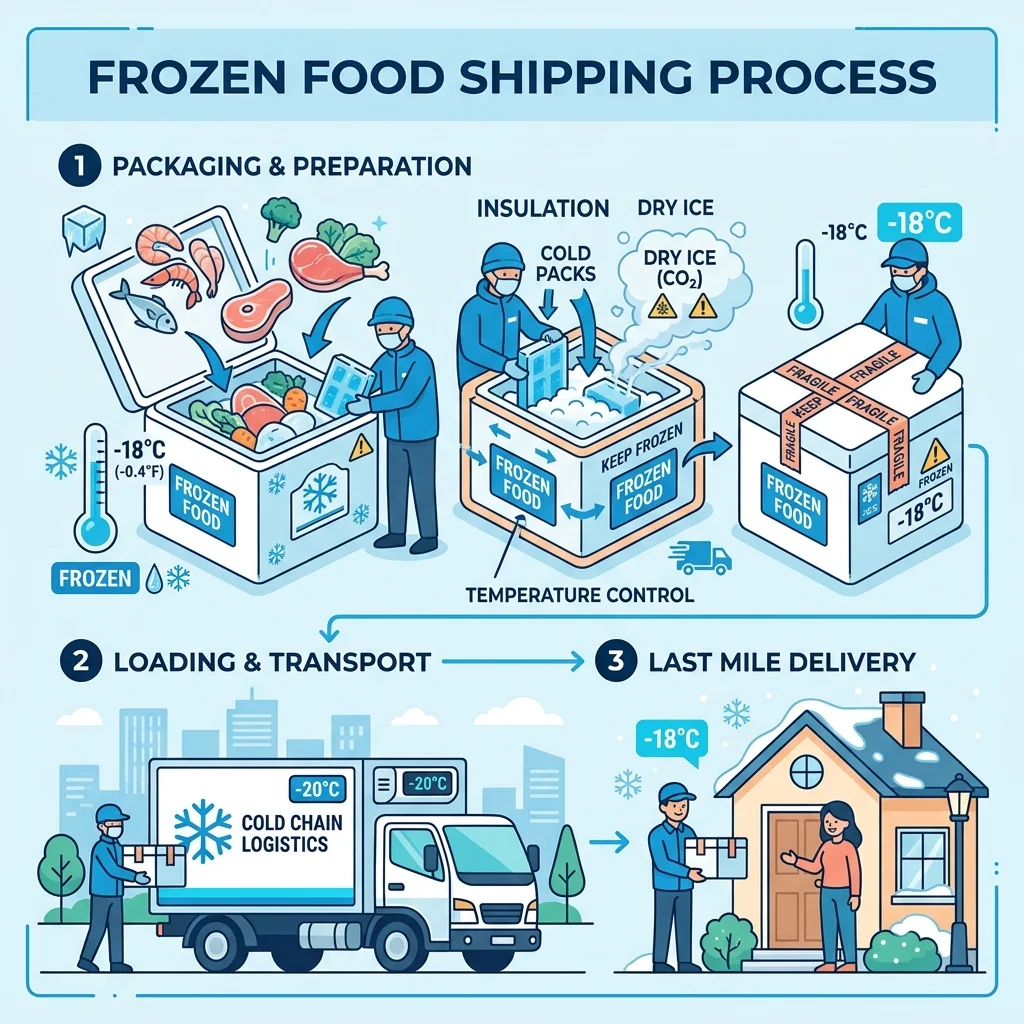
For frozen feeder rodents, the ideal cold chain looks like this:
- Euthanasia and processing: Rodents are humanely euthanized and immediately prepared for freezing
- Flash freezing: Immediately frozen at -18°C (0°F) or colder within hours of processing
- Frozen storage at facility: Maintained at -18°C in a commercial freezer until order is placed
- Order packing: Packed with appropriate insulation and coolants within hours of shipment
- Carrier transit: Typically 1–3 days via expedited shipping
- Delivery: Received by the customer while still frozen or just beginning to thaw
When any link in this chain fails — if a facility freezer malfunctions, if a package sits in a hot sorting facility too long, or if delivery is delayed — the quality of the feeders can be compromised. Understanding each link helps you evaluate and respond appropriately.
2. How Frozen Feeders Are Packaged for Shipping
Insulation: The First Line of Defense
High-quality frozen feeder suppliers use one of two primary insulation methods:
Expanded Polystyrene (EPS) / Styrofoam boxes:
- Highly effective thermal insulation
- Lightweight for shipping cost efficiency
- Standard wall thickness is 1.5"–2"; higher-quality shippers use 2"+ walls
- Works best when combined with dry ice or high-quality gel packs
Insulated box liners (foil bubble wrap):
- Less effective than EPS but cost-efficient
- Works adequately for shorter transit times (1-day shipping)
- Often used for smaller orders
Coolants: Dry Ice vs. Gel Packs
Dry Ice (CO₂):
- Maintains -78.5°C (-109°F) — far colder than necessary, but provides a very long buffer
- Sublimates (turns to gas) at a rate of about 5–10 pounds per 24 hours depending on insulation quality
- Can keep feeders frozen solid for 24–48 hours in transit
- Handling note: Never handle dry ice with bare hands (causes freeze burns). Wear gloves. Allow boxes to ventilate before opening indoors — CO₂ buildup in an enclosed space can be dangerous.
Frozen Gel Packs:
- Maintain 32°F (0°C) — just at freezing point
- Do not get as cold as dry ice, so feeders may begin to soften at the edges
- Work better for shorter transit times (next-day shipping)
- No special handling requirements
Best practice: A quality supplier will use dry ice for 2-day shipping and gel packs only for guaranteed next-day delivery.
3. Transit Time and Temperature Modeling
Understanding how temperature changes during transit helps you set realistic expectations.
Standard Transit Scenarios
| Shipping Method | Transit Time | Recommended Coolant |
|---|---|---|
| Overnight (next-day) | 12–24 hours | Gel packs or dry ice |
| 2-Day Shipping | 24–48 hours | Dry ice strongly recommended |
| Standard (3-Day) | 48–72 hours | Dry ice essential — high risk in summer |
| Ground (4–5 days) | 72–120 hours | Not recommended for frozen feeders |
Seasonal Considerations
Summer shipping (May through September) is significantly more challenging for frozen feeder suppliers because:
- Ambient temperatures in UPS/FedEx sorting facilities can exceed 100°F
- Dry ice sublimation rates increase dramatically in high heat
- Delivery vehicles are not refrigerated
During summer months, reputable suppliers will:
- Add more dry ice per package
- Use thicker EPS insulation
- Ship only on Monday–Wednesday to avoid weekend delays in hot facilities
- Sometimes impose summer surcharges to cover increased coolant costs
Winter shipping risks include package delays due to weather events, which can paradoxically cause packages to be held in very cold conditions — potentially safer for the feeders but creating delivery timeline issues.
4. What to Expect When Your Package Arrives
Knowing what a properly shipped frozen feeder package looks like upon arrival helps you assess quality and act appropriately.
The Arrival Inspection Protocol
Before opening:
- Check the exterior of the box for damage (crushing, soaking wet)
- Note whether the box feels cold to the touch through the exterior
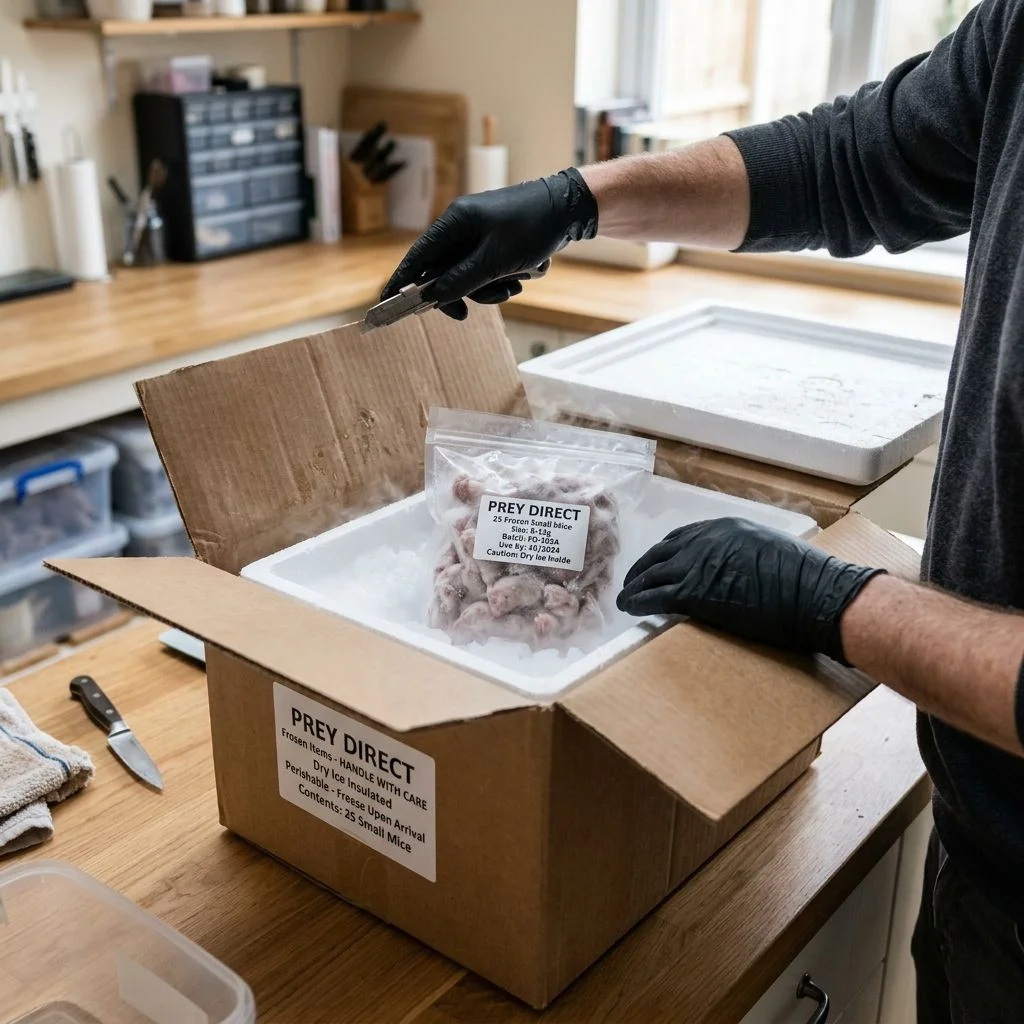
- If dry ice was used, you may see vapor wisps when the box is slightly disturbed — this is normal
Upon opening:
-
If dry ice is present, carefully remove it with gloves and set it aside in a ventilated area (never put dry ice in a sealed container)
-
Assess the temperature of the feeders immediately:
- Completely frozen solid: Excellent cold chain — put directly in your freezer
- Mostly frozen with some softening at extremities: Cold chain is marginal but acceptable — put in freezer immediately
- Soft but still cold (below 40°F): Feed the most thawed items now; freeze the rest — but see note on refreezing below
- Warm or room temperature: Cold chain failed — contact the supplier immediately, do not feed to your reptile
-
Inspect packaging for moisture accumulation inside the insulated liner (a sign of partial thawing)
-
Check individual bags for integrity — torn or open bags expose feeders directly to warm air
Refreezing Partially Thawed Feeders: The Rule
Never refreeze feeders that have been thawed. Even if they are still cool, refreezing creates large ice crystals that damage cell structure, increases bacterial load from the thaw period, and results in very poor quality prey. Feed partially thawed feeders immediately (following proper warming to 98–102°F) or contact the supplier for a replacement.
5. What to Do When a Shipment Arrives Compromised
Every reputable supplier has a policy for handling shipping failures. Here's how to handle the situation effectively:
Documenting the Claim
- Take photographs immediately — before removing any items from the box
- Document the box exterior, the interior insulation, the coolant status, and the condition of the feeders
- Note the delivery time and compare against the shipment tracking — was there an unusual delay?
Contacting the Supplier
Contact the supplier within 24 hours of delivery (most policies have a claim window). Provide:
- Your order number
- Photographs of the box and contents
- Description of the issue (items were thawed, box was damaged, etc.)
- Any relevant tracking information showing delays
A good supplier will reship your order or provide a full refund without argument when the evidence clearly shows a shipping failure. See our reviews of major suppliers, including our RodentPro review, for more on supplier reliability and customer service policies.
When the Carrier Is Responsible
Sometimes the issue is clearly the carrier's fault (e.g., a 24-hour delivery took 3 days due to a logistics error). In these cases:
- The supplier should file a claim with the carrier on your behalf
- Photograph the delivery scan times on the tracking record
- Most reputable suppliers will reship immediately and handle the carrier claim themselves
6. How to Evaluate a Supplier's Shipping Quality
Not all frozen feeder suppliers ship equally. Here is what to look for:
Green flags (good practices):
- Clear shipping schedule (ships Monday–Wednesday to avoid weekend holds)
- Uses dry ice for 2-day+ shipping
- Provides real-time tracking
- Has a clear, fair, hassle-free replacement policy
- Packs in EPS foam with minimum 1.5" wall thickness
- Offers summer shipping upgrades (extra dry ice, priority shipping)
Red flags (concerning practices):
- Ships on Thursdays or Fridays (package may sit over weekend)
- Uses only gel packs for 2-day+ transit
- No published shipping policy
- No tracking provided
- Requires you to file directly with the carrier for damaged shipments
For our full comparison of frozen feeder suppliers and their shipping practices, see our where to buy frozen mice guide.
7. Optimizing Delivery to Your Location
You can improve your shipping success rate by:
Choosing the right delivery day:
- Order so that delivery falls on a Tuesday or Wednesday — you'll be home, and the package won't sit over a weekend
- Avoid ordering before holidays when carriers are overloaded
Providing delivery instructions:
- Request that the package be left in shade or a cool location (covered porch, garage)
- Install a "frozen delivery — keep shaded" instruction on your address in the carrier's system
- Consider a delivery locker service in extreme heat areas
Being home for delivery:
- Large frozen feeder orders should ideally be received in person and immediately moved to your freezer
- If you know you'll be away, schedule for a day you'll be home
8. Large-Volume Ordering for Breeding Operations
If you operate a reptile breeding operation or large collection, frozen feeder shipping dynamics change significantly.
Advantages of large orders:
- Bulk packaging is more thermally stable than multiple small packages (thermal mass is higher)
- Per-unit shipping cost decreases significantly
- Larger dry ice quantities provide longer protection windows
Considerations for large orders:
- Ensure your freezer has adequate capacity before ordering (see our frozen rodent storage guide)
- Coordinate with the supplier on the best shipping day and method for your climate and location
- Consider ordering in spring and fall when ambient temperatures are most favorable for transit
Conclusion
Understanding the frozen feeder shipping process transforms you from a passive recipient into an informed, empowered consumer. By knowing what good cold chain management looks like, what to inspect upon arrival, and how to document and claim shipping failures, you protect both your investment and your reptiles' health.
At Loxahatchee Rodents, our shipping protocols have been refined over 20+ years of operations. We are committed to delivering every order in perfect frozen condition. To learn more about our facility and our ordering process, visit our home page. For more expert reptile care resources, explore our complete feeding guides library.
Written by Jim Galloway, Senior Environmental Scientist and co-founder of Loxahatchee Rodents.