Key Takeaway
A comprehensive guide on the critical importance of biosecurity in feeder rodent production. Learn exactly how professional facilities use quarantine, sterilization, HEPA filtration, and strict SOPs to ensure pathogen-free food for your reptiles.
Table of Contents
- 1. What Exactly is Biosecurity?
- 2. The Pathogen Profiles: What Are We Defending Against?
- Salmonella spp.
- Snake Mites (Ophionyssus natricis)
- Arenaviruses (Inclusion Body Disease)
- Nematodes (Roundworms and Pinworms)
- 3. The Pillars of Professional Biosecurity: The Closed Colony
- The Quarantine Protocol
- 4. Environmental Isolation: Architectural Engineering
- HVAC and HEPA Filtration
- Pest Exclusion Strategies
- 5. Sterilized Inputs: Food, Water, and Bedding
- Lab-Grade Diet vs. Agricultural Feed
- Water Filtration and Treatment
- Bedding Sterilization
- 6. Staff Decontamination and SOPs
- The Decontamination Sequence
- Workflow Directionality
- 7. The Role of Freezing in Biosecurity
- What Freezing Does NOT Kill
- 8. How to Verify Your Supplier's Biosecurity
- The Warning Signs of Poor Biosecurity
- 9. Case Studies: The Cost of Ignoring Biosecurity
- Case Study 1: The Mite Explosion
- Case Study 2: The Salmonella Outbreak
- 10. Frequently Asked Questions
- 11. The Economics of Biosecurity: Why Cheap Feeders Are Dangerous
- The True Cost of Production
- The Financial Risk to the Keeper
- 12. Future Trends in Feeder Biosecurity
- PCR Testing at the Source
- Automated Sanitization
- Conclusion
When you purchase food for your reptile, you are not just buying protein and calcium; you are introducing a complex biological package directly into your animal's pristine, controlled enclosure. If that package was produced in a dirty, unregulated, or heavily trafficked environment, it can act as a Trojan Horse, carrying mites, parasitic nematodes, aggressive bacterial infections, and devastating viral pathogens straight to your snake.
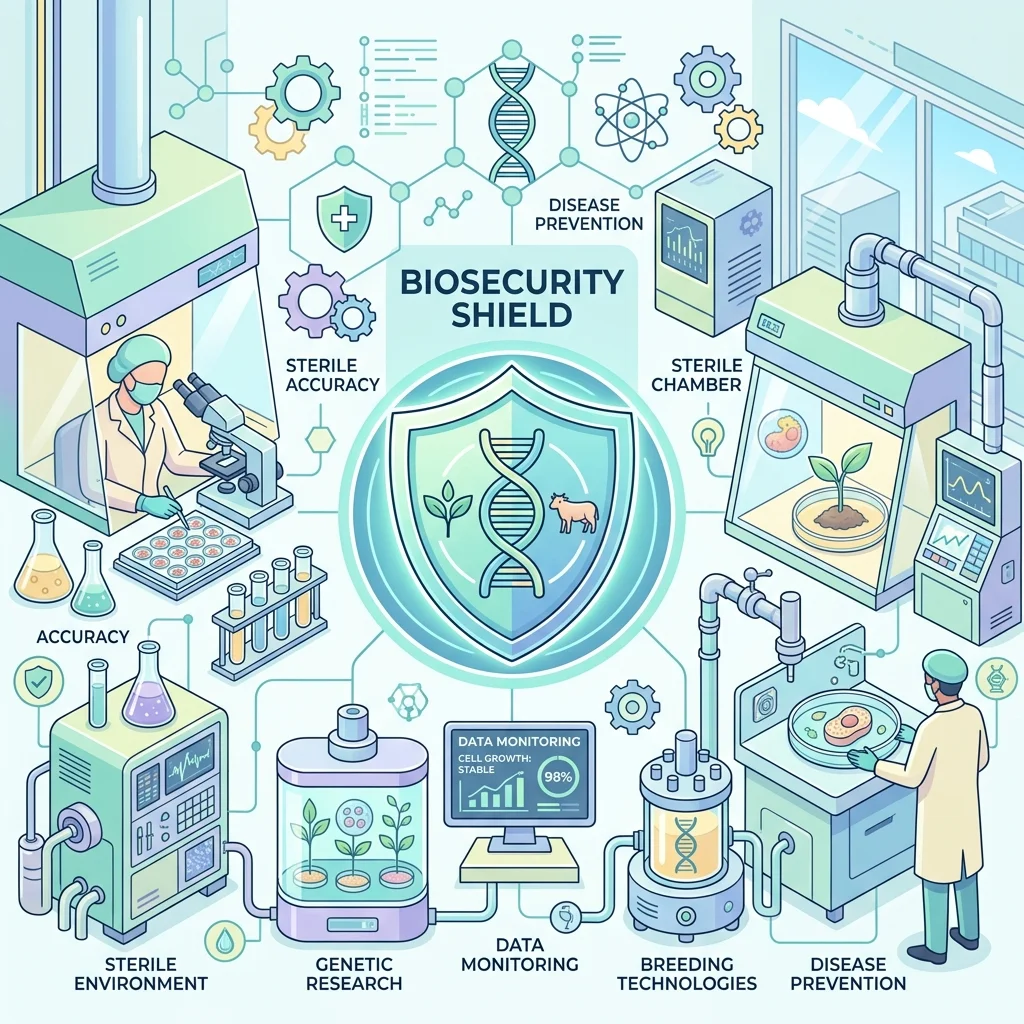
In the zoological community and high-end herpetoculture, biosecurity is non-negotiable. It is the absolute bedrock of animal husbandry. At Loxahatchee Rodents, we bring those same strict, zoo-grade biosecurity protocols to our commercial feeder rodent facility.
This guide is an exhaustive deep dive into what true biosecurity entails, the specific pathogens it prevents, the architectural engineering required to maintain it, and why "backyard breeders" simply cannot guarantee the safety of their feeders.
1. What Exactly is Biosecurity?
Biosecurity refers to the comprehensive set of preventative measures taken to prevent the introduction and spread of harmful organisms (viruses, bacteria, fungi, parasites) into an isolated animal population.
In the context of feeder rodents, it means ensuring the breeding colony is completely isolated from wild pathogens, agricultural contaminants, and cross-contamination from human vectors. It is not just about "keeping things clean." True biosecurity involves environmental engineering, rigid Standard Operating Procedures (SOPs), and an uncompromising closed-colony system.
A breach in biosecurity at a feeder facility is not a minor inconvenience; it is a catastrophic event that can result in:
- Zoonotic Outbreaks: Salmonella and Campylobacter infections affecting both the reptiles and their human keepers.
- Parasitic Infestations: Snake mite (Ophionyssus natricis) transmission if wild rodents or contaminated bedding enter the facility.
- Internal Parasites: Pinworms, tapeworms, and protozoa being passed through the food chain, leading to severe gastrointestinal distress in the reptile.
- Viral Wipeouts: Arenaviruses (which cause Inclusion Body Disease in boas and pythons) and Adenoviruses, which can decimate entire breeding collections.
2. The Pathogen Profiles: What Are We Defending Against?
To understand why biosecurity protocols are so extreme, you must understand the enemies they are designed to keep out.
Salmonella spp.
Salmonella is a ubiquitous bacterium in the agricultural world. While reptiles naturally carry some strains of Salmonella in their gut flora, introducing massive, unnatural loads of pathogenic Salmonella through contaminated prey can overwhelm a snake's immune system, leading to fatal septicemia. In feeder colonies, Salmonella spreads rapidly through fecal-oral transmission, usually introduced via contaminated agricultural grain feed or wild mouse droppings.
Snake Mites (Ophionyssus natricis)
The snake mite is the bane of the reptile keeping world. While they are specific to reptiles, they can use rodents (and humans) as temporary mechanical vectors to travel between enclosures. If a feeder facility has a wild mouse problem, or if staff members visit a reptile expo and then enter the breeding room, mites can easily hitch a ride, lay eggs in the rodent bedding, and eventually end up in the bags of frozen feeders.
Arenaviruses (Inclusion Body Disease)
Arenaviruses are the causative agents of Inclusion Body Disease (IBD), a devastating, incurable, and fatal neurological disease that primarily affects Boa Constrictors and Pythons. While the primary vector for IBD is the snake mite, the virus can also be transmitted through bodily fluids. Ensuring that a feeder facility is 100% mite-free is the only way to guarantee that feeders cannot act as mechanical vectors for this virus.
Nematodes (Roundworms and Pinworms)
Internal parasites drain a reptile's nutrients, leading to weight loss, regurgitation, and failure to thrive. Rodents are common intermediate hosts for many species of tapeworms and nematodes. These are introduced to feeder colonies when breeders use unsterilized topsoil, forage for natural grasses, or fail to filter their water supply.
3. The Pillars of Professional Biosecurity: The Closed Colony
The most fundamental concept in biosecurity is the Closed Colony System.
A closed colony means that no new outside animals are ever introduced to the core breeding population once it is established. The genetic pool is maintained through careful line breeding and rotation, rather than constantly bringing in "new blood" from other breeders or pet stores. Every time an animal crosses the threshold from the outside world into a facility, it brings its entire microbiological history with it.
The Quarantine Protocol
If genetic diversity must be introduced to prevent inbreeding depression, it is never done by placing new animals directly into the breeding room. Instead, a rigorous quarantine protocol is initiated:
- Physical Isolation: New animals are housed in a completely separate building, known as the quarantine facility, with its own dedicated air supply and drainage.
- Dedicated Staff: Staff members who work in quarantine are not allowed to enter the main breeding facility on the same day.
- The 60-Day Hold: The animals are held for a minimum of 60 days. This timeline allows for the incubation period of most common viral and bacterial pathogens to pass.
- Fecal and Blood Testing: During the hold, veterinary staff conduct fecal flotations to check for nematode eggs, PCR testing for specific viral loads, and culture testing for Salmonella and Mycoplasma.
- Prophylactic Treatment: Animals are often treated prophylactically with ivermectin (for external and internal parasites) before being cleared.
Only after passing all tests and completing the 60-day hold are the animals integrated. This is incredibly expensive and time-consuming, which is why backyard breeders skip it entirely.
4. Environmental Isolation: Architectural Engineering
A biosecure facility is not a barn or a garage; it is an engineered fortress physically sealed against the outside world.
HVAC and HEPA Filtration
Airborne pathogens, fungal spores, and dust mites can travel for miles on the wind. To combat this, professional facilities utilize hospital-grade HVAC systems.
- HEPA Class Ratings: All incoming air is pushed through High-Efficiency Particulate Air (HEPA) filters, capable of removing 99.97% of particles that have a size of 0.3 microns. This effectively stops airborne bacteria and fungal spores.
- Positive Pressure Zones: The breeding rooms are engineered to maintain positive air pressure. This means that the air pressure inside the room is slightly higher than the air pressure outside. When a door is opened, the air forcefully rushes out of the room, preventing any contaminated outside air, insects, or dust from flowing in.
Pest Exclusion Strategies
The facility must be completely impenetrable to wild rodents, insects, and birds. Wild house mice (Mus musculus) carry Hantavirus, Leptospirosis, and an array of mites.
- Physical Barriers: Concrete foundations, sealed rooflines, and steel-mesh-backed ventilation ports.
- Perimeter Control: A sterile gravel perimeter (usually 3 to 5 feet wide) surrounds the exterior of the building. Rodents avoid crossing open, coverless ground, which deters them from approaching the walls.
- Interior Trapping: Constant, non-toxic monitoring traps are placed near every entrance to verify that the perimeter remains unbreached.
5. Sterilized Inputs: Food, Water, and Bedding
You cannot have clean animals if the resources you give them are dirty. The inputs entering the facility are the most common vectors for contamination.
Lab-Grade Diet vs. Agricultural Feed
Many cheap feeder breeders use agricultural feed—like pig chow, scratch grains, or cheap dog food. These feeds are stored in massive outdoor silos, often contaminated with bird droppings, rat urine, and grain mites.
Biosecure facilities use specialized, pathogen-free lab-grade diets. These diets are formulated specifically for laboratory rodents used in medical research. They are extruded at high temperatures (which sterilizes the food) and shipped in sealed, heavy-duty bags to ensure they arrive pathogen-free.
Water Filtration and Treatment
Municipal water can carry trace amounts of bacteria, and well water can be contaminated with agricultural runoff.
- Reverse Osmosis (RO): Water is pushed through semi-permeable membranes to remove heavy metals and chemical impurities.
- Ultraviolet (UV) Sterilization: Before reaching the automated watering valves, the water passes through high-intensity UV light chambers, which destroy the DNA of any remaining bacteria or viruses, ensuring the water is sterile.
Bedding Sterilization
Bedding (like pine shavings or aspen) is harvested from trees, processed in dusty mills, and often transported in open trucks. It is a massive vector for fungal spores (like Aspergillus, which causes fatal respiratory infections in reptiles) and wood mites. In a biosecure facility, bedding must be either heat-treated (baked) or chemically sterilized before it is allowed into the breeding rooms.
6. Staff Decontamination and SOPs
Humans are the single most dangerous vector for disease. A staff member who owns a pet snake, visited a reptile expo, or walked through a pet store can easily carry mites, Adenovirus, or Salmonella on their clothing or shoes.
In a biosecure facility, staff members do not simply walk in off the street and start handling animals. The Standard Operating Procedures (SOPs) are rigid:
The Decontamination Sequence
- The Anteroom: Staff enter an isolated anteroom. They remove their "street" shoes and outerwear.
- Sanitization: Strict hand-washing protocols are followed using veterinary-grade antimicrobial soaps.
- Dedicated Uniforms: Staff change into dedicated facility scrubs or coveralls that never leave the building. They put on dedicated facility boots.
- Footbaths: Every doorway between different zones of the facility features a recessed footbath containing a powerful, broad-spectrum veterinary disinfectant (such as Rescue® or F10SC). Staff must step in the footbath to kill any pathogens on the soles of their boots before crossing the threshold.
- Gloving and Masking: Depending on the specific zone, staff may be required to wear nitrile gloves and surgical masks to prevent the transfer of human respiratory pathogens to the rodents (and vice versa).
Workflow Directionality
Work always flows from the cleanest areas to the dirtiest areas, never the reverse. Staff begin their day in the breeding rooms (the most sterile environment) and end their day in the processing, cleaning, or waste-removal areas. Once a staff member enters the cleaning area, they cannot return to the breeding rooms without undergoing full decontamination again.
7. The Role of Freezing in Biosecurity
There is a dangerous myth in the reptile community that freezing a rodent "cleans" it, and therefore, biosecurity at the breeder level doesn't matter. This is fundamentally false.
While freezing rodents does kill many common parasites (like adult mites and most nematode eggs), freezing does not sterilize a dirty animal.
What Freezing Does NOT Kill
- Bacterial Spores: Many bacteria (like certain strains of Clostridium) form highly resistant spores that survive deep freezing indefinitely. When thawed, they reactivate.
- Viruses: Freezing is actually how laboratories preserve viruses for long-term storage. Freezing an Arenavirus-infected rodent simply preserves the virus until it thaws inside your snake's stomach.
- Toxins: If a rodent was living in filthy conditions and died of a bacterial infection (sepsis) before being frozen, the bacteria produced toxins. Freezing the rodent stops the bacteria from multiplying, but it does absolutely nothing to remove the toxic load already present in the tissue. Feeding this toxic rodent to your snake will cause severe gastrointestinal distress and regurgitation.
This is why proper freezing protocols and cold-chain integrity must be combined with a biosecure breeding environment; one cannot compensate for the lack of the other.
8. How to Verify Your Supplier's Biosecurity
When evaluating a feeder rodent supplier, look for transparency regarding their facility. Reputable breeders will openly discuss their diet, housing, and disease-prevention protocols.
The Warning Signs of Poor Biosecurity
When you receive a shipment of frozen rodents, you can often visually diagnose a lack of biosecurity at the facility of origin:
- Feces frozen to the fur: This indicates extreme overcrowding and infrequent cage cleaning. The animals were living in their own waste.
- Urine staining (yellow bellies): Indicates the animals were forced to lay in ammonia-rich, soaked bedding, causing skin burns and respiratory distress prior to death.
- Varying sizes in the same bag: Indicates a lack of standardization and chaotic colony management.
- A strong, foul odor upon thawing: Indicates the animal was either sick before death, or that bacteria began breaking down the tissues before the freezing process was complete.
If a supplier's feeders frequently arrive with these warning signs, it is a clear indicator that their biosecurity, husbandry, and processing standards are inadequate.
9. Case Studies: The Cost of Ignoring Biosecurity
To truly understand the importance of these measures, we must look at what happens when they fail.
Case Study 1: The Mite Explosion
A mid-sized Ball Python breeder purchased 500 live "weanling" rats from a local agricultural feed store to save money. The feed store stored their grain outside, attracting wild field mice. The wild mice carried the snake mite, Ophionyssus natricis, which transferred to the rats. Within two weeks of feeding the rats to his collection, the breeder's entire facility (over 200 snakes) was infested with mites. The cost of veterinary treatments (Provent-a-Mite, ivermectin), lost breeding seasons, and the stress on the animals far exceeded the money saved on cheap feeders.
Case Study 2: The Salmonella Outbreak
A hobbyist purchased frozen mice from an unregulated "garage breeder" who used unsterilized pine shavings and cheap pig feed. The mice were heavily colonized with a virulent strain of Salmonella enterica. While the hobbyist's adult snakes handled the bacterial load, three juvenile Corn Snakes developed severe enteritis, experienced chronic regurgitation, and ultimately died of septicemia.
These scenarios are entirely preventable through the strict application of the biosecurity principles outlined in this guide.
10. Frequently Asked Questions
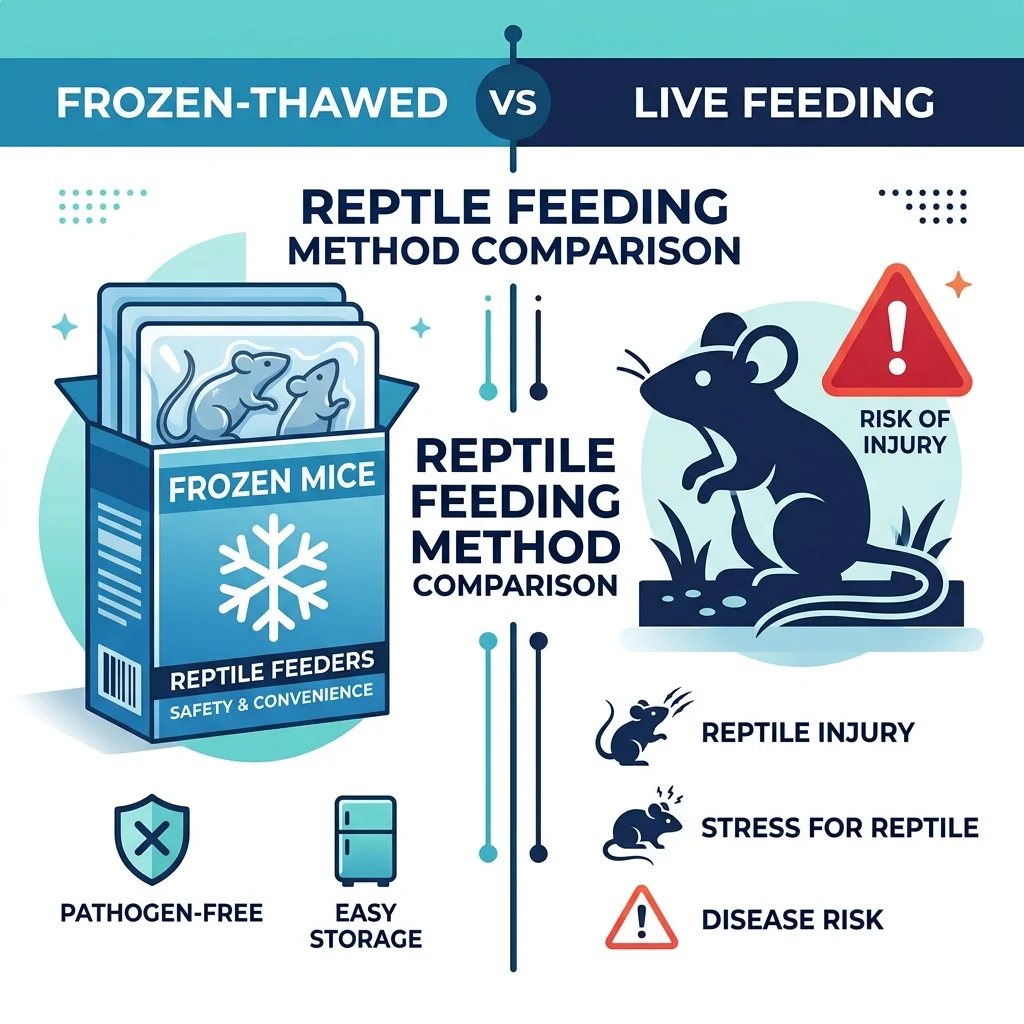
Q: Are live feeders or frozen-thawed feeders safer from a biosecurity standpoint? A: Frozen-thawed feeders are exponentially safer. While freezing doesn't kill everything, it does kill all external parasites (mites, fleas, ticks) and many internal parasite eggs. Live feeders, especially from pet stores where multiple species are mixed, are extremely high-risk vectors for disease and parasites. See our full guide on frozen-thawed vs. live feeding.
Q: Can I wash a dirty frozen rodent before feeding it? A: You can gently rinse a rodent with warm water during the thawing process to remove surface debris, but you cannot wash away the internal bacterial load of an animal raised in filthy conditions. If the rodent is covered in feces, it is safer to discard it and find a new supplier.
Q: Why don't you sell live feeders to the public? A: To protect our closed colony. If we allowed customers to walk into our facility to purchase live rodents, they would bring pathogens from their own reptile collections into our breeding environment. Selling exclusively frozen, shipped directly to the consumer, is a core component of our biosecurity model.
Q: How often do you clean the rodent cages? A: In a professional facility, cage cleaning is continuous. Enclosures are broken down, the bedding is discarded, and the physical tubs and water bottles are run through high-temperature industrial sanitizers (reaching 180°F+) at least once a week, depending on the colony density and breeding stage.
11. The Economics of Biosecurity: Why Cheap Feeders Are Dangerous
One of the most common complaints among novice reptile keepers is the high cost of frozen rodents from premium suppliers compared to local pet stores, agricultural feed stores, or amateur breeders on social media. Understanding the economics of biosecurity explains exactly where that money goes, and why "cheap" feeders are a massive financial risk.
The True Cost of Production
A premium feeder facility operates with overhead costs closer to a veterinary clinic or a laboratory than a traditional farm.
- The HVAC Cost: Maintaining positive pressure, temperature control, and HEPA filtration 24/7 across thousands of square feet is exorbitantly expensive in electrical and maintenance costs.
- The Diet Cost: Lab-grade, pathogen-free rodent diets cost significantly more per pound than agricultural pig feed or scratch grain.
- The Labor Cost: Enforcing strict Standard Operating Procedures (SOPs) means staff spend a significant portion of their day simply decontaminating themselves, cleaning, and sanitizing equipment.
A backyard breeder operating out of a garage avoids all of these costs. They use ambient air, cheap grain, and spend minimal time cleaning. They pass these "savings" on to the consumer.
The Financial Risk to the Keeper
Purchasing cheap feeders is a false economy. The money you save on a bulk order of un-biosecure rats will evaporate instantly the moment a pathogen is introduced to your collection.
Consider the cost of a single respiratory infection or a mite outbreak:
- Veterinary Diagnostics: Fecal floats, blood panels, and PCR testing to identify the pathogen can cost hundreds of dollars per snake.
- Medication: Courses of injectable antibiotics (like Ceftazidime or Amikacin) or anti-parasitics (like Ivermectin) are expensive.
- Loss of Animals: If you keep valuable morphs, rare species, or sentimental pets, the loss of a single animal due to a preventable foodborne illness is devastating.
- Facility Sterilization: If an outbreak occurs (such as Salmonella or Adenovirus), you must sterilize your entire collection, replace all substrate, and potentially discard expensive porous cage furniture.
When viewed through this lens, paying a premium for lab-quality, biosecure feeders is not an expense; it is a highly cost-effective insurance policy for your collection.
12. Future Trends in Feeder Biosecurity
As herpetoculture advances, the standards for feeder production are also evolving.
PCR Testing at the Source
Forward-thinking facilities are beginning to implement routine Polymerase Chain Reaction (PCR) testing on their breeding colonies. Rather than waiting for animals to show symptoms of illness, environmental swabs from the breeding tubs are tested for the DNA of specific pathogens (like Arenavirus or Mycoplasma). This allows facilities to detect and eliminate microscopic threats before they ever enter the food chain.
Automated Sanitization
To reduce the risk of human error (the biggest variable in any biosecurity protocol), commercial facilities are moving toward automated, high-temperature cage washing systems. These industrial machines use steam and chemical sanitizers to completely obliterate any biofilm, bacterial spores, or parasite eggs on the breeding tubs, ensuring a sterile environment for the next generation of feeders.
Conclusion
The health of your reptile is intrinsically linked to the health of the animals it eats. A snake's immune system is incredibly resilient, but it evolved to handle the natural pathogen loads of the wild, not the hyper-concentrated, unnatural bacterial nightmares produced by filthy, unregulated breeding operations.
By understanding the science and engineering behind true biosecurity, and demanding high standards from your feeder supplier, you protect your collection from devastating illnesses. You ensure your animals receive the cleanest, safest, and most nutritious food possible, setting the foundation for decades of health and vitality.