Key Takeaway
A comprehensive scientific exploration of the reptile gut microbiome. Learn how trillions of beneficial bacteria aid in snake digestion, synthesize vitamins, regulate the immune system, and how antibiotics can destroy this fragile ecosystem.
Table of Contents
- 1. What Exactly Does the Microbiome Do?
- Complex Digestion and Fermentation
- Essential Vitamin Synthesis
- The Ultimate Immune Barrier (Competitive Exclusion)
- 2. Microbial Taxonomy: Who Lives in the Gut?
- 3. The Feast and Famine Cycle: How the Microbiome Adapts
- The Fasting Phase
- The Digestion Boom
- 4. Wild vs. Captive Microbiomes
- 5. The Antibiotic Crisis: Destroying the Ecosystem
- Post-Antibiotic Anorexia
- 6. Probiotics for Reptiles: Do They Work?
- 7. The Gut-Brain Axis: Stress and Digestion
- How Stress Destroys the Gut
- 8. Threats to the Microbiome from Feeder Quality
- The Danger of Spoiled Prey
- 9. Frequently Asked Questions
- 10. The Deep Science: Specific Bacterial Families
- The Bacteroides Genus
- The Clostridium Genus (The Good and the Bad)
- The Lactobacillus Genus
- 11. The Impact of Parasites on the Microbiome
- The Mechanism of Disruption
- The Treatment Dilemma
- 12. Emerging Research: The Microbiome and Snake Behavior
- Conclusion

When your snake strikes, constricts, and swallows a meal, it isn't digesting that prey item alone. Inside the gastrointestinal tract of every healthy reptile exists a vast, complex, and incredibly active ecosystem containing trillions of microscopic organisms—bacteria, fungi, archaea, and protozoa. This hidden universe is collectively known as the gut microbiome.
For decades, the veterinary focus on reptile guts was exclusively adversarial: searching for parasitic nematodes, flagellates, and pathogenic bacteria to eradicate. However, modern herpetological science is undergoing a paradigm shift. We now understand that the vast majority of microbes in a snake's gut are not enemies; they are indispensable allies.
At Loxahatchee Rodents, we closely monitor advancements in microbiome research to ensure our feeding protocols and feeder biosecurity standards support, rather than hinder, this delicate internal ecosystem. This exhaustive guide explores the cutting-edge science of the reptile microbiome, its critical functions, and how you, as a keeper, can protect it.
1. What Exactly Does the Microbiome Do?
The microbiome is not a passive passenger "along for the ride"; it functions as a highly active, fully integrated organ system. Its responsibilities are so vast that a snake stripped of its microbiome (for instance, by heavy antibiotic use) will rapidly deteriorate and starve, even if surrounded by food.
Complex Digestion and Fermentation
While the snake's powerful stomach acid and pancreatic enzymes handle the primary breakdown of soft tissues, the microbiome in the hindgut (the large intestine and cloaca) tackles the most resilient molecules. Certain bacterial phyla are responsible for fermenting complex carbohydrates and tough structural proteins that the snake's own enzymes cannot cleave. Through fermentation, these bacteria break down these remaining tissues and excrete Short-Chain Fatty Acids (SCFAs). The snake then absorbs these SCFAs across the intestinal wall, extracting the absolute maximum amount of caloric energy from the prey item. Without this microbial fermentation, a significant portion of the prey's nutritional value would simply be excreted as waste.
Essential Vitamin Synthesis
The microbiome is a microscopic biochemical factory. It is responsible for synthesizing essential nutrients that the snake's body cannot produce on its own.
- Vitamin K: Crucial for blood clotting and bone metabolism.
- B-Complex Vitamins: Essential for cellular energy production and nervous system health. Even if you feed a high-quality whole prey diet, a compromised microbiome can lead to severe vitamin deficiencies because the snake loses the ability to synthesize these specific compounds.
The Ultimate Immune Barrier (Competitive Exclusion)
The gastrointestinal tract is the largest immune organ in a reptile's body. The beneficial bacteria form a dense, physical barrier along the mucosal lining of the intestinal wall. When a harmful pathogen (like an invasive strain of Salmonella or pathogenic E. coli) enters the gut, it cannot find a place to attach to the intestinal wall because the beneficial bacteria are already occupying all the real estate. Furthermore, the beneficial bacteria consume all the available nutrients, starving out the invaders. This concept is known as competitive exclusion. The microbiome is the snake's first and strongest line of defense against foodborne illness.
2. Microbial Taxonomy: Who Lives in the Gut?
The composition of the reptile microbiome is vastly different from that of mammals. While mammalian guts are heavily dominated by the phylum Bacteroidetes, reptile guts show a different evolutionary adaptation.
Research into snake microbiomes (particularly pythons and rattlesnakes) consistently shows dominance by three main bacterial phyla:
- Firmicutes: Often the most dominant phylum. These bacteria are the primary engines of fermentation, breaking down complex molecules into usable Short-Chain Fatty Acids.
- Proteobacteria: While this phylum contains some famous pathogens (like Salmonella and E. coli), the vast majority of Proteobacteria in a healthy snake's gut are commensal (harmless) or beneficial, playing roles in nutrient cycling.
- Bacteroidetes: Present, but usually in lower numbers than in mammals. They are highly efficient at degrading tough structural proteins.
The specific ratio of these phyla fluctuates wildly based on the snake's species, its diet, its environment, and whether it is currently fasting or digesting.
3. The Feast and Famine Cycle: How the Microbiome Adapts
Unlike humans, who eat multiple times a day and maintain a relatively stable gut environment, snakes experience extreme physiological shifts between meals. Their microbiome has evolved to survive this extreme "feast or famine" lifestyle.
The Fasting Phase
During the fasting period between meals, the snake's digestive tract shrinks to conserve energy. The lack of incoming nutrients creates a harsh environment. The total microbial population drops significantly. However, a core population of bacteria survives by feeding on the mucin (the mucus lining) secreted by the snake's own intestinal walls.
The Digestion Boom
The moment a snake ingests a meal, the gut undergoes rapid hypertrophy (expansion). As the liquefied, nutrient-rich chyme hits the intestines, the microbiome experiences a massive population boom. The bacteria multiply exponentially, sometimes increasing in sheer numbers by thousands of percent within 48 hours, to handle the incoming flood of nutrients.
Once digestion is complete and the waste is excreted, the massive microbial population dies back down to its dormant, fasting state. This incredible elasticity is unique to reptiles and amphibians.
4. Wild vs. Captive Microbiomes
Recent scientific studies comparing the microbiomes of wild snakes to those of captive-bred snakes of the same species have revealed startling differences.
Captive snakes generally exhibit a significantly lower microbial diversity than their wild counterparts.
- The Diet Factor: Wild snakes consume a massive variety of prey (birds, amphibians, wild rodents, lizards), each carrying its own unique microbiome. Captive snakes are usually fed a monotonous diet of domestic mice or rats.
- The Environment Factor: Wild snakes interact with soil, natural water sources, and complex environments, all of which introduce environmental microbes. Captive snakes live in highly sanitized, artificial environments.
While lower diversity isn't inherently fatal, it does make the captive snake's microbiome more fragile and less resilient to sudden shocks (like stress or antibiotics). This is why providing the highest quality, most nutritionally complete feeder rodents is so vital—it is the only microbial input the snake receives.
5. The Antibiotic Crisis: Destroying the Ecosystem
There are times when a reptile veterinarian must prescribe broad-spectrum antibiotics to save a snake from a severe respiratory infection, sepsis, or scale rot. However, the use of antibiotics comes at a terrible cost to the gut.
Broad-spectrum antibiotics are like a nuclear bomb dropped on a rainforest. They do not distinguish between the pathogenic bacteria causing the respiratory infection and the beneficial Firmicutes fermenting food in the gut. They kill everything.
Post-Antibiotic Anorexia
This is why snakes so frequently refuse to eat (anorexia) during and after a course of antibiotics.
- Their gut has been essentially sterilized.
- Without the microbiome, they cannot properly digest food.
- The lack of bacteria compromises the intestinal lining, making digestion painful.
- The sudden absence of beneficial bacteria leaves the gut wide open for aggressive, opportunistic pathogens (like pathogenic yeast/Candida) to colonize the empty space, causing severe enteritis.
Recovering a snake from a heavy course of antibiotics requires meticulous care, perfect enclosure temperatures, and immense patience as the gut slowly recolonizes itself over months.
6. Probiotics for Reptiles: Do They Work?
Given the fragility of the captive microbiome and the devastation of antibiotics, keepers naturally ask: "Can I just give my snake probiotics?"
The answer is highly complex and mostly negative.
The Mammalian Probiotic Fallacy: Many keepers attempt to feed their snakes mammalian probiotics, such as yogurt, Bene-Bac (designed for birds and mammals), or human acidophilus supplements. These are completely useless for reptiles. The bacteria in yogurt (like Lactobacillus) are evolved to live in the 98.6°F, milk-rich gut of a mammal. When introduced into the 88°F, meat-rich gut of a snake, they immediately die. They cannot colonize the reptile gut.
Reptile-Specific Probiotics: Currently, there are virtually no scientifically proven, commercially available probiotics formulated specifically with the Firmicutes and Proteobacteria native to a snake's gut.
The Best Way to Restore a Microbiome: The only proven way a snake can rebuild its microbiome is through environmental exposure and diet.
- Feeding very small, easily digestible meals (like pinky mice) allows the remaining surviving bacteria to slowly multiply without overwhelming the system.
- Some advanced veterinary practices use "fecal transplants" (introducing the feces of a healthy snake into the gut of a sick snake via a gastric tube), but this carries massive risks of transferring parasites and should never be attempted at home.
7. The Gut-Brain Axis: Stress and Digestion
The connection between the gut and the brain is one of the most exciting areas of biological research. The microbiome constantly communicates with the central nervous system via the vagus nerve.
How Stress Destroys the Gut
When a snake experiences chronic stress (from lacking hiding spots, improper temperatures, excessive handling, or a too-large enclosure), its brain releases the stress hormone corticosterone (the reptile equivalent of cortisol).
High levels of corticosterone actively alter the environment of the gut. It reduces the thickness of the protective mucosal lining and changes the pH of the intestines. This hostile environment kills off beneficial bacteria and allows stress-tolerant pathogenic bacteria to thrive.
This is why a highly stressed snake will often develop diarrhea, regurgitate its food, or refuse to eat entirely. You cannot fix a stress-induced digestive issue by changing the food; you must fix the husbandry and enclosure setup to lower the corticosterone levels and allow the microbiome to recover.
8. Threats to the Microbiome from Feeder Quality
The most direct interaction a keeper has with their snake's microbiome is through the prey they provide. The prey item introduces its own massive microbial load into the snake's digestive tract.
The Danger of Spoiled Prey
If you feed a snake a frozen rodent that lacked cold-chain integrity and began to spoil before freezing, you are introducing a massive, hyper-concentrated load of putrefying bacteria (like Clostridium) directly into the snake's gut.
While the snake's stomach acid is potent, a massive bacterial payload can survive the acid bath, enter the intestines, and completely overrun the snake's native beneficial bacteria. This leads to explosive enteritis, severe dehydration, and life-threatening regurgitation.
This is why visual inspection and proper thawing techniques are critical. If a rodent smells sour, feels mushy, or looks freezer-burned, throwing it away is infinitely cheaper than paying veterinary bills to treat a crashed microbiome.
9. Frequently Asked Questions
Q: Can I use a bioactive enclosure to improve my snake's microbiome? A: Yes. Bioactive enclosures (which use live soil, isopods, and springtails) expose the snake to a wider variety of natural environmental microbes than sterile paper towels. This environmental exposure can help marginally increase the diversity of the snake's skin and gut microbiomes, mimicking wild conditions.
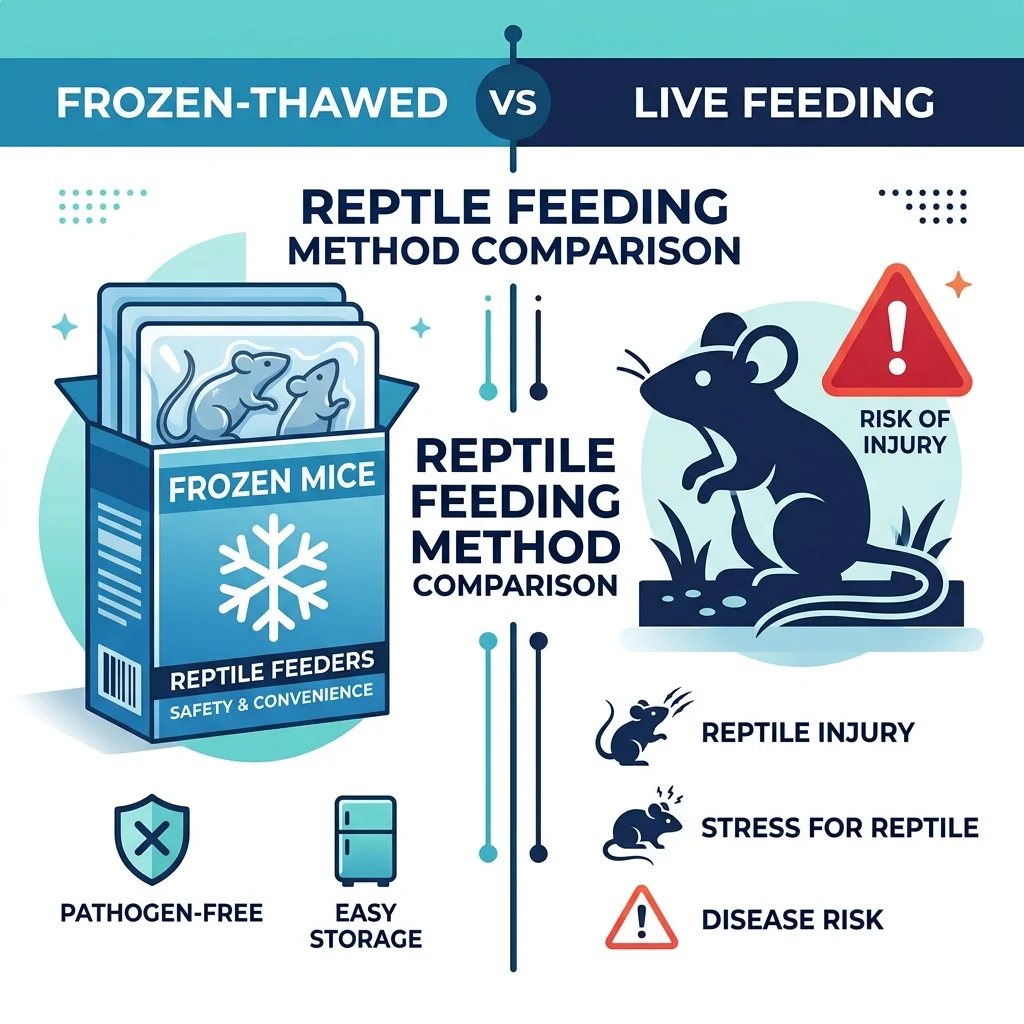
Q: Does feeding live prey provide a better microbiome than frozen-thawed? A: No. While a live rodent has an active microbiome, the risks of live feeding (bites, scratches, parasite transmission) vastly outweigh any theoretical microbial benefit. Frozen-thawed rodents retain the necessary nutrients and physical structures required for the snake's native microbiome to ferment and digest.
Q: Why does my snake's poop smell worse after feeding rats compared to mice? A: Rats have a different nutritional profile than mice, generally being higher in protein and fat. This different nutritional input slightly alters which bacterial populations boom during digestion. The different fermentation byproducts result in a different, often stronger, odor. This is normal and not a sign of a microbiome issue.
Q: Can the snake's microbiome digest the fur and claws of the prey? A: No. Keratin (the protein that makes up fur, claws, and feathers) is incredibly resilient. Neither the snake's stomach acid nor the bacteria in the hindgut possess the specific keratinase enzymes required to break it down. The fur and claws pass through the entire digestive tract completely intact and are excreted in the feces. This acts as a form of "roughage," helping to bind the feces and clean the intestinal walls as it passes.
Q: If my snake regurgitates its meal, is the microbiome destroyed? A: It is severely damaged, but not completely destroyed. Regurgitation forces highly acidic stomach contents backwards through the esophagus, causing chemical burns. It also forcefully ejects a massive portion of the gut bacteria along with the rotting food. This is why a snake must be given 2 to 3 weeks of absolute rest with no food after a regurgitation event—this time is required for the esophagus to heal and for the core surviving bacteria in the gut to slowly repopulate before they can handle another meal.
Q: Does feeding frequency affect microbiome diversity? A: Yes. Snakes fed on highly erratic schedules (e.g., fasting for 4 months, then eating heavily for 1 month) experience more extreme boom-and-bust cycles in their gut flora. While natural, in captivity, a consistent, appropriate feeding schedule helps maintain a more stable, robust, and resilient baseline microbial population, reducing the risk of sudden digestive upset.
Q: Can water quality affect the gut microbiome? A: Absolutely. Providing water treated with heavy amounts of chlorine or chloramines (found in many municipal tap water systems) can theoretically negatively impact the sensitive bacteria in the gut. While snakes are hardy, using filtered or properly dechlorinated water ensures that you are not inadvertently introducing antibacterial chemicals into their delicate internal ecosystem.
10. The Deep Science: Specific Bacterial Families
To truly understand the microbiome, we must look closer at the specific bacterial families that dominate a healthy snake's gut and the exact biochemical roles they play.
The Bacteroides Genus
While less dominant than Firmicutes, bacteria in the genus Bacteroides are the heavy lifters of the reptile gut. They possess massive arsenals of enzymes specifically designed to cleave the complex bonds in structural proteins (like collagen in tendons) and complex polysaccharides (carbohydrates).
- The Benefit: They ensure that the snake can extract calories from the toughest parts of the prey, rather than just the soft muscle tissue.
- The Vulnerability: Bacteroides are highly sensitive to sudden changes in diet. If a snake is suddenly switched from a lean prey item to a highly fatty prey item, the Bacteroides population can crash, leading to temporary digestive upset.
The Clostridium Genus (The Good and the Bad)
When most keepers hear Clostridium, they panic, associating it with botulism or tetanus. However, many species within this genus are entirely natural, commensal residents of the reptile hindgut.
- The Benefit: Commensal Clostridia are massive producers of Short-Chain Fatty Acids (SCFAs), specifically butyrate, which is the primary energy source for the cells lining the snake's own colon.
- The Danger: If the gut environment changes—specifically, if the snake cannot achieve its proper basking temperature—the digestion process stalls. The undigested meat rots, creating an incredibly rich environment where pathogenic strains of Clostridium (like C. perfringens) rapidly outcompete the beneficial strains, leading to gas bloat, enteritis, and fatal toxemia.
The Lactobacillus Genus
While commonly associated with mammalian guts (and yogurt), certain specialized strains of Lactobacillus are found in healthy reptiles.
- The Benefit: They produce lactic acid, which slightly lowers the pH of the hindgut. This mildly acidic environment is highly hostile to many invasive pathogenic bacteria, acting as a chemical shield for the snake.
11. The Impact of Parasites on the Microbiome
Internal parasites (like pinworms, flagellates, and coccidia) do not simply steal nutrients; they actively wage war on the snake's microbiome.
The Mechanism of Disruption
Parasites attach to the intestinal wall, causing physical damage and inflammation (enteritis). This inflammation causes the snake's body to secrete excess mucus and white blood cells into the gut lumen. This alters the physical environment of the gut, making it highly inhospitable for beneficial Firmicutes and Bacteroidetes. As the beneficial bacteria die off, the parasites multiply faster, completely taking over the ecosystem.
The Treatment Dilemma
When a vet prescribes an anti-parasitic medication (like Panacur/Fenbendazole or Flagyl/Metronidazole), it effectively kills the parasites. However, Metronidazole also possesses strong antibacterial properties, meaning it severely damages the beneficial microbiome in the process. This is why snakes treated for parasites often experience diarrhea and anorexia for weeks after the parasites are gone—their gut ecosystem has been devastated by both the disease and the cure.
12. Emerging Research: The Microbiome and Snake Behavior
One of the most fascinating frontiers in herpetological science is the concept of the Gut-Brain Axis in reptiles. In mammals, we know that the microbiome produces neurotransmitters (like serotonin and dopamine) that directly affect mood, anxiety, and behavior.
Recent studies suggest a similar mechanism in snakes.
- Aggression and Stress: Snakes with severely depleted microbiomes (post-antibiotic or due to chronic stress) often exhibit heightened defensive behaviors, increased striking, and extreme reclusiveness.
- Appetite Regulation: The microbiome produces signaling molecules that tell the snake's brain when it is hungry and when it is full. A disrupted microbiome can misfire these signals, contributing to the stubborn feeding refusals often seen in captive Ball Pythons.
While research is in its infancy, it points to a profound conclusion: a calm, confident, and aggressive-feeding snake is not just a product of good handling; it is the product of a thriving, balanced gut ecosystem.
Conclusion
The reptile gut microbiome is a fragile, fascinating, and utterly essential ecosystem that dictates the overall health, digestion, and vitality of your snake. It is the unseen engine that makes whole-prey digestion possible.
By understanding its critical role, keepers can make far better decisions regarding temperature management, stress reduction, the careful use of antibiotics, and, most importantly, the quality of the frozen-thawed rodents they provide. When you feed your snake, you are literally feeding trillions of vital, living microbes. Treat them well, and they will keep your beloved snake thriving for many decades to come.