Key Takeaway
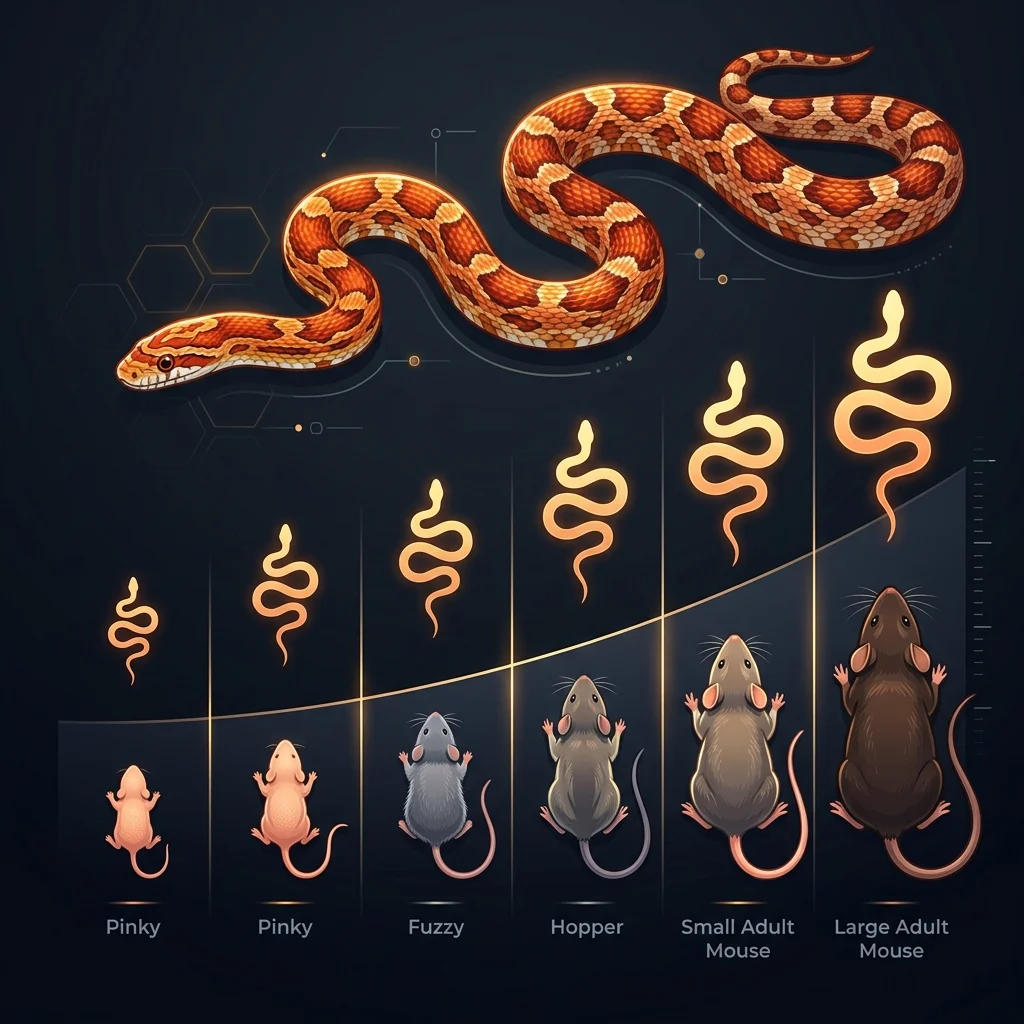
The definitive frozen mice size chart for reptile keepers. Covers every size from pinky to jumbo with exact weights in grams, age equivalents, and species-specific feeding recommendations.
Table of Contents
- 1. Why Mouse Size Matters More Than You Think
- 2. The Complete Frozen Mouse Size Chart
- 3. Which Mouse Size Is Right for My Snake?
- Corn Snakes (Pantherophis guttatus)
- Hognose Snakes (Heterodon nasicus)
- Ball Pythons (Python regius)
- King Snakes (Lampropeltis spp.)
- Milk Snakes (Lampropeltis triangulum spp.)
- 4. Understanding Physical Characteristics of Each Size
- Pinky Mice (2–4g)
- Fuzzy Mice (5–9g)
- Hopper Mice (10–18g)
- Adult Mice — Small, Medium, and Large (19–75g)
- Jumbo Mice (76–100g+)
- 5. Mouse vs. Rat: When Should You Switch?
- 6. How to Thaw Frozen Mice Correctly
- 7. Identifying Quality Frozen Mice Before Feeding
- 8. Buying Frozen Mice in Bulk: What to Look For
- Storage After Delivery
- 9. Frequently Asked Questions
- 10. How Mouse Size Relates to Feeding Frequency
- 11. Building and Managing a Frozen Mouse Inventory
- The Inventory Calculation
- Freezer Requirements for Frozen Mouse Storage
- 12. Common Frozen Mouse Myths Debunked
- Conclusion
If you've ever stood in front of a reptile supplier's website staring at options like "Fuzzy," "Hopper," "Weaned," and "Adult Medium" and wondered exactly what those terms mean — you are not alone. Frozen feeder mouse terminology is notoriously inconsistent across suppliers, and the stakes are high: feed the wrong size mouse to your snake and you risk everything from refusal and wasted prey to regurgitation or, in the case of prey that's too large, genuine digestive injury.
At Loxahatchee Rodents, we have been producing and classifying feeder mice since 2001 using a standardized weight-based system developed from our 25+ years of experience in zoological care and reptile nutrition. This guide gives you the complete, definitive breakdown of every frozen mouse size — with exact gram weights, age equivalents, physical characteristics, and specific recommendations for which snake species benefit from each size.
Whether you keep corn snakes, ball pythons, hognose snakes, or a mixed collection of colubrids and pythons, this chart is your permanent reference.
1. Why Mouse Size Matters More Than You Think
The most common mistake new reptile keepers make is guessing prey size by eye. A mouse that looks "about right" might be 20% too large or 40% too small for your snake's current body weight. The consequences of consistent mismatch accumulate over time:
Prey too large (most dangerous): The snake's digestive system is stressed, increasing the risk of regurgitation. Repeated regurgitation from oversized prey can cause serious esophageal and gastric damage. Snakes that struggle to swallow oversized prey may also experience increased stress and feeding refusal at subsequent sessions.
Prey too small (less dangerous but impactful): Under-nutrition in juveniles leads to stunted growth, delayed sexual maturity, and compromised immune function. Adults fed prey that is consistently too small can develop calcium deficiencies over time, since a larger proportion of a small mouse is metabolically "expensive" to process relative to its caloric return.
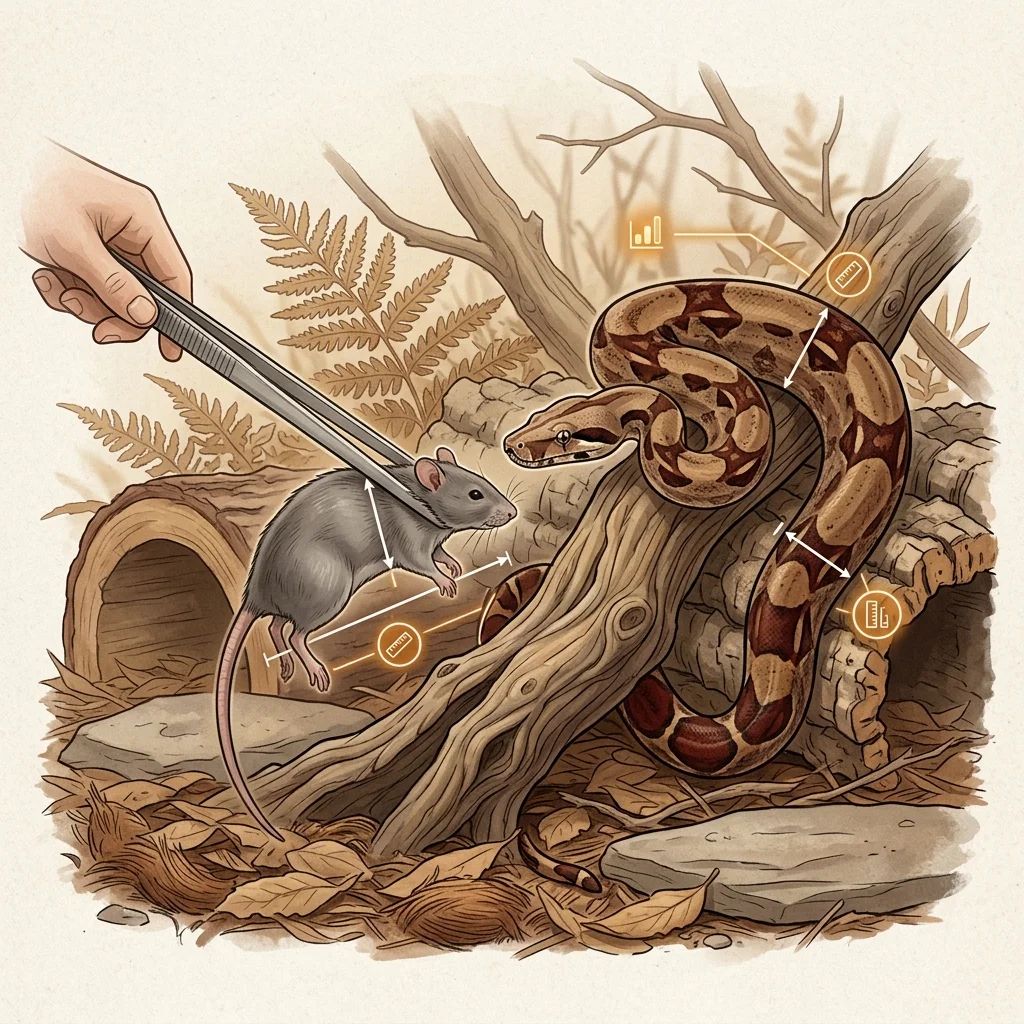
The correct rule: Prey should be approximately equal to the diameter of the widest part of the snake's body, with a maximum of 1.5x that diameter. When in doubt, choose smaller rather than larger. This principle is consistent across all snake species and all life stages.
For a weight-based approach (which is more precise), aim for prey that equals 10–15% of the snake's body weight for juveniles and 5–10% for adults.
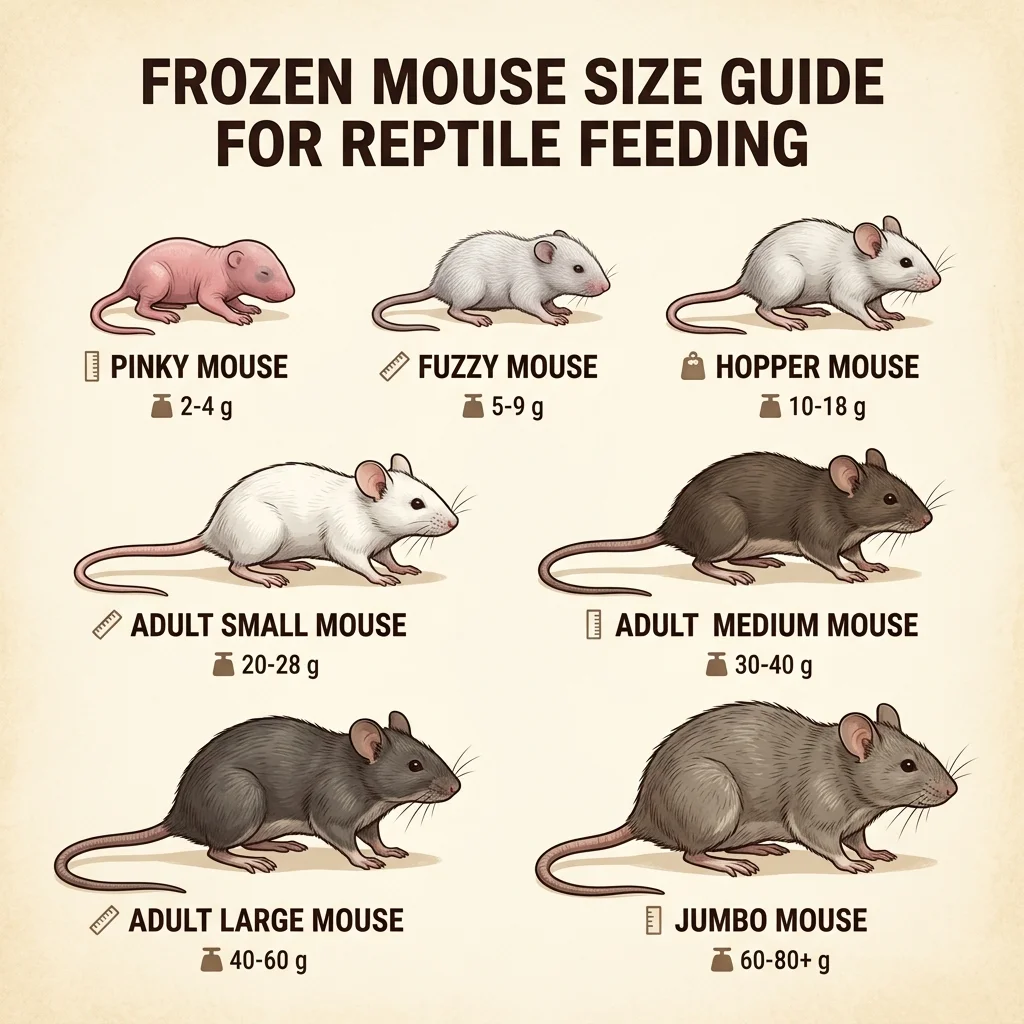
2. The Complete Frozen Mouse Size Chart
Note: All weights represent industry-standard averages. Individual animals may vary by ±10–15% depending on the breeding colony's genetics and husbandry. Loxahatchee Rodents sizes are based on live weight at time of euthanasia.
| Mouse Classification | Weight Range | Age at Euthanasia | Physical Description |
|---|---|---|---|
| Pinky | 2–4g | 1–3 days | Hairless, pink skin, eyes sealed, approx. 1.5–2 inches |
| Fuzzy | 5–9g | 4–10 days | Just developing fur, eyes sealed, approx. 2–2.5 inches |
| Hopper | 10–18g | 11–20 days | Fully furred, eyes recently opened, very active stage, approx. 2.5–3 inches |
| Weaned / Small Adult | 19–28g | 3–4 weeks | Fully furred adult appearance, small frame, approx. 3–3.5 inches |
| Adult Small (S) | 29–39g | 4–6 weeks | Standard adult mouse, small-medium frame |
| Adult Medium (M) | 40–54g | 6–8 weeks | Full adult house mouse body weight |
| Adult Large (L) | 55–75g | 8–12 weeks | Large adult, may be from larger breeding line |
| Jumbo | 76–100g+ | 12+ weeks | Retired breeder or oversized genetics |
Pro Tip: Always weigh your feeder mice before use if precision matters. A digital kitchen scale accurate to 1 gram costs under $15 and is one of the most valuable tools in any serious reptile keeper's toolkit.
3. Which Mouse Size Is Right for My Snake?
Corn Snakes (Pantherophis guttatus)
Corn snakes are the benchmark colubrid species and the most common feeder mouse consumers in the hobby. They are slim-bodied snakes that grow slowly and maintain relatively small body diameters even as adults.
| Life Stage | Snake Weight | Recommended Mouse | Mouse Weight |
|---|---|---|---|
| Hatchling (0–3 months) | 8–15g | Pinky | 2–4g |
| Juvenile (3–9 months) | 15–50g | Fuzzy | 5–9g |
| Sub-Adult (9–18 months) | 50–150g | Hopper | 10–18g |
| Adult (18 months – 3 years) | 150–450g | Adult Small–Medium | 19–40g |
| Large Adult (3+ years) | 350–900g | Adult Medium–Large | 40–55g |
For a complete corn snake feeding schedule and troubleshooting guide, see our corn snake feeding guide.
Hognose Snakes (Heterodon nasicus)
Western hognose snakes have significant sexual dimorphism — females are dramatically larger than males. This means the two sexes from the same litter may need different prey sizes by 18 months of age.
| Life Stage | Snake Weight | Recommended Mouse | Mouse Weight |
|---|---|---|---|
| Hatchling (0–3 months) | 5–10g | Pinky | 2–4g |
| Juvenile (3–9 months) | 10–35g | Pinky–Fuzzy | 3–7g |
| Adult Male (2+ years) | 60–200g | Hopper–Small Adult | 12–25g |
| Adult Female (2+ years) | 150–500g | Adult Small–Medium | 20–40g |
For specific hognose feeding techniques including scenting methods for picky eaters, see our comprehensive hognose snake feeding guide.
Ball Pythons (Python regius)
Ball pythons are typically transitioned from mice to rats as they grow — rats provide a better protein-to-fat ratio for heavy-bodied pythons. However, many ball python keepers and breeders continue using mice through the hatchling and juvenile stages.
| Life Stage | Snake Weight | Recommended Mouse / Transition |
|---|---|---|
| Hatchling (0–3 months) | 50–100g | Pinky to Fuzzy Mouse |
| Early Juvenile (3–6 months) | 100–200g | Hopper Mouse or consider Pinky Rat |
| Juvenile (6–12 months) | 200–400g | Transition to Rat recommended |
At the juvenile stage, most ball python keepers move to our frozen rat size chart and stay on rats for life. For the complete ball python feeding schedule and troubleshooting guide, see our ball python feeding guide.
King Snakes (Lampropeltis spp.)
King snakes are aggressive feeders and excellent first snakes. They have slightly wider body girths than corn snakes of comparable length, meaning they can accept slightly larger prey.
| Life Stage | Snake Weight | Recommended Mouse |
|---|---|---|
| Hatchling | 10–20g | Pinky |
| Juvenile (3–9 months) | 20–75g | Fuzzy–Hopper |
| Adult (2+ years) | 200–800g | Adult Small–Large |
Milk Snakes (Lampropeltis triangulum spp.)
Milk snakes are very similar to king snakes in body proportions and feeding requirements. They are slightly more slender-bodied than California kingsnakes and should generally be sized down by one category if in doubt.
| Life Stage | Snake Weight | Recommended Mouse |
|---|---|---|
| Hatchling | 7–15g | Pinky |
| Juvenile | 15–50g | Fuzzy |
| Adult | 150–600g | Adult Small–Medium |
4. Understanding Physical Characteristics of Each Size
Pinky Mice (2–4g)
Pinkies are neonatal mice — 1 to 3 days old. They are completely hairless, with translucent pink skin that gives them their name. Eyes and ear canals are sealed. Their limbs are present but undeveloped. They provide a high moisture content and relatively high fat-to-protein ratio compared to adults, which makes them ideal for hatchling snakes that are still developing their digestive systems.
Best used for: Hatchling colubrids (corn snakes, milk snakes, king snakes, hognose snakes), very small garter snakes.
Fuzzy Mice (5–9g)
Fuzzies are 4–10 days old and have just begun to develop their first coat of hair — giving them a soft, fuzzy texture that names them. Eyes are still sealed. They have grown significantly from the pinky stage but remain small and nutritionally similar in profile.
Best used for: Juvenile colubrids transitioning from pinkies, adult male hognose snakes, small rat snakes.
Hopper Mice (10–18g)
Hoppers represent a critical transition in mouse development. At 11–20 days old, their eyes have recently opened and they have developed the muscular coordination to move with speed — which is why they are named "hoppers." They are fully furred and beginning to look like adult mice in miniature.
Best used for: Sub-adult colubrids, adult male corn snakes, adult male hognose snakes, juvenile ball pythons transitioning away from the smallest sizes.
Adult Mice — Small, Medium, and Large (19–75g)
Adult mice are fully developed, weaned from their mothers, and nutritionally complete whole prey items. The size progression from Small (19–28g) through Medium (40–54g) to Large (55–75g) reflects increasing body mass through the early adult life stages.
Adult mice provide the complete nutritional profile of whole prey — protein, fat, calcium from bones, vitamins from organs, and beneficial gut microbiome content. See our feeder nutrition comparison for a detailed breakdown.
Best used for: Sub-adult and adult corn snakes, adult king snakes, adult milk snakes, rat snakes, and other medium-bodied colubrids.
Jumbo Mice (76–100g+)
Jumbo mice are retired breeders or animals from genetics that produce oversized adults. They are significantly heavier than standard adult mice and are rarely needed for typical colubrid species.
Best used for: Very large female corn snakes, adult male rough green snakes in rare cases, and any colubrid species where adults exceed 1kg in body weight.
5. Mouse vs. Rat: When Should You Switch?
Many keepers wonder at what point they should transition their snake from mice to rats. The general guidance from experienced keepers and zoological nutritionists:
Switch to rats when:
- Your snake is a heavy-bodied pythonid (ball python, boa constrictor) — these snakes benefit from the higher protein density of rats as early as possible
- Your snake consistently requires Large or Jumbo adult mice — at this point, weanling or small rats become more economical and nutritionally comparable
- You are transitioning to a multi-snake collection and want to standardize prey
Stay on mice when:
- Your snake is a colubrid (corn snake, king snake, milk snake, hognose) — slim-bodied colubrids digest mice more efficiently due to the lower fat density
- Your snake is small and thriving on mice in the hopper to adult range
- Your snake has an established preference for mice and refuses rats
See our dedicated frozen rat size chart and rat size chart by weight in grams for the full rat equivalent guide.
6. How to Thaw Frozen Mice Correctly
The most common reason snakes reject frozen-thawed mice — even correctly sized ones — is improper thawing. Follow this protocol precisely:
Step 1: Refrigerator thaw (12–24 hours before feeding) Move the frozen mouse from the freezer to the refrigerator the evening before your planned feeding session. This slow thaw is the gentlest method and best preserves cell structure and scent.
Step 2: Warm water bath (15–20 minutes before offering) Place the thawed mouse in a watertight bag (if it isn't already in one) and submerge in water at 100–105°F for 15 minutes. For pinkies and fuzzies, 10 minutes is sufficient. For jumbo adult mice, extend to 20 minutes.
Step 3: Temperature verification Use an infrared temperature gun to verify the surface temperature of the mouse has reached 98–102°F. This temperature range closely mimics the body temperature of a live mouse and triggers the snake's full feeding response.
Never thaw at room temperature (bacterial growth risk), in a microwave (hot spots that can burn the snake's mouth and GI tract), or in boiling water (denatures proteins and destroys scent). See our complete thawing guide for additional detail.
7. Identifying Quality Frozen Mice Before Feeding
Not all frozen mice are equal. At Loxahatchee Rodents, every batch is quality-checked before shipment, but you should perform your own inspection at home before each feeding:
Visual inspection (after thawing):
- Natural color — pink to white, or gray-brown in furred adults
- Moist, slightly shiny skin
- No green, black, or extensive brown discoloration
- No visible mold
Smell inspection:
- Mild, warm animal musk — natural and not offensive
- Discard if you detect sharp ammonia, rotten, or rancid odors
Texture inspection:
- Pliable throughout, no hard or leathery patches
- Releases a small amount of clear to pale pink fluid when gently squeezed
- Not mushy or falling apart (sign of freeze-thaw cycling)
For the complete quality inspection guide, see our article on how to identify spoiled frozen rodents.
8. Buying Frozen Mice in Bulk: What to Look For
Buying in bulk from a reputable supplier is the most economical and practical approach for any keeper with one or more snakes.
What separates quality suppliers:
- Flash-freezing at -18°C or colder immediately after humane euthanasia — preserves cell structure, scent, and nutritional integrity
- CO₂ euthanasia — the AVMA-recognized standard for minimal suffering
- Vacuum or sealed packaging — prevents freezer burn during shipping and storage
- Consistent sizing — weight-based classification rather than eyeballing
- Clean breeding conditions — biosecure facility management reduces pathogen load
For our full supplier comparison and recommendation, visit our where to buy frozen mice guide.
Storage After Delivery
Once your bulk order arrives, transfer to a dedicated chest freezer maintained at -18°C. Organize by size and date using the FIFO (First In, First Out) method. Properly stored frozen mice maintain full quality for 6–12 months.
For complete storage guidance, including how to prevent freezer burn and organize your freezer efficiently, see our frozen rodent storage guide.
9. Frequently Asked Questions
Q: What's the difference between a "fuzzy" and a "hopper"? A: A fuzzy is 4–10 days old, just developing its first coat of fur with eyes sealed. A hopper is 11–20 days old, fully furred with eyes open, and can move rapidly — hence the name.
Q: Can I use a pinky rat instead of a hopper mouse? A: Yes, for many species the sizes overlap. A pinky rat (5–12g) is comparable to a hopper or small adult mouse. Many ball python breeders prefer transitioning to pinky rats at this stage for their nutritional profile.
Q: My snake ate a mouse that looked too big — should I be worried? A: If the snake swallowed it without apparent distress, monitor for the next 48–72 hours. Do not handle. If regurgitation occurs within 48 hours, implement the 14-day rest protocol from our regurgitation guide.
Q: How long can I keep frozen mice in my freezer? A: In a dedicated chest freezer at -18°C with intact packaging, 6–12 months. In a standard household combo fridge-freezer, 3–5 months maximum.
Q: Should I refreeze a mouse that's already been thawed? A: Never refreeze thawed feeder mice. Once thawed, feed immediately or discard. Refreezing causes significant cell damage and bacterial proliferation.
10. How Mouse Size Relates to Feeding Frequency
Prey size and feeding frequency are interdependent variables that must be balanced together. This is a frequently misunderstood aspect of snake nutrition.
The core principle: A larger meal at the correct interval is better than a smaller meal at a higher frequency. This mirrors the snake's natural feeding biology — they evolved as intermittent, variable-sized hunters, not as animals that expect small, identical meals on a fixed schedule.
Here's how the relationship works in practice:
| Snake Species | Adult Snake Weight | Correct Mouse Size | Feeding Interval |
|---|---|---|---|
| Adult Corn Snake | 300–600g | Adult Small–Medium (25–45g) | Every 10–14 days |
| Adult Male Hognose | 80–150g | Hopper–Adult Small (12–25g) | Every 10–14 days |
| Adult Female Hognose | 200–500g | Adult Small–Medium (20–40g) | Every 7–10 days |
| Adult King Snake | 400–900g | Adult Medium (35–50g) | Every 10–14 days |
| Adult Milk Snake | 300–700g | Adult Small–Medium (25–40g) | Every 10–14 days |
For ball python and boa feeder scheduling, see our how often to feed your snake guide for the complete multi-species reference.
11. Building and Managing a Frozen Mouse Inventory
For keepers with more than one snake, or with any snake eating regularly for years, building a properly managed bulk inventory is one of the most practical and economical approaches to frozen feeder management.
The Inventory Calculation
Step 1: List all your snakes and their feeding schedules:
- Snake 1: Adult corn snake, eats every 10 days, adult small mouse (~25g)
- Snake 2: Juvenile hognose, eats every 7 days, fuzzy mouse (~7g)
Step 2: Calculate consumption per 60 days (2 months):
- Snake 1: 6 adult small mice per 60 days
- Snake 2: 8 fuzzy mice per 60 days
Step 3: Order a 2–3 month supply per order. This gives buffer for refusals, sizing adjustments, and shipping delays without running out.
Step 4: Organize by FIFO (First In, First Out) — oldest stock at the front, newest in the back. Label each section with the purchase date.
Freezer Requirements for Frozen Mouse Storage
Dedicated chest freezer: The ideal storage for a bulk feeder inventory. Chest freezers maintain a more consistent temperature than upright models and use less energy. A small chest freezer ($80–120 at major retailers) pays for itself in bulk purchase savings within the first year for any keeper with 2+ snakes.
Temperature target: -18°C (-0°F) or colder. At this temperature:
- Bacterial growth is completely halted
- External parasites are killed within 48–72 hours
- Nutritional content is preserved
- Scent profile is maintained for the snake's feeding response
Why not use a standard refrigerator-freezer combination unit? Standard combo units cycle through temperature fluctuations more frequently than dedicated chest freezers, and they are often shared with human food (creating contamination risk) or subject to frequent opening (temperature instability). A dedicated unit is the professional approach.
For the complete storage guide including organization methods and how to test your freezer temperature accuracy, see our frozen rodent storage guide.
12. Common Frozen Mouse Myths Debunked
Myth 1: "Fresh-killed mice are more nutritious than frozen." False. A flash-frozen mouse retains its nutritional profile essentially intact. The freezing process preserves proteins, minerals, and most vitamins at the levels present at the time of freezing. What matters is the mouse's health and diet before freezing — a well-fed, healthy mouse from a quality breeding colony is nutritionally superior to a stressed, underfed live mouse from a pet store, regardless of frozen vs. live status.
Myth 2: "Snakes need live prey to stay mentally stimulated." False. Snake behavior during feeding is entirely reflexive and instinctual — it is not a complex cognitive exercise requiring live prey. A properly warmed frozen mouse triggers the exact same thermal and scent-based sensory response as a live mouse. The "mental stimulation" argument is a common anthropomorphization of snake behavior.
Myth 3: "You can tell a frozen mouse is spoiled by how it looks." Partially false. While extreme spoilage is visible (mold, severe discoloration), moderate degradation — particularly from freeze-thaw cycling or poor packaging — can produce a mouse that looks acceptable but has compromised scent profile and reduced nutritional quality. The smell test (natural musk vs. ammonia or rancid odor) is more reliable than visual inspection alone. See our spoiled frozen rodent identification guide.
Myth 4: "All frozen mice from pet stores are the same quality as from specialty suppliers." False. Pet store feeder mice are typically purchased in bulk from commercial distributors and stored under conditions not optimized for long-term quality. Specialty frozen feeder suppliers who flash-freeze immediately after humane euthanasia, vacuum seal, and ship with dry ice produce a meaningfully different product that better preserves scent profile, nutritional content, and appearance.
Myth 5: "A snake that's been on live prey can't be switched to frozen." False. Every snake species can be transitioned to frozen-thawed prey with the correct techniques. Some require more effort than others — hognose snakes imprinted on amphibians and ball pythons with strong live prey preferences are more challenging — but none are impossible. See our complete live-to-frozen transition guide for the full 7-technique toolkit.
Conclusion
Understanding frozen mouse sizes is one of the foundations of good reptile husbandry. By using weight-based sizing, thawing correctly, and sourcing from quality suppliers, you give your snake the best possible nutritional foundation at every life stage.
Use this chart as your permanent reference, bookmark it, and share it with fellow keepers who are still guessing at prey sizes. For snakes that have graduated to rats, transition seamlessly to our frozen rat size chart and rat size chart by weight in grams.
Explore our complete library of reptile feeding guides for more expert resources, and visit our home page to learn more about Loxahatchee Rodents and our 25+ years of commitment to quality frozen feeder production.
Written by Bill Galloway, Former Assistant Curator at Palm Beach Zoo and co-founder of Loxahatchee Rodents.