Key Takeaway
Hognose snakes are notoriously picky eaters. This expert guide covers their natural diet, prey sizing, frequency, and proven techniques for transitioning stubborn hognoses from amphibians to frozen-thawed mice.
Table of Contents
- 1. What Do Western Hognose Snakes Eat in the Wild?
- 2. Why You Should Always Use Frozen-Thawed Mice for Hognose Snakes
- 3. Hognose Snake Prey Size Guide
- Western Hognose Prey Size Chart
- 4. Feeding Frequency for Hognose Snakes
- 5. The 7 Best Techniques for Transitioning Hognose Snakes to Frozen Mice
- Technique 1: Toad Scenting
- Technique 2: Amphibian Extract Scenting
- Technique 3: The Lizard Scenting Technique
- Technique 4: Brain the Mouse
- Technique 5: Cover and Leave Method
- Technique 6: Feed After Dark
- Technique 7: Assist Feeding (Last Resort)
- 6. Common Mistakes When Feeding Hognose Snakes
- Mistake 1: Feeding Too Infrequently During Establishment
- Mistake 2: Offering Prey That Is Too Large
- Mistake 3: Handling Before or After Feeding
- Mistake 4: Offering Cold Prey
- 7. Hognose Snake Enclosure Requirements That Affect Feeding
- 8. Buying Quality Frozen Feeders for Hognose Snakes
- 9. Health Monitoring for Hognose Snakes
- Conclusion
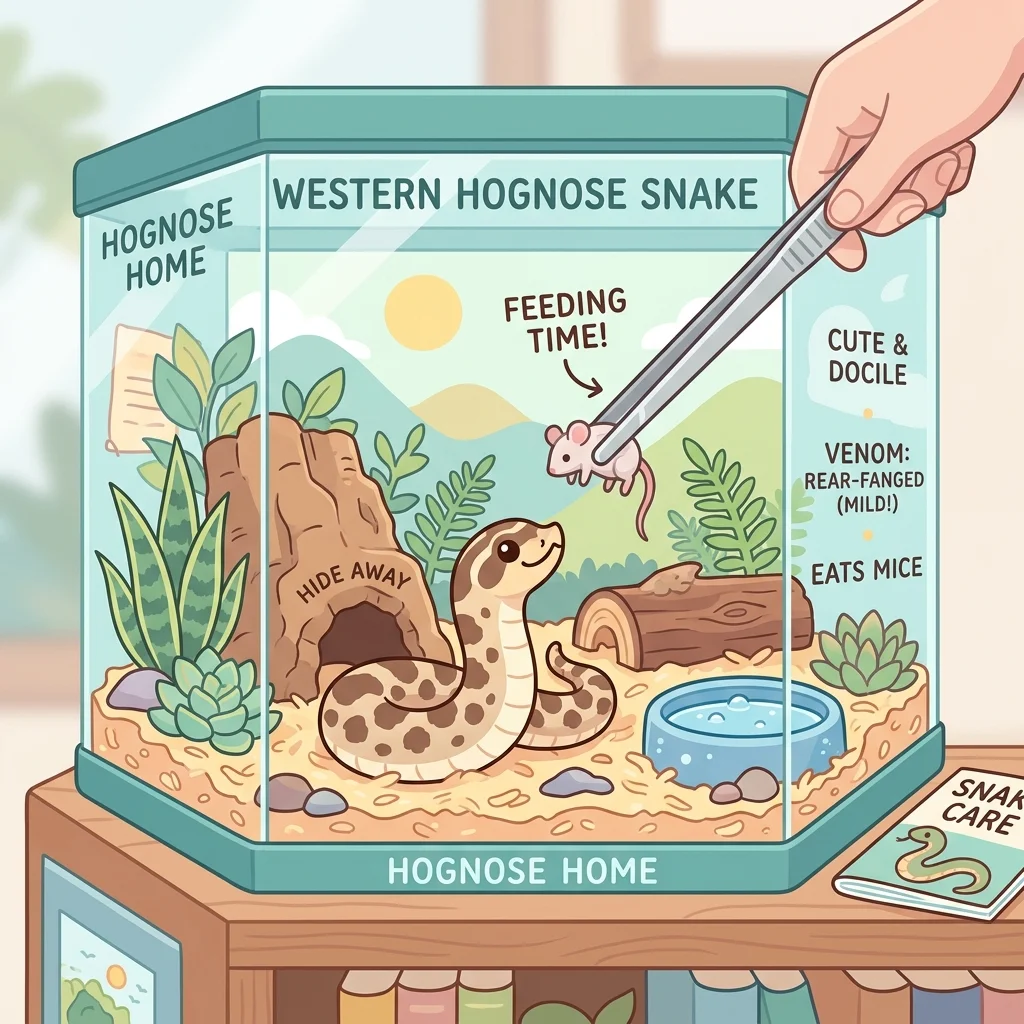
The Western Hognose snake (Heterodon nasicus) is one of the most charismatic, personality-filled snakes available in the hobby today. With their upturned noses, dramatic death-feigning behavior, and expressive eyes, hognoses have captured the hearts of reptile keepers worldwide. But they also come with a reputation that can frustrate new keepers: they can be extremely picky eaters.
Understanding why hognoses can be difficult to feed — and how to solve those difficulties — requires understanding their natural diet and biology. At Loxahatchee Rodents, with over 25 years of experience working with a wide range of colubrid species, we've developed a comprehensive approach to hognose feeding that works for even the most stubborn individuals.
1. What Do Western Hognose Snakes Eat in the Wild?
Here lies the root of the feeding challenge. In the wild, Western hognose snakes are dietary specialists with a strong preference for toads and other amphibians. Their upturned rostral scale (the distinctive "hognose") is an adaptation for digging toads out of loose soil. Their saliva contains a mild venom used to subdue amphibian prey — it's harmless to humans but effectively paralyzes a toad.
Their wild diet includes:
- Toads (Anaxyrus spp., Bufo spp.) — primary prey
- Frogs — secondary prey
- Salamanders — opportunistically consumed
- Small lizards — consumed when available
- Small rodents and bird eggs — occasionally consumed, particularly by adults
This is why newly acquired hognose snakes — especially wild-caught animals or poorly socialized captive-bred ones — often refuse mice. To them, a mouse doesn't smell like food. The good news: with the right techniques, virtually every Western hognose can be transitioned to accept frozen-thawed mice, which is far more sustainable for captive feeding than maintaining an amphibian supply.
2. Why You Should Always Use Frozen-Thawed Mice for Hognose Snakes
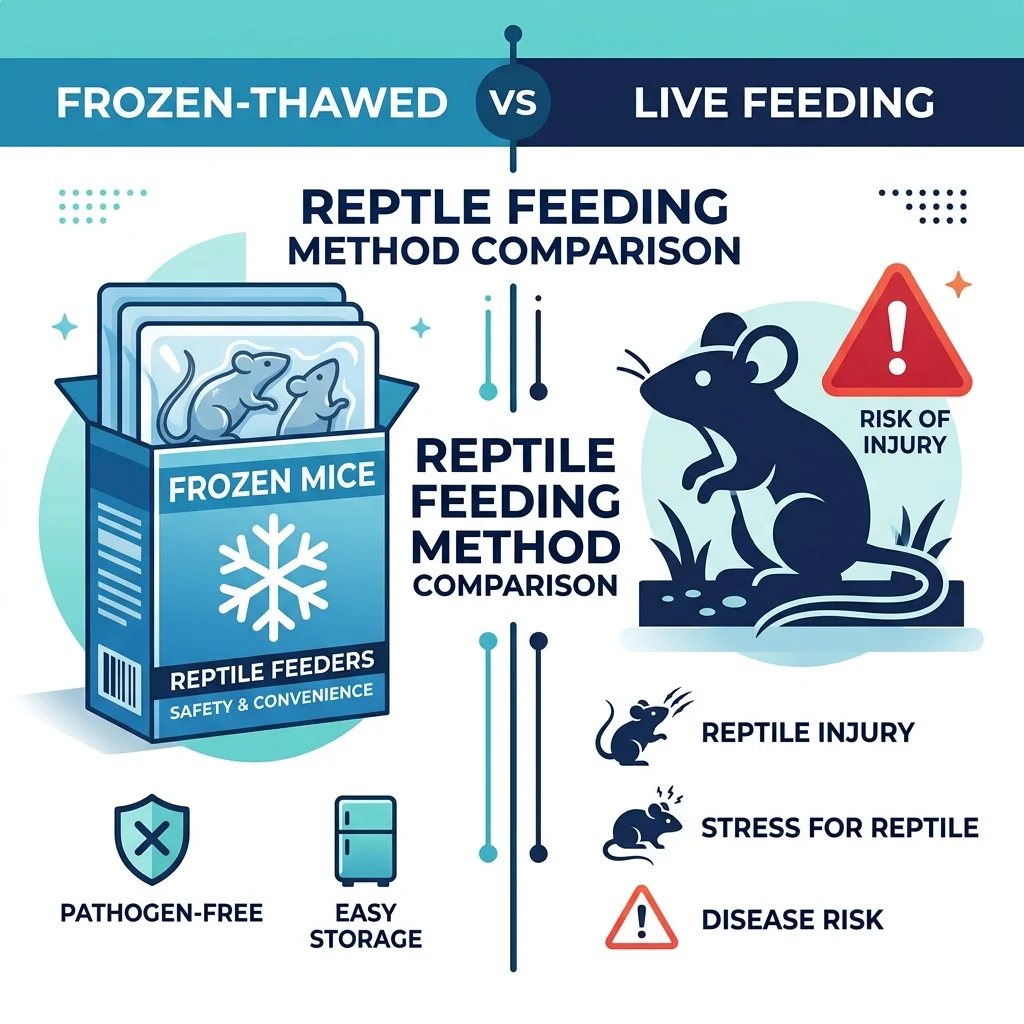
Some keepers attempt to feed hognose snakes live or thawed toads and frogs. While this can work, it comes with significant problems:
- Sourcing difficulty: Maintaining a live toad colony is complex and space-intensive
- Disease risk: Wild-caught amphibians carry parasites, chytrid fungus, and other pathogens
- Legal issues: Collection of wild amphibians is illegal or restricted in many states
- Nutritional concerns: Toads contain bufadienolide toxins that may, over time, affect reptile health when consumed in large quantities
Frozen-thawed mice from a reputable supplier like Loxahatchee Rodents are far safer, more nutritious, and more convenient. The key is in the transition technique.
3. Hognose Snake Prey Size Guide
Despite their dramatic feeding behaviors, hognose snakes are actually quite small. Most captive Western hognose adults reach only 18–24 inches (females occasionally reach 28–36 inches). Prey sizing follows the same basic rule as other snakes: the prey should match the widest part of the snake's body.
Western Hognose Prey Size Chart
| Age | Length | Weight | Recommended Prey | Prey Weight |
|---|---|---|---|---|
| Hatchling (0–3 months) | 6–8 inches | 5–10g | Pinky Mouse | 2–4g |
| Juvenile (3–9 months) | 8–14 inches | 10–30g | Pinky to Fuzzy Mouse | 4–7g |
| Sub-Adult (9–18 months) | 14–20 inches | 30–80g | Fuzzy to Hopper Mouse | 7–12g |
| Adult Male (2+ years) | 15–22 inches | 80–180g | Small Adult Mouse | 15–25g |
| Adult Female (2+ years) | 20–36 inches | 150–500g | Adult Mouse (S/M) | 20–35g |
Females are significantly larger than males, which is unusual in colubrids. A large adult female may accept a medium adult mouse, while her male counterpart is still eating hoppers.
For reference sizing, see our complete frozen rodent size chart.
4. Feeding Frequency for Hognose Snakes
Hognose snakes have a moderate metabolism — faster than ball pythons but slower than corn snakes.
Hatchlings (0–6 months): Feed every 5–7 days. Consistent early nutrition is important for establishing a feeding response and healthy growth.
Juveniles (6–18 months): Feed every 7 days (once per week). Continue weekly feeding to maintain growth momentum.
Adults: Feed every 10–14 days. Adult hognoses, particularly males, do not need weekly feeding.
Notes on seasonal behavior: Hognose snakes experience a natural brumation period and may refuse food from October through February. This is normal. If your hognose goes off feed in autumn, check temperatures, ensure proper hides are available, and do not force-feed. Offer food once a week during this period, but if refused, simply remove the prey and try again the following week.
5. The 7 Best Techniques for Transitioning Hognose Snakes to Frozen Mice
This is the section most hognose keepers need most. Here are the proven techniques, ranked from least invasive to most intensive:
Technique 1: Toad Scenting
The most universally effective method for toad-imprinted hognose snakes. Purchase a live toad (or, where legal, collect one from your property). Rub the live toad gently across the thawed, warmed mouse — particularly around the head and belly of the mouse. The toad's scent transforms the mouse into something the hognose recognizes as prey.
Success rate: Very high for most toad-imprinted hognoses.
Technique 2: Amphibian Extract Scenting
If you cannot obtain a live toad, toad extract or shed toad skin (which you can collect from pet store display animals) can be used. Some specialty reptile suppliers sell freeze-dried toad extract powder specifically for this purpose. Mix a small amount with warm water and coat the mouse.
Technique 3: The Lizard Scenting Technique
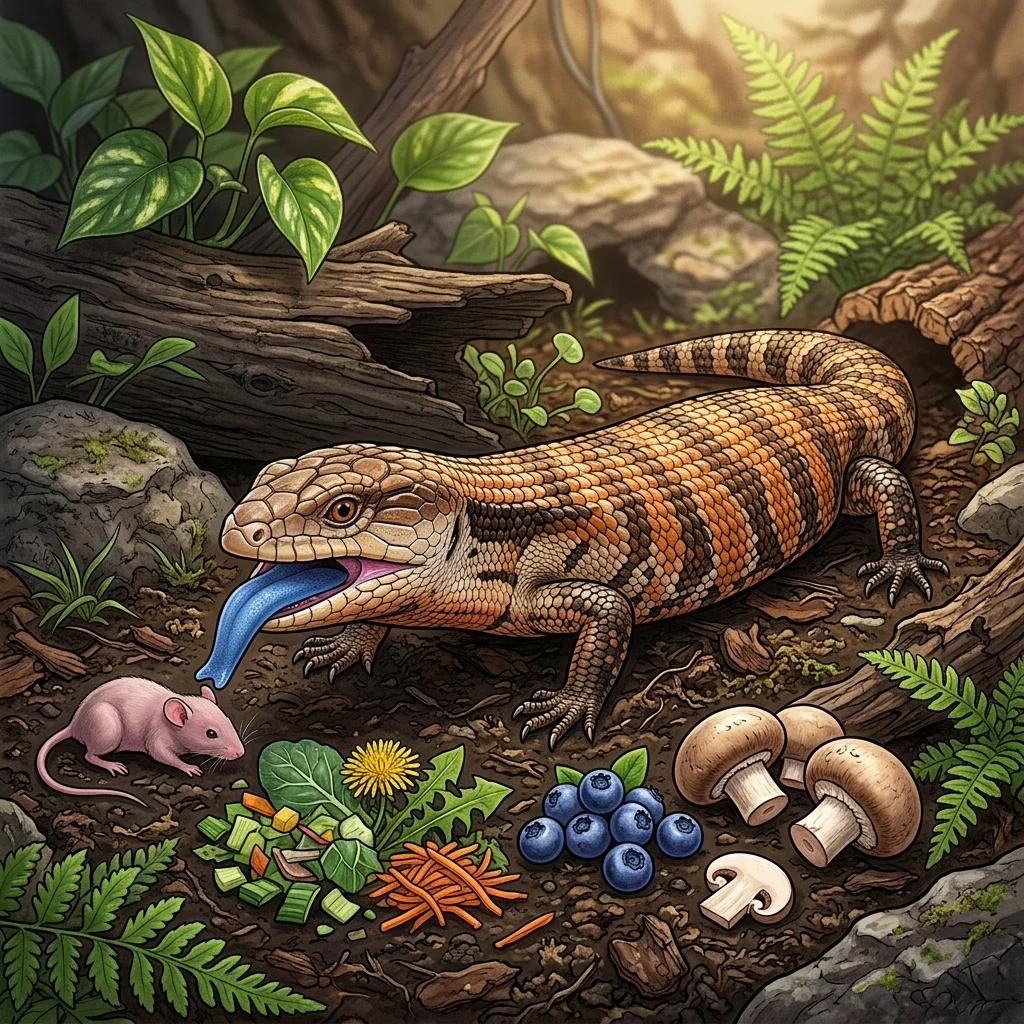
For hognoses that prefer lizards over toads, rub the mouse with a blue-tongued skink, bearded dragon, or other lizard species available at your local pet store (ask the staff if you can briefly handle a display animal for this purpose — most stores will accommodate a quick scenting).
Technique 4: Brain the Mouse
This technique is effective when scenting isn't enough. Using a sterilized pin or toothpick, make a small perforation in the skull of the thawed mouse — just enough to release a drop of brain fluid. The strong neurochemical scent of brain tissue is a powerful feeding trigger for most snakes. This might sound intense, but the mouse is already humanely euthanized and frozen, so there is no additional suffering involved.
Technique 5: Cover and Leave Method
Place the snake and the scented, warmed prey item inside a small paper bag or opaque feeding container. Leave them together in a dark, quiet room for 30–60 minutes without any disturbance. The darkness, enclosed space, and undisturbed quiet often trigger a feeding response in snakes that were too stimulated to eat.
Technique 6: Feed After Dark
Hognose snakes are primarily crepuscular and nocturnal hunters. Offering food in the evening, after the lights in your home have dimmed, can significantly improve feeding success.
Technique 7: Assist Feeding (Last Resort)
For severely anorexic hognose snakes that pose a genuine health risk, assist feeding may be necessary. This should only be performed by an experienced keeper or exotic veterinarian, and only as a last resort. Improper assist feeding can cause serious injury, aspiration, and regurgitation.
6. Common Mistakes When Feeding Hognose Snakes
Mistake 1: Feeding Too Infrequently During Establishment
New hognose snakes (especially recently captive-bred hatchlings) need consistent feeding opportunities to establish and reinforce the feeding response. During the first 3 months of ownership, offer food every 5–7 days without fail. Don't skip weeks.
Mistake 2: Offering Prey That Is Too Large
Hognose snakes have a particularly strong gag response and will dramatically overreact to prey that is too large. They will huff, puff, flatten their necks, feign death — anything to avoid swallowing something uncomfortable. Always err on the smaller side.
Mistake 3: Handling Before or After Feeding
Handle your hognose at most every 2–3 days, and never within 48 hours of feeding. A freshly fed hognose that is handled is very likely to regurgitate. If regurgitation occurs, follow the 14-day fast protocol outlined in our regurgitation guide.
Mistake 4: Offering Cold Prey
Hognose snakes respond strongly to thermal cues. A frozen-thawed mouse that has not been warmed to 98–102°F will almost always be refused. Always warm thoroughly using the protocol in our thawing guide.
7. Hognose Snake Enclosure Requirements That Affect Feeding
A hognose snake in a suboptimal enclosure is a hognose snake that won't eat. Ensure:
Temperature gradient:
- Warm side: 85–90°F
- Cool side: 75–80°F
- Night drop to 70–75°F is acceptable and can simulate brumation triggers
Substrate: Aspen shavings, eco earth, or a mix that allows digging. Hognoses are burrowers and feel insecure without the ability to dig. A stressed, exposed hognose will not eat.
Hides: Two per enclosure minimum — one on the warm side, one on the cool side. The hide should be snug enough that the snake is in contact with the walls on all sides. A hide that is too large does not provide the security cue the snake needs.
Enclosure size: Contrary to popular belief, hognose snakes do best in appropriately-sized enclosures — not maximally large ones. A hatchling in a 40-gallon tank will feel insecure and be reluctant to eat. Start with a 10-gallon (or 12"x12"x18") enclosure for hatchlings.
8. Buying Quality Frozen Feeders for Hognose Snakes
For hognose snakes, prey presentation is particularly important. You want:
- Fresh scent: High-quality feeders that haven't suffered freezer burn have a much more appealing scent to finicky hognoses. Old or freezer-burned mice often smell wrong to these sensitive predators.
- Pinky availability: Many hognose snakes, particularly males, never outgrow pinkies and fuzzies. Ensure your supplier reliably stocks small sizes.
Learn more about what to look for in a quality frozen feeder supplier in our where to buy frozen mice guide.
9. Health Monitoring for Hognose Snakes
Hognose snakes can be secretive about illness. Feeding disruptions are often the first sign of a health problem. If your hognose refuses food for more than 4–6 weeks outside of a natural brumation period, and scenting and environmental adjustments have not helped, consult an exotic veterinarian to rule out:
- Internal parasites
- Respiratory infection
- Mouth rot (infectious stomatitis)
- Reproductive issues (particularly in adult females who may be follicle-bound)
Conclusion
Western hognose snakes are genuinely special animals — full of personality, manageable in size, and increasingly available as captive-bred, selectively bred morphs. Their feeding quirks, while frustrating at first, are completely understandable once you know their biology. With the right techniques, patience, and consistently high-quality frozen-thawed prey, even the most stubborn hognose will reliably accept mice.
Explore our complete reptile feeding guides for more expert resources, and visit our home page to learn more about Loxahatchee Rodents. For more on frozen vs. live feeding, check out our complete comparison guide.
Written by Bill Galloway, Former Assistant Curator at Palm Beach Zoo and co-founder of Loxahatchee Rodents.