Key Takeaway
The definitive comparison of frozen vs live rodents for snake feeding. We cover safety, nutrition, animal welfare, behavior, and the practical techniques that make frozen/thawed feeding work for even the most reluctant snakes.
Table of Contents
- 1. Why This Decision Matters More Than Most Keepers Realize
- 2. The Safety Case: Injury Risk Is Real and Documented
- Rodent Bites Are a Leading Cause of Reptile Veterinary Visits
- Specific Injury Patterns
- The "Just Watch Them" Response Doesn't Hold Up
- 3. Pathogen and Parasite Risk
- External Parasites
- Internal Parasites and Pathogens
- 4. Nutritional Comparison: Frozen vs Live
- Nutritional Content: Nearly Identical at Freezing
- Where Frozen Prey Wins Nutritionally
- Where Live Prey Has a Theoretical Advantage
- 5. Animal Welfare: The Ethical Dimension
- The Prey Animal's Experience
- The Snake's Welfare
- 6. Practical Techniques for Transitioning to Frozen/Thawed
- 1. Temperature Optimization
- 2. Scent Transfers
- 3. Feeding Location Change
- 4. Movement Simulation
- 5. Prey Substitution Ladder
- 7. The Verdict by Snake Species
- Ball Pythons (Python regius)
- Corn Snakes (Pantherophis guttatus)
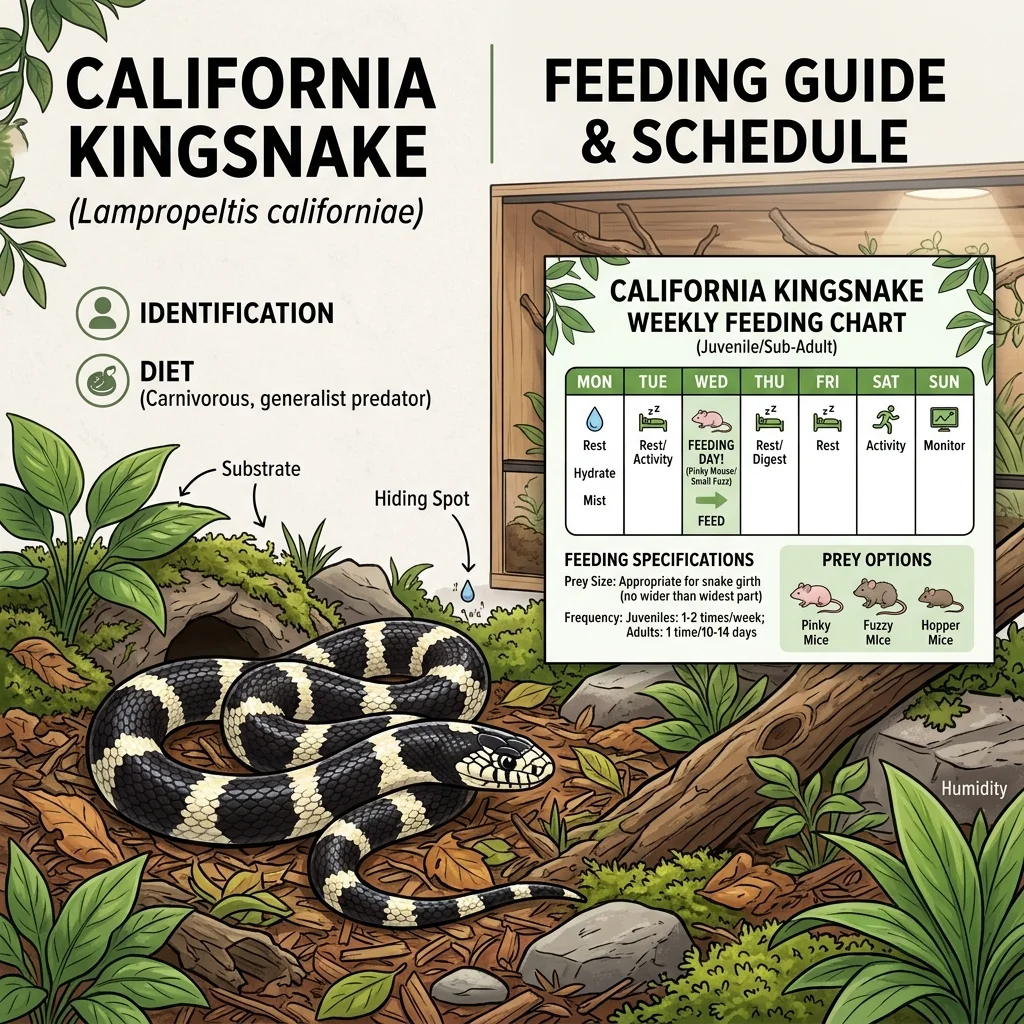
- King Snakes (Lampropeltis spp.)
- Hognose Snakes (Heterodon spp.)
- Boa Constrictors (Boa constrictor)
- 8. Cost Analysis: Frozen vs Live
- 9. Common Myths About Frozen/Thawed Feeding
- "Snakes need live prey for nutritional completeness"
- "Snakes won't accept frozen prey"
- "Live feeding is more natural"
- "I've fed live for 10 years with no problems"
- Conclusion
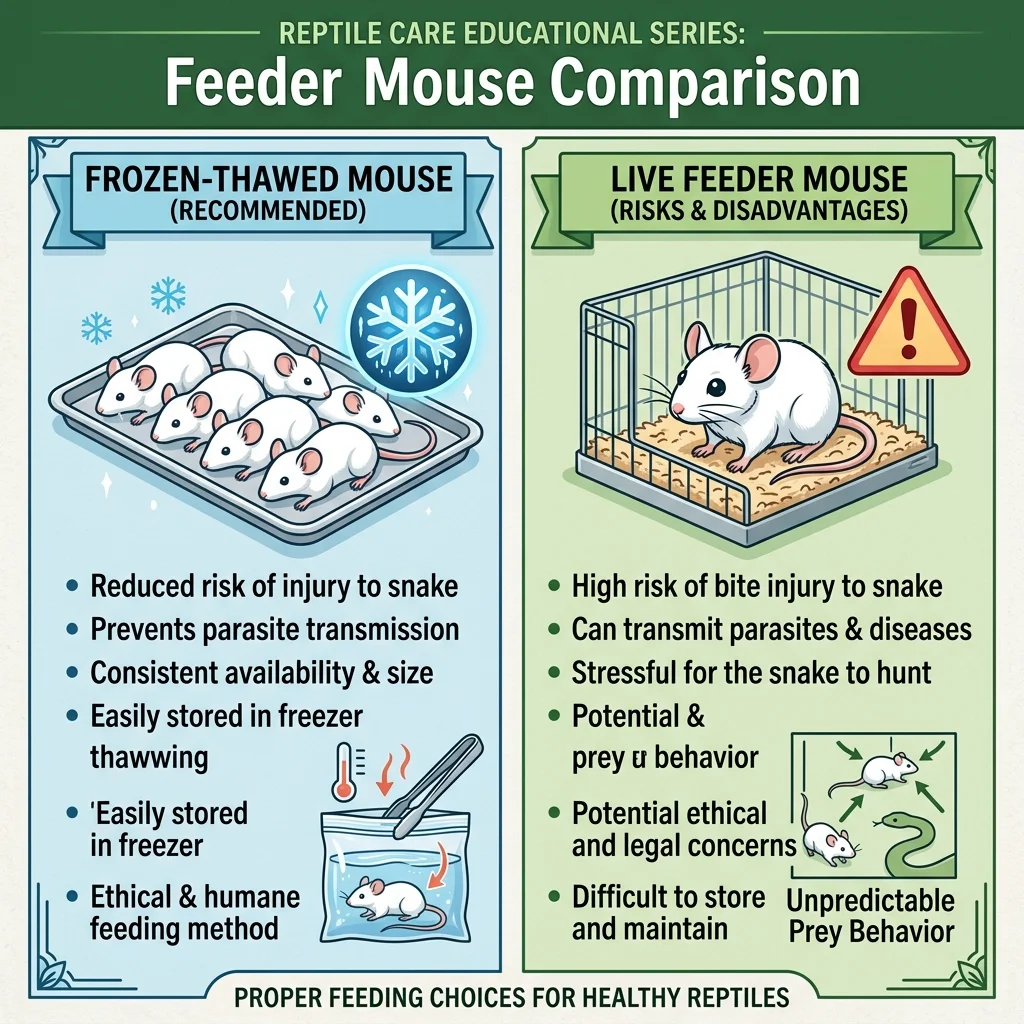
The debate between frozen/thawed and live prey feeding is one of the most persistent conversations in the reptile-keeping hobby. It is also one where the evidence is substantially clearer than the debate suggests: for most captive snake species, most of the time, frozen/thawed prey is the safer, more ethical, and often more nutritionally reliable option.
But "most of the time" contains real nuances. There are situations — specific species, specific problem animals, specific life stages — where live prey may still have a legitimate role. And there are correct ways to manage frozen/thawed feeding that make it succeed with even historically difficult feeders.
This guide covers everything: the biology, the safety data, the nutritional comparison, the animal welfare arguments, the practical techniques for making frozen feeding work, and the limited cases where live prey might still be considered.
1. Why This Decision Matters More Than Most Keepers Realize
Most new reptile keepers receive conflicting advice about feeding method from the start. Pet store employees who want to sell live mice in the moment, online forums full of strong opinions, breeders who've "always done it live," and reptile veterinarians who consistently recommend frozen — the noise is considerable.
What cuts through it is understanding what's actually at stake:
For the snake:
- Risk of physical injury (bite wounds, infections, stress)
- Exposure to parasites and pathogens
- Long-term behavioral conditioning that affects handling safety
For the keeper:
- Cost and logistics of maintaining live prey animals
- Ethical responsibilities toward prey animals
- Legal considerations in some jurisdictions
For the collection overall:
- Quarantine and biosecurity risk from live prey supplier chains
- Feeding reliability and consistency
Each of these dimensions plays differently when you compare frozen vs live, and understanding each one helps you make a genuinely informed decision rather than defaulting to what's locally available or what you've always heard.
2. The Safety Case: Injury Risk Is Real and Documented
The most compelling practical argument for frozen/thawed prey is the injury data.
Rodent Bites Are a Leading Cause of Reptile Veterinary Visits
Multiple herpetological veterinary surveys have documented rodent bites as one of the most common causes of snake injuries presenting to reptile practices. The mechanism is straightforward: when a live mouse or rat is placed in a snake's enclosure and the snake does not immediately strike, the rodent — acting on self-preservation instinct — will attack the snake.
Adult mice can inflict deep puncture wounds. Adult rats are capable of causing severe lacerations, particularly to the snake's face, eyes, dorsal scales, and ventral scutes. These wounds require veterinary treatment, create scarring, and carry significant infection risk.
The bite risk is not limited to "problem feeders." Even a reliably feeding ball python that misses a strike, or a corn snake that is temporarily in shed and less visually acute, is at risk from unattended live prey.
Specific Injury Patterns
The most commonly reported rodent-inflicted injuries in captive snakes include:
- Facial wounds: Bites around the lips, nostrils, and eyes. Periocular (around-the-eye) wounds are particularly serious — they can cause permanent spectacle scarring and vision impairment.
- Dorsal lacerations: Bite wounds along the snake's back, sometimes penetrating to the muscle layer. These wounds can develop into abscesses that require surgical drainage.
- Tail and cloaca injuries: When snakes are coiled defensively, rodents frequently bite the tail and cloaca region. Cloacal injuries can affect reproductive organs and are difficult to treat.
The "Just Watch Them" Response Doesn't Hold Up
Some keepers argue that injury risk is only an issue if you leave the prey animal unattended — that supervised live feeding eliminates the risk. There are several problems with this position:
- Snakes are unpredictable. A snake that strikes immediately 95% of the time will occasionally miss, pause, or show no interest. The moment you turn away is exactly when a strike can fail.
- Supervision fatigue. In collections of more than a few animals, the time required to supervise every feeding session with live prey becomes impractical.
- Stress to the snake persists. Even when no bite occurs, the presence of a defensive live rodent in the enclosure creates a stress response in the snake that can affect feeding regularity and handling temperament.
3. Pathogen and Parasite Risk
Beyond physical injury, live prey introduces a biological risk vector that frozen prey does not.
External Parasites
Feeder rodents from live-prey supplier networks carry external parasites — most commonly mites of the genus Ornithonyssus and tropical rat mites (Dermanyssus gallinae). Introduction of a mite-carrying rodent into a snake's enclosure can establish a mite infestation that, in a collection setting, spreads to every enclosure.
Snake mite (Ophionyssus natricis) infestations are one of the most difficult and persistent pest problems in reptile collections. While O. natricis itself is usually acquired from other infected snakes rather than rodents, the confusion and cross-contamination risk from any mite introduction is substantial.
Internal Parasites and Pathogens
Live feeder rodents can carry:
- Salmonella (various serovars) — transmissible to snakes and, through snake handling, to humans
- Lymphocytic choriomeningitis virus (LCMV) — a zoonotic pathogen that can cause serious human illness; mice are a primary reservoir
- Pinworms and other internal nematodes — while not cross-species transferable in most cases, they add parasite load to the snake's system
- Hantavirus (in wild-caught rodents) — a severe zoonotic risk if any live prey is wild-sourced
Frozen prey eliminates virtually all of these risks. The freezing process kills most external parasites, and the controlled production environment of quality frozen feeder suppliers eliminates the livestock-facility contamination risks associated with live prey supply chains. Our comprehensive biosecurity guide for feeder rodents details the production protocols that distinguish safe from unsafe frozen prey suppliers.
4. Nutritional Comparison: Frozen vs Live
The nutritional argument is more nuanced than either camp typically acknowledges.
Nutritional Content: Nearly Identical at Freezing
A frozen mouse frozen immediately post-euthanasia and stored at 0°F retains nutritionally equivalent content to a live mouse of identical size. The freezing process does not degrade proteins, fats, calcium, phosphorus, or micronutrients to any clinically meaningful degree.
The nutritional risk in frozen prey is not from freezing — it is from improper storage. Freezer burn (lipid oxidation caused by exposure to air) progressively degrades fat content and creates rancid fatty acids. Properly vacuum-sealed frozen prey stored for under 12 months at 0°F is nutritionally equivalent to live prey.
Where Frozen Prey Wins Nutritionally
Prey selection consistency: When you purchase a "hopper" from a quality frozen prey supplier, you receive a consistently sized animal within a defined weight range. When you purchase "small mice" as live prey, size variation is typically much wider. Consistent prey sizing means consistent caloric delivery.
Breeding colony diet control: Quality frozen prey producers feed their colonies nutritionally complete, professionally formulated rodent diets. Live prey suppliers — particularly local pet stores — frequently house feeder mice on low-quality grain diets, seed mixes, or whatever is cheapest. A poorly nourished feeder mouse is a poorly nourished meal for your snake.
Pre-killing pathogen elimination: Beyond parasites, the euthanasia and immediate freezing process eliminates transient bacterial contamination on the prey's surface. A live mouse that has been in a group holding tank at a pet store for two weeks carries substantial surface bacterial load.
Where Live Prey Has a Theoretical Advantage
Behavioral enrichment: The hunting-and-striking sequence is a natural behavior for snakes. Some herpetologists argue that providing this enrichment has psychological benefits. The counterargument is that enrichment can be provided through other means (feeding enclosures, prey scent trails, varied thawed prey presentation) without the associated injury and pathogen risks.
Reluctant feeders in extreme cases: Some individual snakes — particularly wild-caught adults, certain naturally reluctant species like hognose snakes during breeding season, and some neonates — may only reliably accept live prey during the initial period of captivity. In these specific cases, a temporary use of live prey while conditioning the animal to frozen is defensible.
5. Animal Welfare: The Ethical Dimension
The animal welfare argument is the most philosophically complex dimension of this comparison.
The Prey Animal's Experience
Live feeding involves confining a prey animal in a space with a predator. If the snake does not immediately strike, the prey animal experiences prolonged fear. The stress hormones released during this period — particularly corticosterone and catecholamines — represent genuine suffering under most standard frameworks for animal welfare.
Multiple jurisdictions have taken legal positions on this: the UK Animal Welfare Act (2006) was interpreted by DEFRA to strongly discourage live prey feeding for captive reptiles except where a veterinarian certifies nutritional necessity. Similar positions have been adopted in Germany, Austria, and the Netherlands.
CO2 euthanasia, the standard used by quality frozen prey producers, is approved by the American Veterinary Medical Association (AVMA) as a humane method for rodents. The animal is rendered unconscious within seconds and does not experience the fear, stress, or pain associated with a predation encounter.
The Snake's Welfare
From the snake's welfare perspective, live prey also creates risk. As documented above, bite injuries represent a welfare concern for the snake. Additionally, repeated exposure to combative live prey can create chronic stress responses in some individuals — manifesting as defensive behavior, reduced feeding reliability, and, in severe cases, what experienced keepers describe as a "food-aggressive but fearful" behavioral state.
6. Practical Techniques for Transitioning to Frozen/Thawed
For keepers currently feeding live prey or dealing with snakes that refuse frozen/thawed, the following evidence-based techniques have the highest success rates.
1. Temperature Optimization
Ball pythons and most other pit-vipers detect prey via infrared (the loreal pits), while colubrids (corn snakes, king snakes, hognose) rely more heavily on chemoreception (Jacobson's organ) with some visual cues. For pit-sensing species:
- Warm frozen prey to 98–102°F (37–39°C) surface temperature
- Use a laser thermometer to verify — do not estimate
- Offer prey immediately after warming, while it is at peak temperature
For colubrid species (corn snakes, king snakes), scent matters more than heat. See scent techniques below.
2. Scent Transfers
If a snake accepts one prey type but refuses frozen/thawed of the desired type:
- Mouse-to-rat scent transfer: Rub frozen rat prey briefly against the fur of a thawed mouse before offering. The mouse scent on the rat surface triggers strike in mouse-preferring snakes.
- Bedding rub: Rub the frozen prey on bedding or substrate from the prey animal's housing. The fresh fecal and urinary scent triggers prey recognition.
- "Braining": As a technique of last resort, make a small incision in the skull of thawed prey to expose brain tissue. The smell is extremely prey-stimulating and usually triggers feeding even in reluctant animals. This is more commonly needed for hognose snakes than other species.
3. Feeding Location Change
Some snakes that refuse food in their main enclosure will accept it in a separate, unfamiliar container. Use a paper bag, a plain plastic tub, or a dedicated "feeding box." The novelty reduces defensive behavior that the snake may have associated with its home enclosure, and the confined space increases the likelihood of a strike.
4. Movement Simulation
Attach a piece of fishing line or thread to the tail of thawed prey and drag it slowly along the substrate. The movement stimulates the snake's visual and vibration-sensing systems. This technique is particularly effective for colubrids (corn snakes, king snakes) that hunt partially by sight and movement detection.
5. Prey Substitution Ladder
If a snake is refusing frozen/thawed of its primary prey type:
- Try a different prey species (mice vs rats vs gerbils)
- Try a different prey size (one step smaller — smaller prey is less intimidating)
- Try frozen/thawed chicks or quail (some species accept novel prey types more readily)
- If necessary, use a freshly killed item as a bridge — euthanize a live mouse immediately before offering and offer it warm while still fresh
For species-specific stubborn feeder protocols, see our guide to corn snakes that won't eat frozen mice and our ball python not eating troubleshooting guide.
7. The Verdict by Snake Species
Ball Pythons (Python regius)
Strong recommendation: Frozen/thawed. Ball pythons are well-documented frozen feeders when properly conditioned from hatchling stage. The only reliable exceptions are wild-caught imports (increasingly rare) and occasional problem hatchlings from neglected breeding situations.
Key context: Ball pythons are an ambush species that hunts by heat signature. Properly warmed frozen prey at 100°F is indistinguishable to the snake's pit organs from live prey. There is no sensory justification for live feeding in this species.
Corn Snakes (Pantherophis guttatus)
Strong recommendation: Frozen/thawed. Corn snakes are among the most reliable frozen/thawed feeders in the hobby. Hatchlings occasionally require scent transfer, but almost all corn snakes can be established on frozen within the first few feedings. See our complete corn snake feeding guide for hatchling-specific protocols.
King Snakes (Lampropeltis spp.)
Strong recommendation: Frozen/thawed. Kingsnakes are ophiophagous (they eat other snakes in the wild) and have a robust feeding response that generalizes well to frozen prey. The primary challenge with kingsnakes is that they are highly food-motivated and can be aggressive feeders — using frozen prey reduces the risk of a feeding response bite to the keeper. See our king snake feeding guide for detailed protocols.
Hognose Snakes (Heterodon spp.)
Recommendation: Frozen/thawed with patience. Hognose snakes present the most challenging frozen/thawed transition in common pet snakes because of their specialized natural diet (toads and frogs). Hatchlings commonly require live pinky mice or scent-enhanced frozen pinkies. Once established, they transition to frozen reliably. The braining technique has the highest success rate for initial frozen acceptance.
Boa Constrictors (Boa constrictor)
Strong recommendation: Frozen/thawed. Adult boas present the clearest safety argument for frozen prey — an adult boa constrictor in a feeding response can strike with significant force, and ensuring prey is non-retaliatory eliminates a real bite injury risk to the prey animal. Frozen prey presents no size-based limitation for boas since quality suppliers offer prey up to large rat sizes. See our boa constrictor feeding guide.
8. Cost Analysis: Frozen vs Live
The economic argument for frozen prey is strong for keepers with established collections.
| Metric | Frozen/Thawed | Live |
|---|---|---|
| Purchase price (per item) | Lower (bulk discounts available) | Higher (live premium) |
| Storage cost | Freezer electricity (minimal) | Housing, bedding, food, water for live prey |
| Time cost | Low (thaw and feed) | High (acquire, house, maintain, feed prey animals) |
| Injury treatment cost | Eliminated | Significant risk (vet visits, medications) |
| Waste | Low (frozen items don't die unexpectedly) | Moderate (prey animals die in holding) |
The break-even point for frozen vs live feeding typically occurs at 3+ snakes. For collections of 5 or more animals, buying frozen mice and rats in bulk from quality suppliers represents a significant cost reduction compared to purchasing live prey at local pet store prices.
For a detailed comparison of the major online frozen feeder suppliers, see our guide to the best places to buy frozen mice.
9. Common Myths About Frozen/Thawed Feeding
"Snakes need live prey for nutritional completeness"
False. As established in Section 4, properly stored frozen prey is nutritionally equivalent to live prey. The freezing process does not meaningfully alter protein, fat, calcium, or micronutrient content.
"Snakes won't accept frozen prey"
False in the vast majority of cases. While the transition can require patience (and specific techniques as covered in Section 6), virtually all common pet snake species can be established on frozen/thawed prey. The exceptions are extremely rare.
"Live feeding is more natural"
Technically true, but irrelevant to the welfare argument. Captive snakes live in controlled enclosures, receive veterinary care, and are not under survival pressure. The goal of captive husbandry is optimal welfare — not perfect naturalism. Providing frozen prey is more analogous to how we feed other captive predators in zoological settings.
"I've fed live for 10 years with no problems"
The absence of observed problems does not equal the absence of risk. Bite injuries are often dismissed as minor and go unrecorded. Subclinical stress from live prey encounters is not visible to keepers. The parasitological risks from live prey are real regardless of whether disease manifestation has occurred.
Conclusion
The evidence across safety, nutrition, animal welfare, cost, and practical management strongly supports frozen/thawed as the standard feeding method for captive snakes. The valid exceptions — specific problem feeders, certain species in specific situations — exist but should be treated as exceptions requiring active management toward a frozen-feeding endpoint, not as validation of live feeding as a standard practice.
The good news is that frozen/thawed feeding, once established, is simpler, safer, and more economical than live prey in virtually every practical respect. The up-front investment is patience during the transition period — and the techniques in Section 6 make that transition succeed for the overwhelming majority of animals.
For more on specific feeding protocols, explore our complete guide to snake feeding frequency, our live vs frozen prey deep dive, and our guide to switching snakes from live to frozen prey.