Key Takeaway
A complete feeding guide for boa constrictors from hatchling to adult. Includes prey sizing charts, feeding frequency, the dangers of power feeding, and expert tips from 25 years of experience.
Table of Contents
- 1. Understanding the Boa Constrictor's Natural Feeding Behavior
- 2. The Correct Prey Size for Boa Constrictors
- Boa Constrictor Prey Size Chart by Age and Length
- Why Male and Female Boas Differ So Much
- 3. Feeding Frequency: The Critical Factor for Boa Health
- What is Power Feeding and Why Is It Dangerous?
- Recommended Feeding Frequency for Boa Constrictors
- 4. Transitioning from Mice to Rats
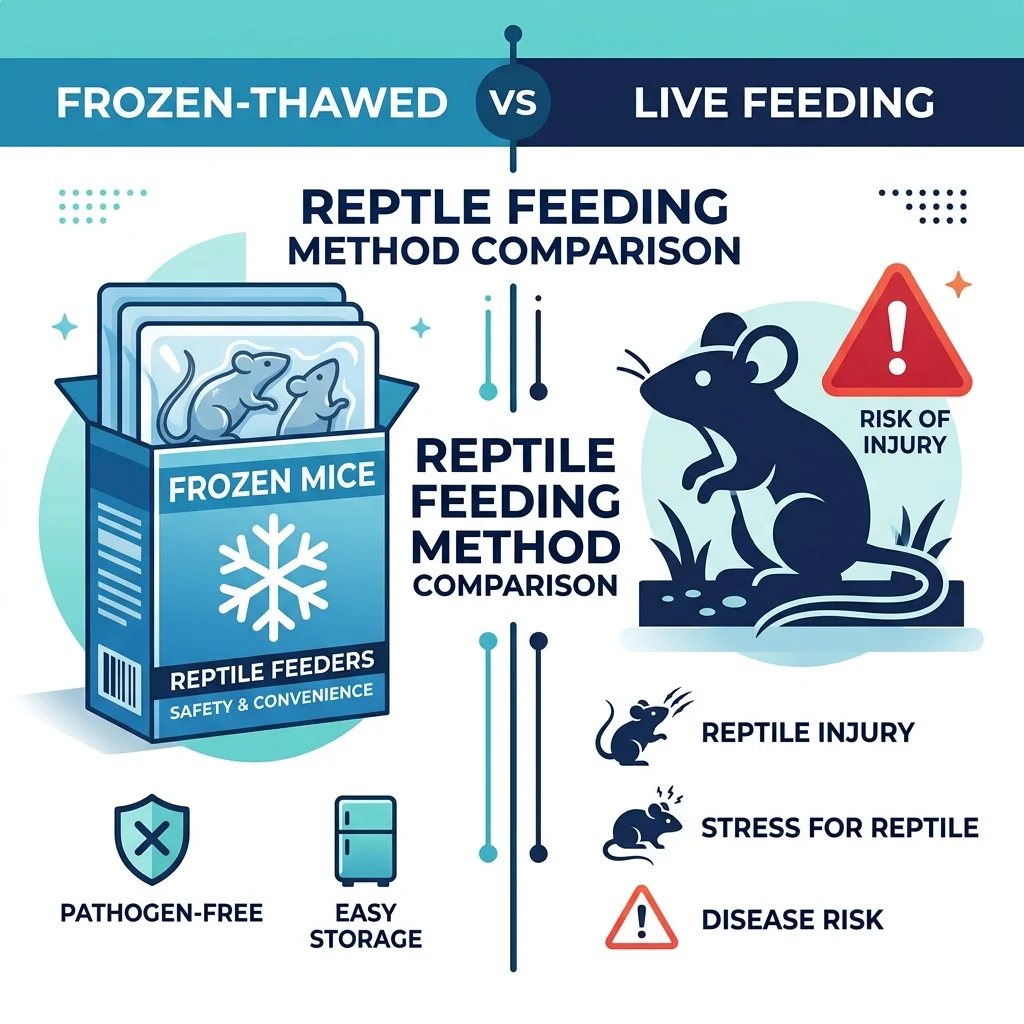
- 5. Frozen-Thawed Prey: Essential for Boa Constrictors
- 6. Recognizing a Healthy Weight Boa Constrictor
- 7. Common Boa Feeding Problems
- My Boa Won't Eat — Is This Normal?
- My Boa Regurgitated — What Do I Do?
- 8. Enclosure Temperatures and Their Role in Feeding
- 9. Buying Quality Frozen Prey for Boas
- 10. The Long Game: Feeding a Boa for 25+ Years
- Conclusion
Boa constrictors (Boa constrictor) are among the most rewarding snakes to keep, capable of living 20–30 years with proper care. One of the most critical aspects of their long-term health is getting the feeding program right from day one. At Loxahatchee Rodents, we have worked with boa constrictors for over 25 years and have seen first-hand how overfeeding, incorrect prey sizing, and poor quality feeders shorten the lives of these magnificent animals.
This comprehensive guide covers every aspect of boa constrictor feeding — from the first meal of a hatchling through the maintenance diet of a 10-foot adult female.
1. Understanding the Boa Constrictor's Natural Feeding Behavior
In the wild, boa constrictors are sit-and-wait predators that can go weeks or even months between successful hunts. Their metabolism is adapted for infrequent, large meals rather than frequent small ones. They inhabit a wide range of environments from Central America through South America, where their diet includes:
- Small to medium mammals (rats, opossums, young rabbits)
- Birds and bird eggs
- Lizards (particularly in juveniles)
This natural feeding pattern has a critical implication for captive care: boas are biologically designed to thrive on infrequent feeding. The common mistake of feeding a boa too frequently (a practice called "power feeding") is one of the primary causes of shortened lifespan, organ failure, and obesity in captive boas.
2. The Correct Prey Size for Boa Constrictors
The correct prey size for a boa constrictor follows the same fundamental rule as all constrictors: the prey item should be approximately equal to the diameter of the snake's widest body point, with a maximum of 1.5x that diameter.
Boa Constrictor Prey Size Chart by Age and Length
| Age | Length | Weight | Recommended Prey | Prey Weight |
|---|---|---|---|---|
| Hatchling (0–6 months) | 18–24 inches | 50–150g | Hopper Mouse / Small Rat | 15–30g |
| Juvenile (6–18 months) | 2–3.5 feet | 150–500g | Weanling to Small Rat | 30–80g |
| Sub-Adult (1.5–3 years) | 3.5–5 feet | 500g–1.5kg | Small to Medium Rat | 80–200g |
| Adult Female (3–7 years) | 6–10 feet | 3–10kg | Large Rat to Small Rabbit | 300–600g |
| Adult Male (3–7 years) | 5–8 feet | 2–6kg | Medium to Large Rat | 200–450g |
Why Male and Female Boas Differ So Much
Female boa constrictors are significantly larger than males — often by 30–50% in body mass. A large adult female boa can reach 8–10 feet and weigh 8–10kg, while adult males typically reach 5–7 feet and 2–5kg. This means their feeding programs diverge significantly in adulthood.
For rat sizing reference, always consult our complete frozen rat size chart.
3. Feeding Frequency: The Critical Factor for Boa Health
This is where most boa keepers go wrong. Because boas are beautiful, impressive animals, many keepers want to see them grow as fast as possible. Power feeding — offering prey every 5–7 days to accelerate growth — does achieve rapid size gains. But the long-term cost is severe.
What is Power Feeding and Why Is It Dangerous?
Power feeding is the practice of feeding boas more frequently and with larger prey than their natural biology requires, specifically to maximize growth rate. While a power-fed boa may reach adult size in 2–3 years instead of 5–7, the health consequences include:
- Hepatic lipidosis (fatty liver disease): The liver cannot process the excess fat and protein quickly enough, leading to fat deposits in the liver tissue. This is progressive, debilitating, and eventually fatal.
- Cardiovascular disease: Excess adipose tissue surrounding the heart and great vessels.
- Reproductive failure: Obese females often have difficulty producing healthy litters.
- Shortened lifespan: Power-fed boas often live 10–15 years rather than the 25–30 achievable with proper feeding.
- Regurgitation: An overworked digestive system leads to more frequent regurgitation events. See our snake regurgitation guide if this happens.
Recommended Feeding Frequency for Boa Constrictors
Hatchlings (0–6 months): Feed every 7–10 days. Hatchlings need consistent nutrition for early development but should not be pushed.
Juveniles (6–18 months): Feed every 10–14 days. The boa is growing rapidly but the feeding interval should already be establishing a healthy pattern.
Sub-Adults (18 months – 3 years): Feed every 14 days. Two weeks between meals is appropriate at this stage.
Adult Males: Feed every 3–4 weeks. Adult male boas have very low energy requirements. Monthly feeding with an appropriately sized rat maintains excellent body condition.
Adult Females (non-reproductive): Feed every 3–4 weeks. Same as males.
Gravid Females (pregnant): Feed every 2 weeks with a slightly larger prey item to support fetal development. Consult an exotic veterinarian for guidance on managing pregnant boas.
4. Transitioning from Mice to Rats
Most boa hatchlings start on hopper mice or small rats. At some point, you will need to transition to rats as their primary prey. Here is how to do it smoothly:
- Offer a weanling rat (the smallest rat size, approximately 30–50g) in place of the usual mouse
- If the boa is hesitant, briefly rub the rat with a thawed mouse to transfer the familiar scent
- Once the boa accepts 3 weanling rats without hesitation, increase to a small rat at the next feeding
- Continue stepping up prey size as the boa's girth increases
Because boas are powerful constrictors with strong feeding responses, transitions are usually smooth. Most boas will accept any appropriately-sized, warmed frozen-thawed prey without issue.
5. Frozen-Thawed Prey: Essential for Boa Constrictors
For boas specifically, frozen-thawed prey is not just preferable — it's strongly recommended. Adult and sub-adult boas are powerful enough to subdue live prey, but they are also large enough for live prey to inflict serious injury during the strike phase. A large rat that lands a bite on a boa's eye or throat can cause serious, permanent damage.
Follow our complete thawing guide for the correct protocol. For large prey items like medium and large rats, extend the refrigerator thaw time to 24 hours and the warm water bath to 20–25 minutes due to the increased mass.
Surface temperature should still reach 98–102°F before offering.
6. Recognizing a Healthy Weight Boa Constrictor
Monitoring body condition is essential for preventing both obesity and underweight. A healthy boa should have:
Dorsal view (from above):
- A rounded, full body profile — not flat or concave
- The spine should not be visible or feel prominent
- The sides should gently taper from the body midline rather than dropping off sharply
Lateral view (from the side):
- The belly should be slightly wider than the sides
- No visible ribs through the skin
- No sharp drop-off at the base of the tail
Scale test:
- A digital postal or luggage scale can confirm body weight
- Use the feeding charts above to assess if your boa is within the expected weight range for its length and age
If your boa appears to be gaining weight rapidly on a conservative feeding schedule, reduce prey size before reducing frequency. Smaller, more frequent meals cause less liver stress than large, infrequent ones.
7. Common Boa Feeding Problems
My Boa Won't Eat — Is This Normal?
Yes, in many cases. Boas are well-known for seasonal feeding pauses. Adult boas may refuse food for 4–8 weeks during late fall and winter as their instinct to brumate kicks in — even in a consistently heated enclosure. As long as the snake maintains body weight and remains alert, a temporary feeding refusal is not a cause for concern.
Other common reasons for refusal:
- Pre-shed: Boas about to shed will often refuse food. Wait until after the shed and offer food 3–5 days later.
- Post-breeding: Males especially may refuse food for weeks after breeding activity.
- Stress: New enclosure, too-frequent handling, or an enclosure that is too small or too brightly lit.
- Prey size too large: If the boa constricted the prey but then refused to swallow it, the prey is likely too large. Try a smaller size.
My Boa Regurgitated — What Do I Do?
Immediately implement the 14-day fast and husbandry check. Read our complete regurgitation guide for the step-by-step protocol. In boas, regurgitation is most commonly caused by:
- Handling within 48 hours of feeding
- Prey that is too large
- Temperatures that are too cold to support digestion
8. Enclosure Temperatures and Their Role in Feeding
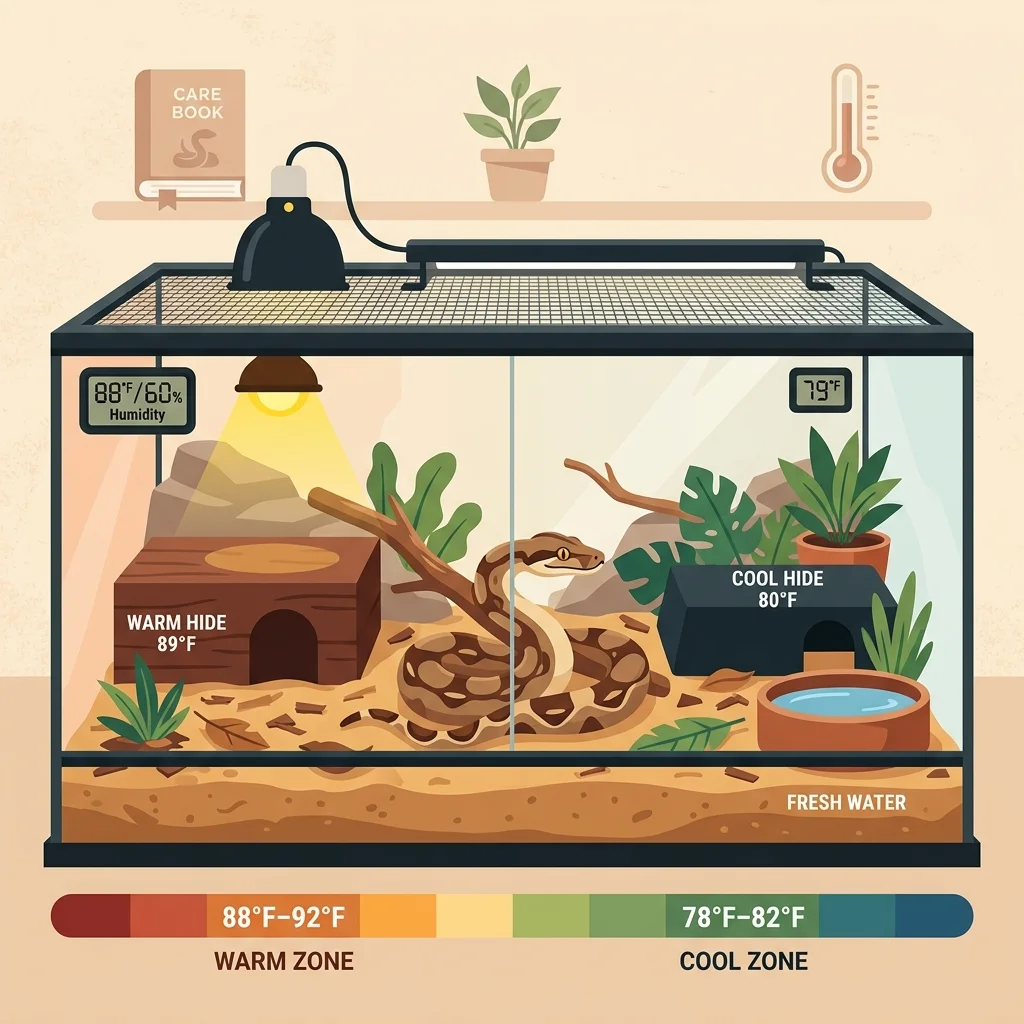
Boa constrictors require a proper thermal gradient to digest their meals. Without adequate heat, even a perfectly healthy boa with a full stomach cannot complete digestion, leading to food rotting in the GI tract and regurgitation.
Required temperature gradient:
- Warm side / basking: 88–92°F
- Cool side: 78–82°F
- Ambient: 80–85°F
After feeding, your boa should spend extended time on the warm side. This is normal digestive behavior. Do not disturb a feeding boa for 48–72 hours after a meal.
9. Buying Quality Frozen Prey for Boas
As your boa grows, you will be purchasing increasingly large prey items. Quality matters just as much for large rats as for small mice. Look for:
- Suppliers that flash-freeze at -18°C or colder immediately after euthanasia
- Vacuum or sealed individual packaging
- No evidence of freezer burn upon delivery
- A clear chain of custody and storage protocols
For our full analysis of where to source quality frozen feeders, including large rats, see our where to buy frozen mice and rats review.
10. The Long Game: Feeding a Boa for 25+ Years
The most important mindset shift for boa keepers is thinking in decades, not months. A boa constrictor you acquire today as a hatchling could still be with you in 2050. Every feeding decision you make compounds over time.
Feeding a boa correctly looks like:
- Appropriately sized prey, never more than 1.5x body diameter
- Feeding no more than once every 10–14 days as a juvenile, and once every 3–4 weeks as an adult
- Using only high-quality frozen-thawed prey from reputable suppliers
- Monitoring body condition monthly
- Consulting an exotic vet annually
Feeding a boa incorrectly looks like:
- Power feeding to maximize size
- Feeding jumbo prey items that cause the snake to bulge dramatically after eating
- Feeding live prey unnecessarily
- Ignoring gradual weight gain as the snake reaches adulthood
The difference between these two approaches is, in many cases, 10–15 years of life.
Conclusion
Boa constrictors are long-lived, intelligent animals that deserve the best possible nutritional care. By following a conservative, appropriately-paced feeding program, using quality frozen-thawed prey, and monitoring body condition throughout their life, you can expect your boa to live a full, healthy 20–30 years.
For more expert resources, explore our complete library of reptile feeding guides, or visit our home page to learn more about Loxahatchee Rodents and our commitment to high-quality feeder production since 2001.
Written by Bill Galloway, Former Assistant Curator at Palm Beach Zoo and co-founder of Loxahatchee Rodents.