Key Takeaway
The complete milk snake feeding guide covering all common subspecies. Prey size charts, feeding schedules, and expert techniques for keeping these sometimes-reluctant feeders reliably eating frozen-thawed prey.
Table of Contents
- 1. Milk Snake Species and Subspecies: A Brief Overview
- 2. Understanding Milk Snake Feeding Behavior
- 3. Milk Snake Prey Size Chart
- Honduran Milk Snake Prey Size Chart (Largest Common Subspecies)
- Smaller Subspecies (Sinaloan, Pueblan, Eastern) Prey Size Chart
- 4. Feeding Frequency for Milk Snakes
- 5. The Shy Feeder Problem: Why Milk Snakes Refuse and What to Do
- Creating the Right Environment
- The Evening Feeding Rule
- The Paper Bag Method
- 6. Milk Snake Enclosure Requirements That Support Feeding
- Temperature
- Enclosure Sizing
- 7. Transitioning to Frozen-Thawed Prey
- 8. Common Milk Snake Feeding Problems
- "My milk snake thrashes and retreats when I try to feed it"
- "My milk snake investigates the prey but won't strike"
- "My milk snake ate reliably for months and stopped"
- "My hatchling milk snake has never eaten"
- 9. Nutrition and Long-Term Health
- 10. Buying Quality Frozen Mice for Milk Snakes
- Milk Snake FAQ
- Conclusion
- 11. Long-Term Health and Feeding: What to Expect Over a Milk Snake's Lifetime
- 12. Regional Considerations: Locality-Specific Milk Snake Care
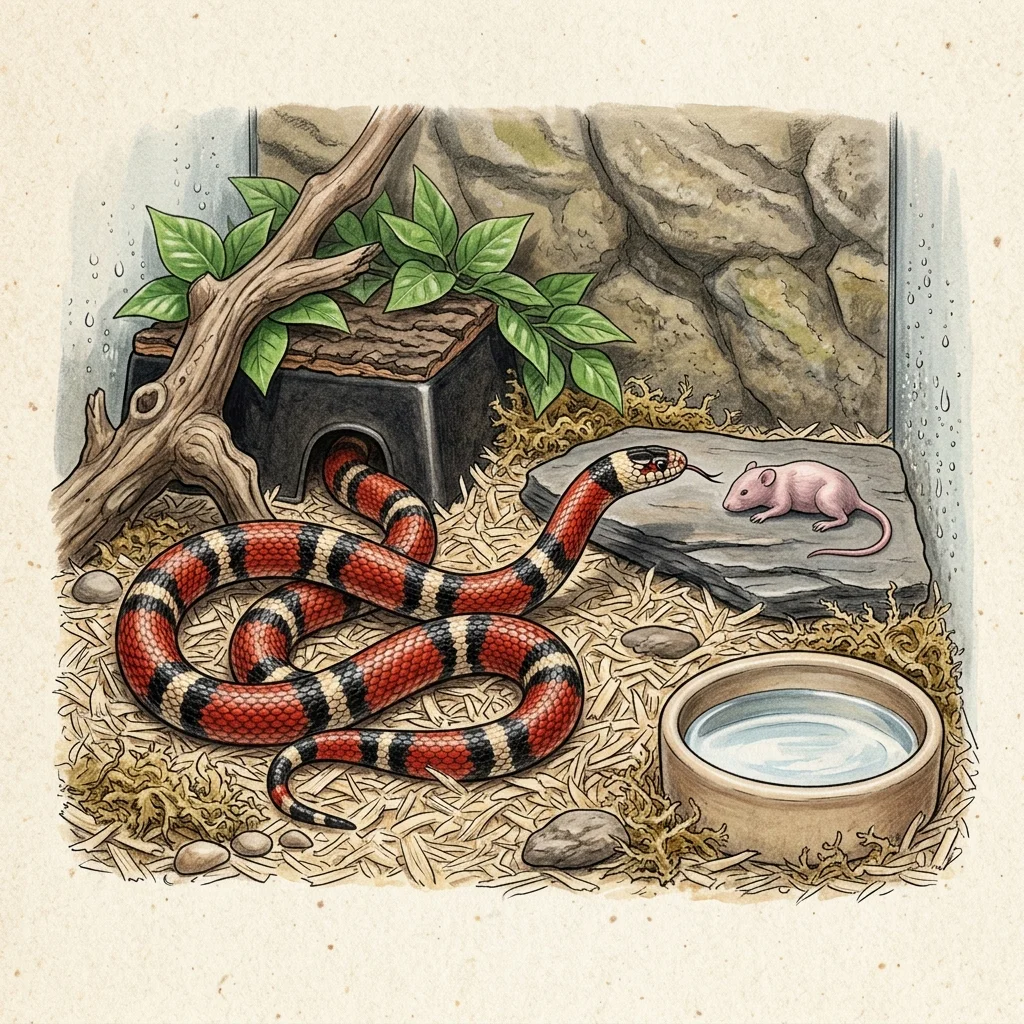
Milk snakes (Lampropeltis triangulum and related species) are among the most visually striking snakes in the reptile hobby — their bold red, black, and white banding makes them unmistakable, and in some subspecies the resemblance to the venomous coral snake is remarkable enough to have inspired the mnemonic "red touches black, friend of Jack; red touches yellow, kill a fellow." But milk snakes also come with a reputation that can surprise keepers transitioning from the enthusiastic, predictable feeding of their king snake cousins: milk snakes can be shy, nervous, and somewhat reluctant feeders compared to their more closely related Lampropeltis relatives.
This guide covers everything you need to know about feeding milk snakes successfully, from hatchling first meals through adult maintenance, including the techniques that work best for this occasionally finicky species.
1. Milk Snake Species and Subspecies: A Brief Overview
The name "milk snake" covers a complex of related species and subspecies within the Lampropeltis triangulum group. Taxonomy is actively debated in herpetology, with some authorities splitting what was once a single species into multiple distinct species. For feeding purposes, the commonly kept forms share broadly similar requirements:
Honduran Milk Snake (L. hondurensis or L. t. hondurensis): One of the most popular pet trade milk snakes. Larger than many subspecies, adults reach 4–5 feet. Intense orange-red, black, and white tricolor banding. Generally reliable feeder.
Nelson's Milk Snake (L. nelsoni or L. t. nelsoni): Brilliant orange-red coloration. Adults reach 3–4 feet. Similar feeding behavior to Honduran milk snakes.
Sinaloan Milk Snake (L. t. sinaloae): Smaller subspecies with thin white and red bands. Adults typically 24–36 inches. Can be slightly more reluctant than Honduran subspecies.
Eastern Milk Snake (L. t. triangulum): The nominate subspecies, found throughout eastern North America. Brown to gray with reddish blotches — less vibrantly patterned than tropical subspecies. Adults 24–36 inches. Primarily feeds on small mice and occasionally other small prey in the wild.
Pueblan Milk Snake (L. t. campbelli): Small, vivid tricolor milk snake. Adults 24–36 inches. Occasional feeding reluctance, similar to Sinaloan.
All subspecies have broadly similar care and feeding requirements, with the main variable being prey size — larger subspecies require larger prey.
2. Understanding Milk Snake Feeding Behavior
Milk snakes are more similar in temperament to their king snake relatives than their corn snake relatives, but they trend toward the more cautious end of the Lampropeltis spectrum.
Key behavioral characteristics that affect feeding:
Defensive and nervous: Milk snakes are prey for many animals in the wild. They tend to be more defensive and more easily stressed than king snakes. A stressed milk snake often refuses food. This means that handling protocols, enclosure design, and the quiet during feeding sessions matter more for milk snakes than for the more phlegmatic corn snake or king snake.
More likely to retain wild nervousness: Even captive-bred milk snakes can retain strong defensive behaviors — defensive striking, musking, and frantic movement when disturbed. This defensive temperament correlates with a more cautious feeding response.
Crepuscular and nocturnal: Like most colubrid snakes, milk snakes are most active in low-light conditions. Feeding attempts during daylight hours have meaningfully lower success rates than evening sessions.
Burrowing tendency: Many milk snake subspecies in the wild spend significant time under rocks, logs, and debris. Enclosures without adequate substrate depth for burrowing create chronically stressed animals that refuse food.
3. Milk Snake Prey Size Chart
Milk snakes are slim-bodied colubrids that eat mice throughout their lives — rats are generally inappropriate due to their higher fat content. Follow the same diameter rule as all colubrids: prey diameter equal to or slightly less than the widest point of the snake's body.
Honduran Milk Snake Prey Size Chart (Largest Common Subspecies)
| Life Stage | Length | Weight | Recommended Mouse | Mouse Weight |
|---|---|---|---|---|
| Hatchling (0–3 months) | 8–12 inches | 8–20g | Pinky Mouse | 2–4g |
| Juvenile (3–9 months) | 12–22 inches | 20–80g | Fuzzy to Hopper Mouse | 5–14g |
| Sub-Adult (9–24 months) | 22–36 inches | 80–250g | Hopper to Adult Small Mouse | 12–25g |
| Adult (2+ years) | 36–60 inches | 250–700g | Adult Small to Medium Mouse | 20–40g |
Smaller Subspecies (Sinaloan, Pueblan, Eastern) Prey Size Chart
| Life Stage | Length | Weight | Recommended Mouse | Mouse Weight |
|---|---|---|---|---|
| Hatchling (0–3 months) | 7–10 inches | 5–15g | Pinky Mouse | 2–4g |
| Juvenile (3–9 months) | 10–18 inches | 15–50g | Pinky to Fuzzy Mouse | 3–8g |
| Sub-Adult (9–18 months) | 18–28 inches | 50–150g | Fuzzy to Hopper Mouse | 6–14g |
| Adult (2+ years) | 24–36 inches | 120–400g | Hopper to Adult Small Mouse | 12–25g |
For complete sizing reference with descriptions, see our frozen mice size chart.
Note: Milk snakes tolerate undersized prey much better than oversized prey. When in doubt, go one size smaller. An undersized meal is slightly nutritionally insufficient but avoids the regurgitation risk of an oversized one.
4. Feeding Frequency for Milk Snakes
Milk snakes have a metabolism similar to corn snakes — active feeders that need more frequent meals than pythons but less frequent than some tropical species.
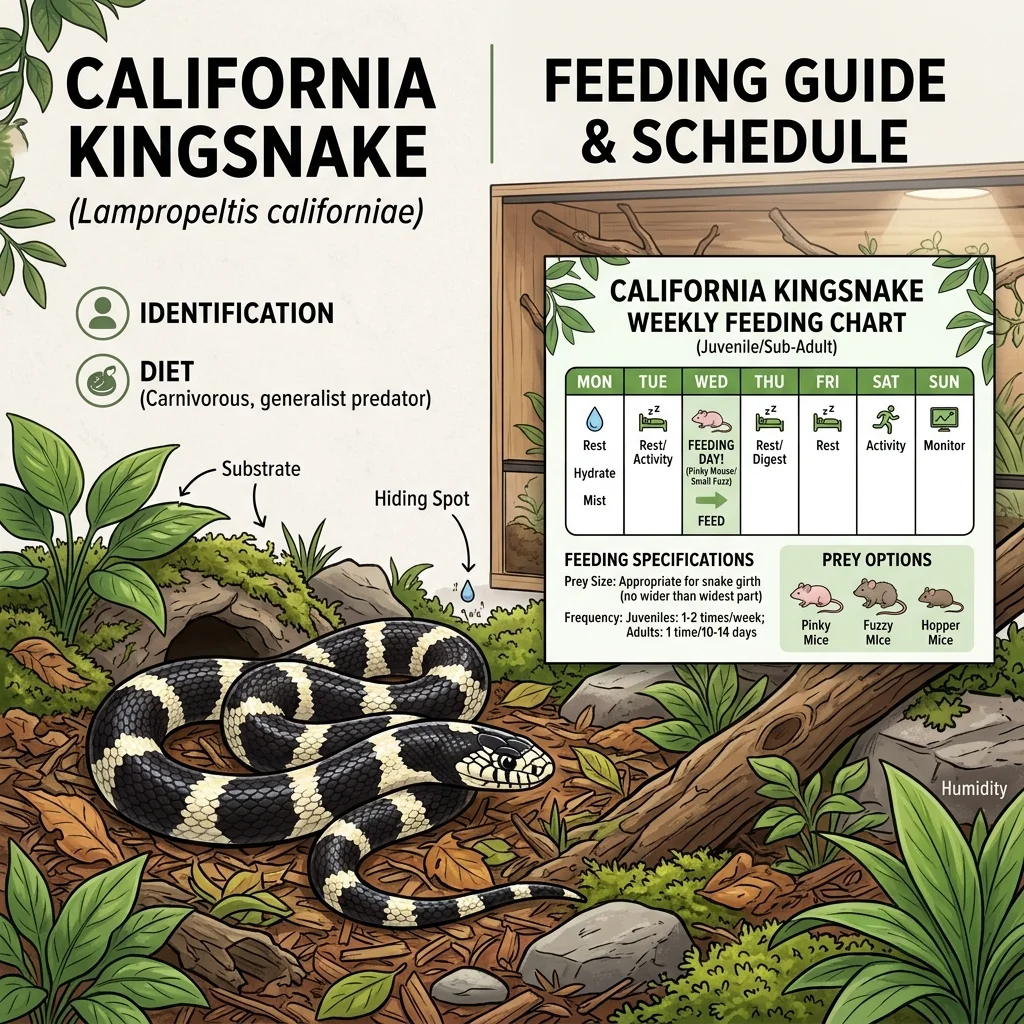
Hatchlings (0–6 months): Feed every 5–7 days. This is the critical period for establishing a feeding response. Consistency is essential — skip feedings early in a hatchling's life and you may develop a snake with an inconsistent feeding response that persists into adulthood.
Juveniles (6–18 months): Feed every 7 days. Weekly feeding continues to support active growth. Monitor body weight monthly.
Sub-Adults (18 months – 3 years): Feed every 7–10 days. As growth slows, the slight reduction in frequency prevents early obesity onset.
Adults (3+ years): Feed every 10–14 days. Mature adults do not need weekly feeding. The higher fat and caloric density of adult mice means less frequent, appropriately-sized meals maintain healthy body condition better than frequent small meals.
Seasonal variation: Some milk snake subspecies, particularly those from North American populations (Eastern milk snakes), retain a strong brumation instinct. These animals may reduce feeding or stop entirely from October through February. Tropical subspecies (Honduran, Sinaloan) show this tendency to a lesser degree. As long as body condition is maintained, a seasonal fast of 4–8 weeks is normal.
5. The Shy Feeder Problem: Why Milk Snakes Refuse and What to Do
The most common complaint from milk snake keepers: a snake that eats inconsistently, showing interest in prey but then retreating, or refusing multiple sessions in a row before suddenly eating without any apparent change.
Creating the Right Environment
The number one factor for reluctant milk snake feeders is environmental stress. Unlike corn snakes and king snakes, which are relatively stress-tolerant feeders, milk snakes require more specific conditions to feed confidently:
Hides: Two opaque hides — one on the warm side, one on the cool side — are mandatory. Milk snakes spend most of their time hidden. A snake that doesn't feel secure won't hunt. The hide test: your milk snake should fit its entire body inside the hide with all sides making contact. Hides that are too large provide no security benefit.
Substrate depth: At least 3 inches of loose substrate (aspen shavings or coconut fiber) for burrowing. A milk snake that can burrow feels significantly more secure than one on a thin substrate layer.
Low visual stimulation: Milk snakes feel exposed in brightly lit, visually open enclosures. Positioning the enclosure away from foot traffic, covering three sides with paper or fabric, and using dim ambient lighting all reduce the chronic low-level stress that suppresses feeding.
Separate feeding container: For milk snakes specifically, feeding in a separate container (a dark plastic tub with ventilation) is strongly recommended. This is the single most consistently effective technique for reluctant milk snake feeders. The separate container is used only for feeding — the snake never associates it with handling or stress.
The Evening Feeding Rule
Feed your milk snake after 8 PM in a dark or dim environment. This is non-negotiable for persistently reluctant feeders. Low ambient light activates the snake's natural hunting behavior and dramatically improves acceptance rates.
The Paper Bag Method
Place the snake and the warmed, properly scented prey into a small paper bag. Fold the top loosely. Place in a dark, quiet room for 45–60 minutes without checking. The enclosed space, darkness, and concentrated scent in a paper bag is one of the most reliable techniques for shy feeding milk snakes.
For more transition techniques, see our how to switch a snake from live to frozen prey guide.
6. Milk Snake Enclosure Requirements That Support Feeding
Temperature
| Zone | Day Temperature | Night Temperature |
|---|---|---|
| Warm side (ambient) | 82–86°F | 75–78°F |
| Cool side | 72–76°F | 68–72°F |
Milk snakes are more cold-tolerant than tropical species, but consistent warm-side access is still essential for digestion. After feeding, your milk snake should spend 2–3 days primarily in the warm hide.
Note: Eastern milk snakes, adapted to cooler North American climates, can tolerate night drops to 60–65°F — useful for triggering natural brumation behavior or for seasonal light cycling.
Enclosure Sizing
Milk snakes are active explorers and benefit from appropriate enclosure size without being overwhelming. A hatchling milk snake in a 40-gallon tank will feel insecure and stressed. Start hatchlings in a 10-gallon (or equivalent sized tub) and upgrade as the snake grows.
Adult Honduran milk snakes: 36×18×12 inch enclosure minimum; 40–75 gallons equivalent. Adult smaller subspecies: 24×18×12 inch enclosure is comfortable for most individuals.
7. Transitioning to Frozen-Thawed Prey
Many milk snakes, particularly those from pet store sources, may have been fed live prey. The same transition techniques that work for corn snakes are effective for milk snakes, with a few milk-snake specific notes:
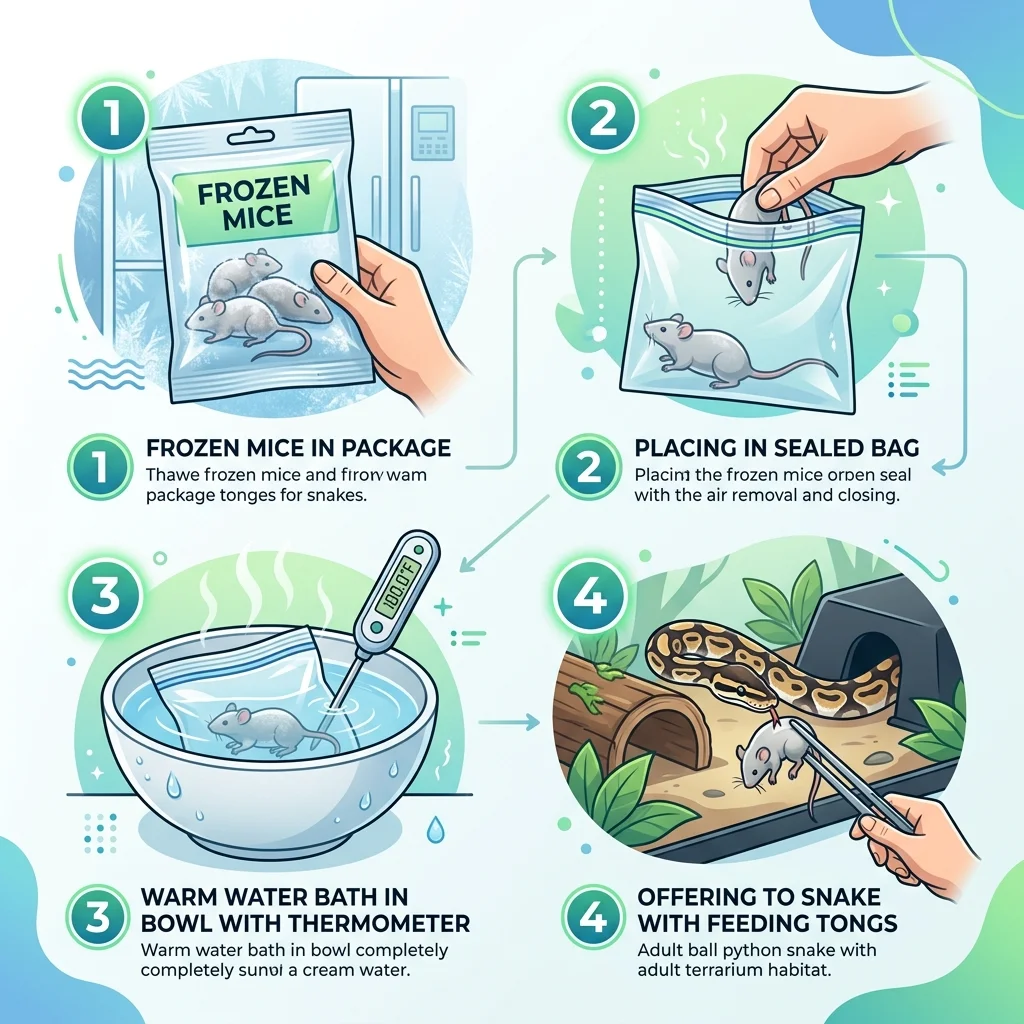
Temperature is essential: Milk snakes are more temperature-dependent in their feeding response than some other colubrids. Prey at 98–102°F is not optional. Always verify with an IR gun. This alone resolves approximately 40% of frozen prey reluctance in milk snakes.
Scenting works well: Milk snakes respond strongly to scenting techniques. Rub the warmed thawed mouse on used bedding from a live mouse enclosure before offering.
Wiggling with tongs: Most milk snakes will strike at movement. Slow, undulating movement on tongs — mimicking the movement of an exploring mouse — triggers the strike response reliably in most individuals.
The paper bag method: Particularly effective for shy milk snake subspecies.
For the full 7-technique transition toolkit, see our live to frozen transition guide.
8. Common Milk Snake Feeding Problems
"My milk snake thrashes and retreats when I try to feed it"
This is a defensive response, not a problem with the prey. The snake is stressed. Check:
- Is the enclosure placement quiet and away from foot traffic?
- Are there two appropriately-sized opaque hides?
- Are you attempting to feed during the day?
- Have you handled the snake within 48 hours of the feeding attempt?
Address these environmental factors first before trying different prey.
"My milk snake investigates the prey but won't strike"
Most likely cause: prey temperature. Verify with IR gun. If the temperature is correct, try adding scent (live mouse bedding rubbed on the prey) and using the paper bag method.
"My milk snake ate reliably for months and stopped"
Check for pre-shed (cloudy eyes), seasonal changes (fall/winter), and temperature drops. For the complete troubleshooting framework, the same principles in our corn snake won't eat frozen mice guide apply equally to milk snakes.
"My hatchling milk snake has never eaten"
Hatchling milk snakes that refuse their first several meals are a known challenge in the hobby. They need small, correctly warmed prey (pinky mice) in an extremely enclosed, dark feeding container. If after 6 attempts with the paper bag method and proper scenting the hatchling still refuses, consult an exotic veterinarian — some hatchlings require assist feeding or veterinary intervention.
If regurgitation occurs at any point, implement the protocol from our snake regurgitation guide immediately.
9. Nutrition and Long-Term Health
Milk snakes fed whole frozen-thawed mice receive a complete, balanced diet. Whole prey contains everything these snakes need:
- Complete protein (all essential amino acids)
- Calcium and phosphorus from bones in the ideal ~1.3:1 ratio
- Fat-soluble vitamins (A, D, E, K) from organs
- B vitamins from muscle tissue
- Gut content microbiome transfer
No supplementation is required for a milk snake eating regularly from high-quality frozen feeders. The critical factors are prey quality (see our feeder nutrition comparison) and correct thawing (see our how to thaw frozen mice guide).
10. Buying Quality Frozen Mice for Milk Snakes
Milk snakes eat mice at all sizes — from pinky mice for hatchlings through adult small-medium mice for large adults. Consistent availability of the right sizes from a quality supplier is important.
Key quality factors:
- Flash-frozen at -18°C or colder immediately after humane CO₂ euthanasia
- Clean, biosecure breeding facility with no signs of disease
- Consistent sizing by weight — not visual estimate
- Intact packaging on delivery — no tears, no evidence of partial thawing
Because milk snakes are particularly scent-sensitive — they rely heavily on olfactory cues when deciding whether to accept prey — scent quality is especially important. A mouse with freezer burn has a diminished, "wrong" scent profile that can cause even a normally reliable milk snake to refuse. This is another reason quality of source matters.
See our where to buy frozen mice guide for supplier recommendations. For storage guidance to maintain quality after delivery, see our frozen rodent storage guide.
Milk Snake FAQ
Q: Can milk snakes eat rats? A: Not recommended as a staple. Milk snakes are slim-bodied colubrids best suited to mice. Very large Honduran milk snakes approaching 700g might occasionally accept a rat pup, but the higher fat content of rats is not ideal for this body type. Stick with mice.
Q: How often should I handle my milk snake around feeding time? A: No handling within 48 hours before or after a feeding attempt. For particularly shy milk snake subspecies, extending this to 72 hours may improve feeding reliability.
Q: My milk snake eats but is very small for its age. What's happening? A: Check that prey sizing is appropriate (see Section 3), that feeding frequency is correct (Section 4), and that temperatures are adequate for digestion (Section 6). If all husbandry factors check out, consult an exotic veterinarian to rule out internal parasites, which are a common cause of stunted growth in colubrids.
Q: Are milk snakes related to corn snakes? A: Both are North American colubrids but belong to different genera. Corn snakes are Pantherophis guttatus; milk snakes are Lampropeltis triangulum (or related species). Milk snakes are more closely related to king snakes, with which they share the Lampropeltis genus.
Conclusion
Milk snakes are rewarding, beautiful animals that are fully capable of becoming consistent, reliable feeders — they simply need the right environmental conditions, the right presentation, and a keeper who understands their naturally cautious temperament. By providing appropriate hides, feeding in dim conditions, using the paper bag method, and always offering properly warmed frozen-thawed mice, the vast majority of milk snakes become straightforward, predictable feeders.
For related species guides, see our king snake feeding guide and corn snake feeding guide. For complete mouse sizing reference, see our frozen mice size chart. Explore our complete reptile feeding guides for more expert resources.
Written by Bill Galloway, Former Assistant Curator at Palm Beach Zoo and co-founder of Loxahatchee Rodents.
11. Long-Term Health and Feeding: What to Expect Over a Milk Snake's Lifetime
A well-kept milk snake can live 15–20 years. Here's what to expect from a feeding perspective across that lifespan:
Years 1–3 (Juvenile to Young Adult): Active growth phase. Weekly feeding with prey progressing from pinkies through fuzzy and hopper mice. Most individuals in this phase are reliable feeders given correct husbandry. Growth rate should be visible in monthly weighing records.
Years 3–8 (Peak Adult): Stable adult phase. Bi-weekly feeding at maintenance. Most milk snakes reach their maximum body size by year 3–4. Feed quality maintains body condition; feed quantity no longer drives growth. This is often the phase where keepers reduce frequency and prevent obesity.
Years 8–15 (Middle Age): Feeding typically remains reliable but seasonal fasts may become more pronounced. Some individuals develop stronger seasonal refusal patterns as they age. Monitor body condition more carefully — weight loss in this phase warrants veterinary attention, as it can indicate early organ decline.
Years 15+ (Senior): Senior milk snakes may show reduced appetite year-round. Prey size may need to be reduced as the snake's ability to digest large meals declines. Annual veterinary checkups recommended for any snake over 15 years old. A snake in good health at 15 is a testament to 15 years of correct husbandry.
12. Regional Considerations: Locality-Specific Milk Snake Care
If you keep a locality-specific milk snake (wild-caught locality or confirmed wild-type genetics), there may be regional care differences that affect feeding:
Mexican and Central American localities (Honduran, Jalisco, Sinaloan, Nelson's, etc.): Tropical and subtropical origins mean these snakes have weaker seasonal responses to photoperiod and temperature changes. They tend to have more consistent year-round feeding with less pronounced seasonal fasting.
North American localities (Eastern, Coastal Plain, Louisiana, etc.): These populations evolved with distinct seasonal temperature cycles and retain strong brumation instincts. Expect stronger seasonal fasting (October–February) and potentially a complete feeding cessation during winter months.
Hibernation cycling for breeding pairs: If you intend to breed your milk snakes, a proper hibernation cycle (8–12 weeks at 50–55°F with no feeding) is essential for conditioning both males and females. This is separate from a typical seasonal fast and requires specific planning. Consult species-specific breeding resources before attempting.
For complete feeding schedules across all snake species, see our how often to feed your snake guide. For the related species guide, see our king snake feeding guide.
Written by Bill Galloway, Former Assistant Curator at Palm Beach Zoo and co-founder of Loxahatchee Rodents.