Key Takeaway
The complete guide to reptile feeding tongs. Why they're essential for snake safety, how to choose the right type and length, proper technique for different species, and maintenance tips.
Table of Contents
- 1. Why Reptile Feeding Tongs Are Non-Negotiable
- The Three Risks of Hand-Feeding
- The Case for Tongs Beyond Safety
- 2. Types of Reptile Feeding Tongs
- Stainless Steel Tongs (Straight)
- Stainless Steel Tongs (Curved/Angled)
- Bamboo Tongs
- Silicone-Tipped Tongs
- Extra-Long Tongs (18–30 inches)
- 3. Choosing the Right Length
- 4. The Correct Feeding Technique
- Step 1: Prepare the Prey First
- Step 2: Hold the Prey by the Tail or Hindquarters
- Step 3: Approach Slowly and Low
- Step 4: Use the Correct Movement
- Step 5: Allow the Strike Without Interference
- Step 6: Step Back and Give Space
- 5. Species-Specific Technique Notes
- Ball Pythons
- Corn Snakes
- Boa Constrictors
- Hognose Snakes
- King Snakes
- 6. Cleaning and Maintenance
- 7. Where to Buy Quality Feeding Tongs
- Frequently Asked Questions
- Conclusion
- 8. Training Your Snake to Associate Tongs with Feeding
- 9. Tong Safety: Protecting Yourself and Your Snake
If you've ever been feeding your snake with your hand and caught yourself thinking "I hope this doesn't go wrong" — feeding tongs are the tool you need. A proper pair of reptile feeding tongs is not an optional accessory. For any snake species capable of a feeding response strike, offering prey from your hand is a habit that will eventually result in a bite. Not because the snake is aggressive or "mean" — but because your warm, prey-scented hand triggers the exact same sensory response as the prey item you're trying to offer.
Beyond bite prevention, quality feeding tongs also affect your snake's feeding success, prey positioning precision, and the longevity of the feeding behavior itself. This guide covers everything you need to know about selecting, using, and maintaining reptile feeding tongs for every major pet snake species.
1. Why Reptile Feeding Tongs Are Non-Negotiable
Let's start with the most important reason: snake bites during feeding are entirely avoidable and are the direct result of poor feeding technique.
When a snake is in feeding mode — after smelling warm prey, after you've opened the enclosure, after it has begun tongue-flicking toward the approaching hand — it is responding to a combination of thermal (heat) and chemical (scent) signals. Your hand at body temperature (98.6°F) combined with the scent of the prey item you've been handling closely mimics the signal pattern of prey.
The snake is not "attacking" you. It is doing exactly what you trained it to do: respond to a warm, prey-scented object approaching its strike zone.
The Three Risks of Hand-Feeding
1. Strike bites: Even the calmest corn snake can deliver a feeding-response strike that breaks skin and requires wound care. Ball python feeding bites involving larger prey-size strikes are significantly more impactful. Boa constrictor feeding bites, even from juvenile animals, can cause serious lacerations.
2. Behavioral conditioning: Snakes that are hand-fed learn to associate human scent and approach with feeding. This creates animals that are defensive and potentially strike-prone outside of feeding contexts — particularly during cage maintenance when they're hungry.
3. Prey ingestion accidents: Rare but documented: snakes have ingested fingers partially during feeding strikes, particularly species like blood pythons and large-headed species that have fast, powerful strikes. Tongs create a physical barrier that keeps hands outside the strike zone.
The Case for Tongs Beyond Safety
Feeding tongs also improve the feeding experience for the snake:
Precise prey positioning: You can present the prey at exactly the right height, angle, and distance from the snake's head — maximizing the snake's thermal and scent detection and triggering a clean, confident feeding response.
Prey movement control: Using tongs, you can replicate the slow, irregular movement of a mouse exploring terrain — a key trigger for visual hunters and snakes that are reluctant to strike stationary prey.
Scent separation: Tongs allow you to handle the prey without your body scent being deposited on it — the prey smells like prey, not like you plus prey. This subtle difference can matter for particularly scent-sensitive species.
2. Types of Reptile Feeding Tongs
Not all tongs are equally suited for all applications. Here's a breakdown of the main types:
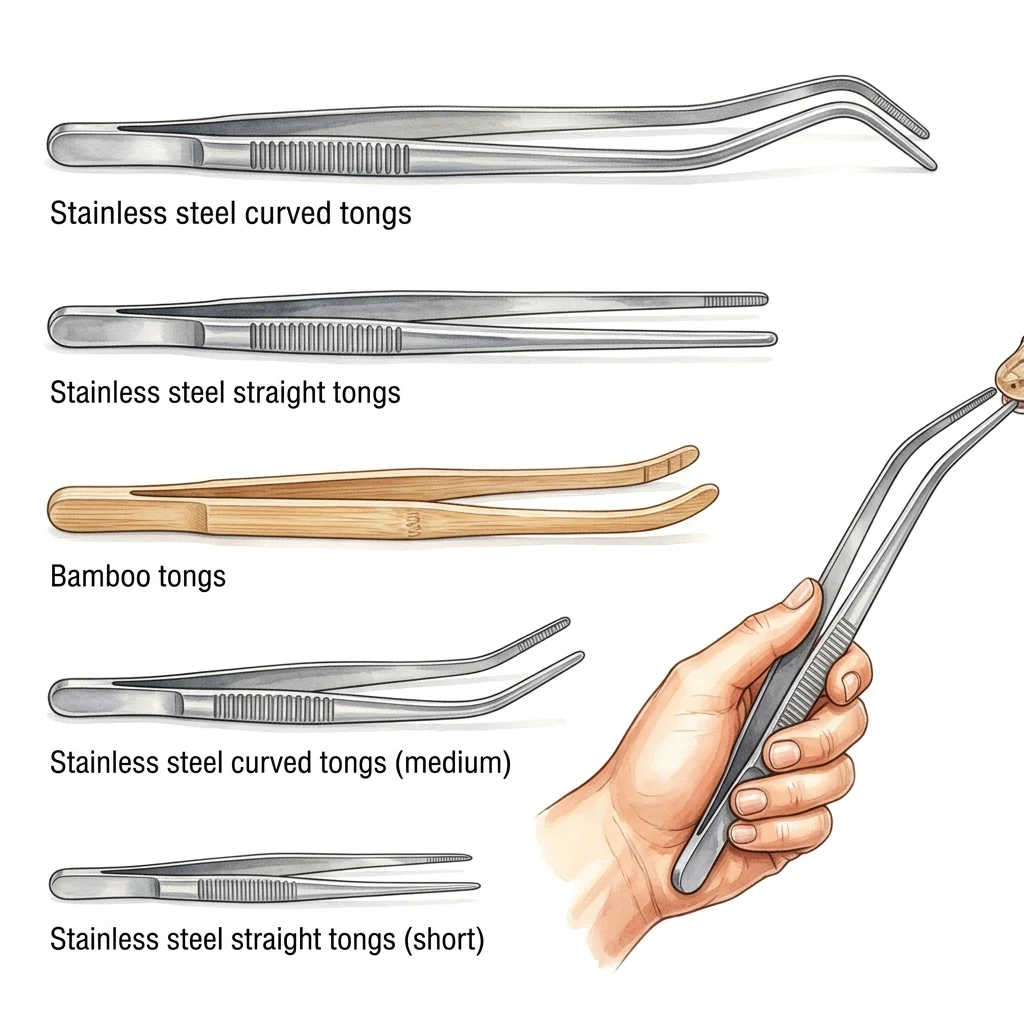
Stainless Steel Tongs (Straight)
Best for: Colubrids (corn snakes, king snakes, milk snakes, rat snakes), juvenile ball pythons, most small-to-medium snake species.
Specifications to look for:
- Material: 304 or 316 stainless steel (food-grade, non-reactive, corrosion-resistant)
- Length: 10–14 inches for colubrids; 12–16 inches for ball pythons
- Tip style: Smooth, rounded — not sharp or serrated
- Grip texture: Ridged or knurled grip section for control
Straight stainless tongs are the workhorse of the reptile keeper. They are easy to clean, durable, and give good control for most applications.
Stainless Steel Tongs (Curved/Angled)
Best for: Feeding in enclosures with limited vertical clearance, side-opening enclosures, species where you want to present prey at a specific angle.
The curved tip allows you to position the prey at angles that a straight tong makes difficult. Particularly useful for presenting prey horizontally (simulating a mouse on the ground) rather than dangling it vertically.
Bamboo Tongs
Best for: Hatchlings and very small juveniles (pinkies, fuzzies); keepers who want a lighter, softer option for delicate feeder items.
Advantages: Very lightweight, inexpensive, and soft enough at the tip that they won't cause injury to a hatchling snake if accidentally struck by the animal.
Disadvantages: Less durable, harder to clean thoroughly, and limited length options. Not appropriate for snakes over 300g or prey items over 15g.
Silicone-Tipped Tongs
Best for: Ball pythons with strike-accuracy issues (particularly spider morphs with Wobble), species that tend to "chew" the tong tip.
The silicone tip cushions against the hard metal and is less likely to damage the snake's mouth if the tong tip is accidentally struck. Can also help grip prey items that are too small for standard stainless tips.
Extra-Long Tongs (18–30 inches)
Best for: Large boas, large pythons (Burmese, reticulated, blood pythons), any species with an aggressive or powerful feeding response.
When feeding large constrictors, keeping your hand as far from the strike zone as possible is important. An 18–24 inch tong keeps the handler's hand well outside the effective strike range of most large constrictors during the initial strike and constriction phase.
3. Choosing the Right Length
The minimum safe tong length varies by species and is calculated based on the effective strike reach of the animal:
| Species | Body Length | Strike Reach | Recommended Tong Length |
|---|---|---|---|
| Hatchling corn/king/milk snake | 10–14 inches | 3–4 inches | 8–10 inches minimum |
| Adult corn snake | 36–60 inches | 10–15 inches | 12 inches minimum |
| Adult king snake | 36–60 inches | 10–18 inches | 12–14 inches minimum |
| Hatchling ball python | 12–18 inches | 4–6 inches | 10 inches minimum |
| Adult ball python | 36–60 inches | 12–18 inches | 14–16 inches |
| Adult boa constrictor | 60–120 inches | 20–36 inches | 18–24 inches |
| Large constrictor (Burmese, retic) | 10–20 feet | 2–4 feet | 24–30 inches |
General rule: The tong should be at least twice the snake's maximum head-and-neck strike reach plus enough additional length to keep your hand completely comfortable and not flinching. Flinching is how keepers accidentally move the prey closer to themselves — exactly the wrong direction.
4. The Correct Feeding Technique
Having the right tongs is only half the equation. Using them correctly is what determines whether your snake feeds reliably and safely.
Step 1: Prepare the Prey First
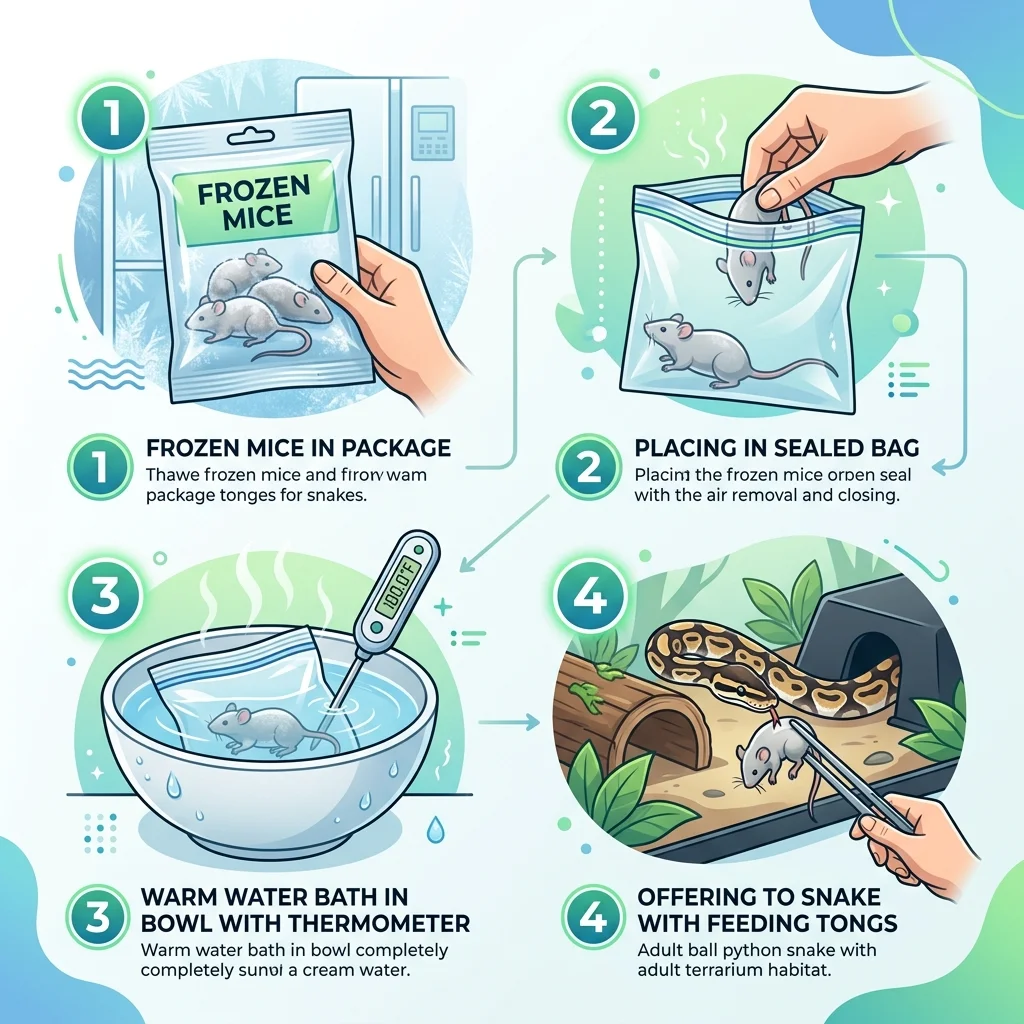
Fully prepare and warm the prey before you pick up the tongs. Verify temperature at 98–102°F with an IR gun. The tongs should not be used to prepare or handle the prey any more than necessary — you want the prey to smell like prey, not like metal.
Step 2: Hold the Prey by the Tail or Hindquarters
Grip the thawed prey at the base of the tail or hindquarters — not at the body, which would interfere with the natural hanging posture. The prey should hang head-down naturally, with the head pointing toward the snake. This "natural hanging" posture is the most effective for triggering a feeding response.
Step 3: Approach Slowly and Low
Approach the snake's enclosure or feeding container slowly. Do not "dangle" the prey at the snake from above — most snake species are triggered by prey at their level or slightly below, not hanging overhead. Position the prey approximately 4–6 inches in front of the snake's head, at the same level as the snake's head.
Step 4: Use the Correct Movement
For most species, begin with no movement — hold the prey steady for 5–10 seconds and allow the snake to detect it via heat and scent. If no response, then introduce slow, irregular movement:
- For thermal hunters (ball pythons, boas): minimal movement is needed once the snake detects heat. A very slight oscillation (half-inch, slow) may help.
- For visual hunters (corn snakes, king snakes): mimic the movement of a mouse exploring terrain — slow, hesitant, side-to-side. Not rapid or jerky.
- For amphibian-imprinted hognose snakes: slow, smooth movement mimicking a toad's deliberate walking gait.
Step 5: Allow the Strike Without Interference
When the snake strikes and begins constricting, immediately stop moving the tong and hold still. Do not try to pull the tong away — this often results in the snake constricting the tong instead of the prey, or ripping the prey item. Allow the snake to complete constriction (30–60 seconds typically), and then gently release the prey from the tong grip. The snake should begin the ingestion process naturally.
Step 6: Step Back and Give Space
Once the prey is in the snake's mouth or the constriction is complete, step away and give the snake complete privacy for 20–45 minutes while it swallows the prey. Hovering, watching, or continuing to interact with the snake during ingestion is a significant source of stress and can cause regurgitation.
5. Species-Specific Technique Notes
Ball Pythons
Ball pythons require warm prey at exactly the right temperature. If your ball python is reluctant to respond to the tongs, verify the prey temperature first. Some ball pythons show interest but won't strike until they detect thermal cues from very close range (1–2 inches). In this case, slowly move the prey closer until the snake tongue-flicks actively, then hold steady.
For spider ball pythons with Wobble, be prepared for the strike to miss the prey. Allow several attempts — the snake will eventually connect. Using slightly longer tongs (16 inches) gives you more control over positioning and reduces the risk of an errant strike hitting your hand.
For full ball python feeding guidance, see our ball python feeding schedule guide.
Corn Snakes
Corn snakes are usually the easiest species to feed with tongs — they have fast, accurate strikes and a clear feeding response. The main technique point: use movement. A corn snake that ignores stationary prey will often immediately strike prey that mimics the exploring movement of a mouse. See our corn snake feeding guide for the full protocol.
Boa Constrictors
Adult boas require extra tong length. A large adult boa striking at prey can generate enough force to pull the tong out of your hand — use a firm two-finger grip with the rest of the hand relaxed to avoid being jerked. After strike, hold the tong loosely — allow the boa to redirect its grip from the initial strike to constricting the prey body. See our boa constrictor feeding chart.
Hognose Snakes
Hognose snakes benefit from slow, deliberate tong movement. Do not wiggle frantically — a hognose snake is hunting toads, not quick-moving mice. Slow the movement down to about 1/3 of the speed you'd use for a corn snake. For full hognose technique, see our hognose snake feeding guide.
King Snakes
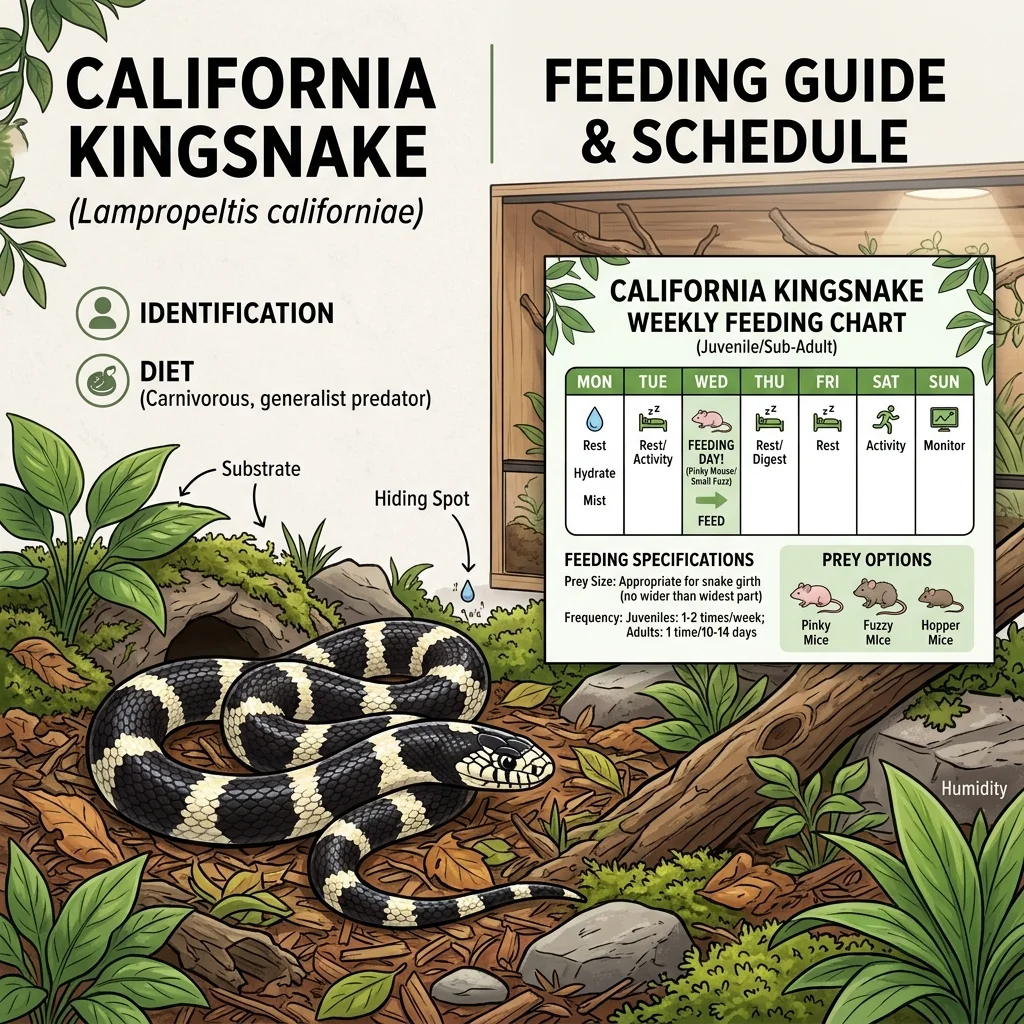
King snakes are fast, aggressive strikers. Be prepared — they often strike with significantly less "investigation" than other species. Hold the tong in a relaxed grip so the snake's strike force doesn't jerk your hand. For full king snake technique, see our king snake feeding guide.
6. Cleaning and Maintenance
Reptile feeding tongs used repeatedly accumulate scent proteins from prey items. This residual scent can:
- Create feeding responses when you pick up the tongs in non-feeding contexts
- Harbor bacteria that can transfer to prey items
- Interfere with prey scent profiles for particularly scent-sensitive species
Cleaning protocol after every use:
- Rinse with hot water immediately after use
- Wash with dish soap and a brush (especially the ridged grip section)
- Rinse thoroughly and air dry completely before storage
- Monthly: sanitize with a dilute chlorhexidine or isopropyl alcohol wipe; rinse with water and dry completely
Signs your tongs need replacing:
- Visible rust or corrosion (even small spots can harbor bacteria)
- Tips that no longer close cleanly or have developed sharp edges from metal fatigue
- Bamboo tongs that have developed cracks or splinters
- Silicone tips that have partially detached from the metal shaft
7. Where to Buy Quality Feeding Tongs
Reptile feeding tongs are available from reptile specialty retailers, online shops, and some general pet retailers. Quality indicators:
- Stainless steel designation: Look for "304 SS" or "food-grade stainless" — not just "stainless"
- Smooth, rounded tips: Avoid any tips with edges or points that could injure a snake's palate or skin
- Length labeled: The actual measurement should be stated, not just "medium" or "large"
- Single-piece construction: Tongs made from one piece of bent stainless are stronger than those with riveted joints that can fail over time
Avoid:
- Very cheap bamboo tongs that are too short (under 8 inches) for any species beyond neonates
- Craft or culinary tongs not designed for reptile use — they often have sharp tips or rough edges
- Any tong with a spring mechanism that could pinch prey items too hard and damage the presentation
The investment in quality tongs ($10–25 for most keepers) is one of the highest-ROI purchases in reptile keeping.
Frequently Asked Questions
Q: My snake strikes the tong tip instead of the prey. What am I doing wrong? A: The prey is likely being held too close to the tong tip rather than dangling from it. Make sure the prey hangs at least 2–3 inches from the tip of the tong. You can also try angled tongs that position the prey at a more natural angle away from the tong body.
Q: My snake bit the tong and won't let go. What do I do? A: Stay calm. Do not pull — this can injure the snake's teeth and jaw. Allow the snake to release on its own. Most snakes release within 30–60 seconds once they realize the tong is not prey. Gently pouring room-temperature water over the snake's head will usually prompt immediate release as a last resort.
Q: Do I need separate tongs for each snake in my collection? A: Separate tongs are ideal to prevent pathogen transfer between enclosures, particularly if any animals have had health issues. At minimum, sanitize tongs thoroughly between uses if shared. If you have snakes of significantly different sizes, separate tong lengths are helpful for proper technique with each.
Q: Can I use kitchen cooking tongs instead of reptile tongs? A: Kitchen tongs are a workable substitute for large species if they have smooth tips and appropriate length. However, most cooking tongs are too short for small-to-medium snakes, and many have scalloped edges that can damage prey presentation. Dedicated reptile tongs are worth the modest investment.
Conclusion
Reptile feeding tongs are the single most important safety and technique tool for snake keepers. They protect you from feeding-response bites, protect your snake from developing hand-feeding conditioning, and improve the precision and success of every feeding session.
Choose tongs appropriate for your species — at minimum twice the strike reach length of your snake, made from smooth, food-grade stainless steel. Learn the correct technique for your species, maintain your tongs after every use, and make tong-feeding a non-negotiable part of every feeding session.
For more resources, explore our how to thaw frozen mice guide, our species-specific guides for ball pythons, corn snakes, boa constrictors, and king snakes, or browse our complete reptile feeding guides library.
8. Training Your Snake to Associate Tongs with Feeding
If you are transitioning from hand-feeding or if you have a snake with an established feeding response to your hands, introducing tongs requires a brief re-conditioning period.
The Re-conditioning Protocol:
Session 1: Present the tongs (without prey) near the snake's enclosure. Allow the snake to tongue-flick the tongs. Do not react if the snake strikes the tongs.
Session 2: Hold the tong in one hand. Place the warmed prey in a small dish inside the feeding container. Allow the snake to find and eat from the dish with the tong simply present (not actively holding the prey). This disassociates the tong from "threat" while keeping it visually present during a positive feeding event.
Session 3: Hold the prey with the tong at a distance — 12–15 inches from the snake. Allow the snake to approach and investigate. Do not pursue the snake with the prey.
Sessions 4+: Standard tong presentation. By this point, most snakes have associated the tong with prey delivery rather than threat.
For snakes with established hand-feeding conditioning: These animals may require 3–5 sessions of the above protocol before accepting tong-presented prey. During this transition, wash your hands thoroughly with dish soap (removes hand scent) before each session and wear thin nitrile gloves for additional scent barrier.
9. Tong Safety: Protecting Yourself and Your Snake
The feeding tong is the most important safety barrier in reptile feeding, but it only works if used correctly.
For the keeper:
- Maintain a relaxed grip — the tong should float in your fingers, not be clenched. A relaxed grip absorbs the shock of a feeding strike without your hand being jerked toward the snake.
- Keep tongs slightly longer than you think necessary. An extra 2–3 inches of distance between your hand and the snake's strike zone is always valuable.
- Step away and lower the tong (while still holding the prey) the moment the snake begins to constrict — this reduces the chance of the snake constricting the tong instead of the prey.
For the snake:
- Never poke or tap the snake with the tong — this is stressful and can condition the snake to associate the tong with threat rather than food
- Do not use the tong to hold prey so tightly that it crushes or deforms the prey item — this damages the prey's scent presentation
- Keep the tong clean — accumulated scent from previous sessions can confuse the snake's feeding response
Emergency tong disengagement: If a snake bites and holds the tong (rare but possible, particularly with king snakes): Stay calm. Do not pull. Most snakes release within 30–60 seconds when they realize the tong is not food. Pouring room-temperature (not cold) water over the snake's head usually produces immediate release.
For species-specific feeding techniques, see our king snake feeding guide, corn snake feeding guide, ball python feeding schedule, and boa constrictor feeding chart.
Written by Jim Galloway, Senior Environmental Scientist and co-founder of Loxahatchee Rodents.