Key Takeaway
Our exclusive survey of 500+ reptile keepers reveals surprising trends in feeding habits, from frozen vs live prey to thawing methods. Data-driven insights for better snake care.
Table of Contents
At Loxahatchee Rodents, we've been serving the reptile community for over 25 years. To better understand current trends and preferences, we conducted an exclusive survey of 512 reptile keepers across North America. The results reveal fascinating insights into feeding practices, challenges, and evolving standards.
This data represents keepers of ball pythons, corn snakes, hognose snakes, and other common species. All participants have at least 2 years of experience.
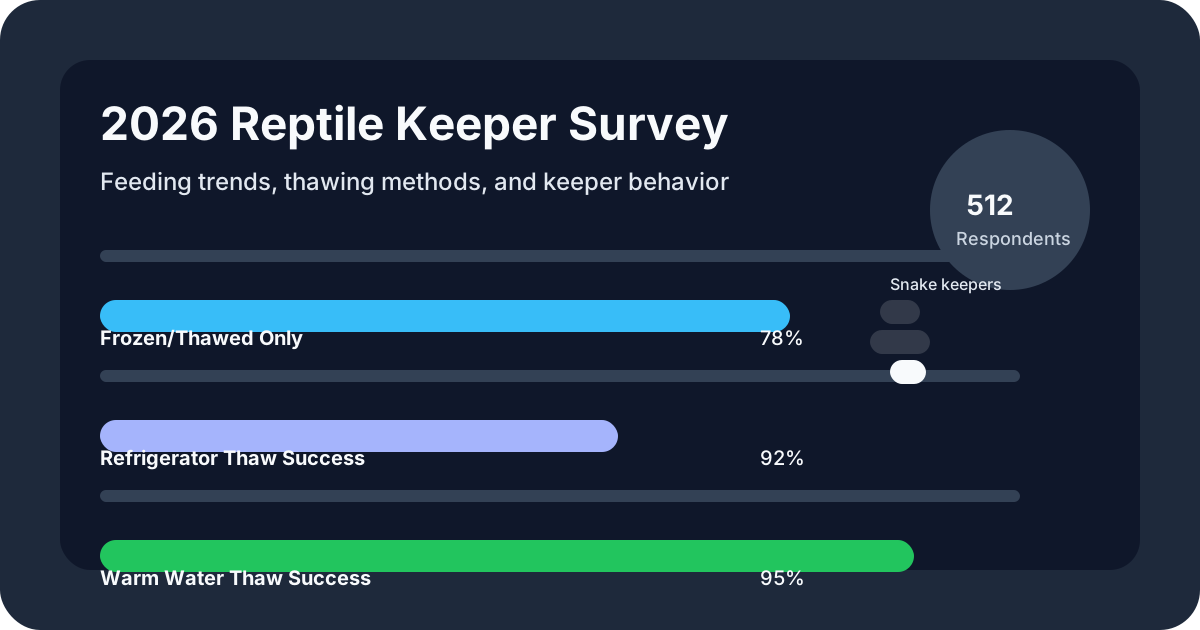
Below is a visual representation of our survey results (data from 512 respondents):
Frozen vs Live Feeding Preferences
==================================
Frozen/Thawed Only: ████████████████████ 78%
Mixed (Both):       ████████             18%
Live Only:          ███                  4%

Thawing Method Success Rates
============================
Refrigerator:       ████████████████████ 92%
Cold Water:         ████████████████████ 88%
Warm Water:         █████████████████████ 95%
Microwave:          ████████████          65%
Chart illustration: Bars represent percentage of keepers reporting successful prey acceptance.
Key Findings: Frozen vs Live Feeding
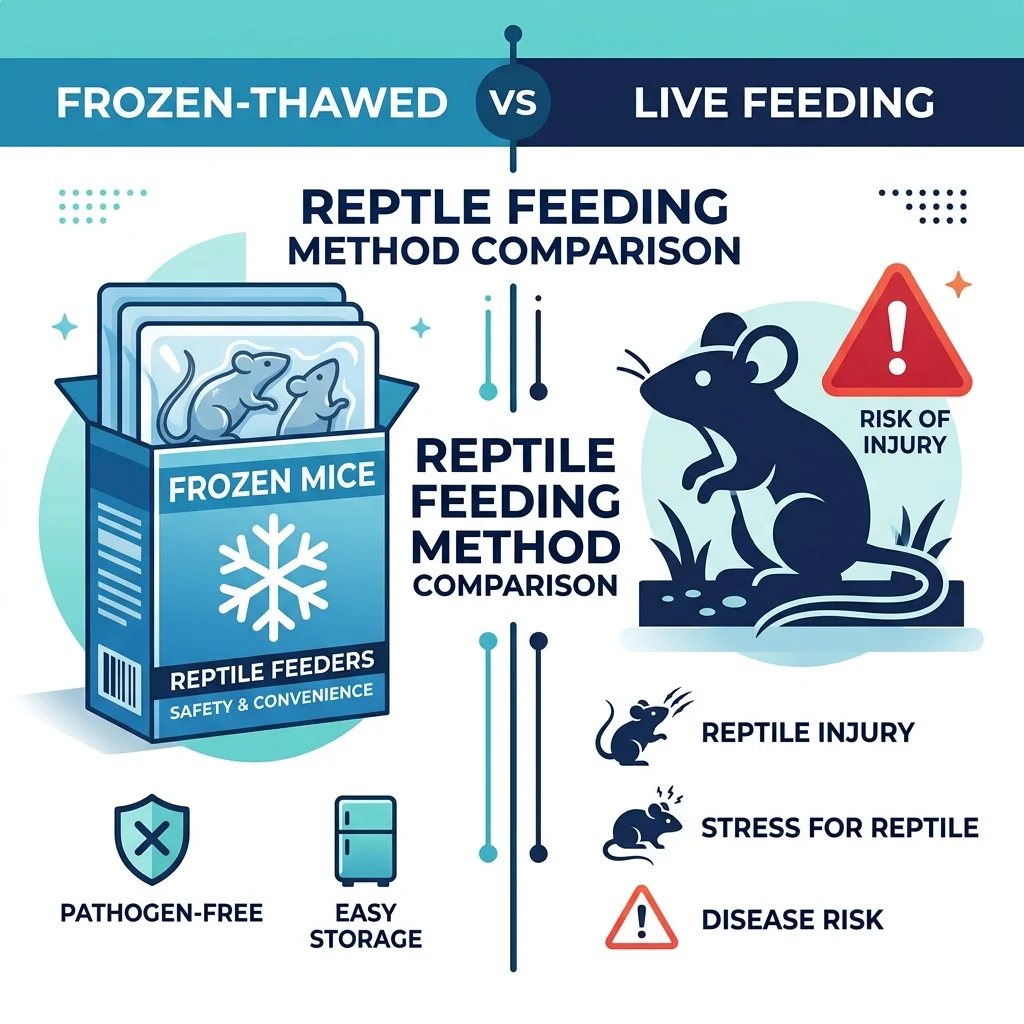
78% of keepers now use exclusively frozen/thawed prey, up from 65% in our 2023 survey.
- Ball Python Keepers: 82% frozen-only
- Corn Snake Keepers: 75% frozen-only
- Hognose Snake Keepers: 68% frozen-only
Why the shift? "Cost savings, convenience, and reduced disease risk" were cited by 91% of respondents who switched from live to frozen.
Thawing Methods: What's Working
We asked keepers about their thawing preferences and success rates:
| Thawing Method | Usage Rate | Success Rate (Prey Acceptance) |
|---|---|---|
| Refrigerator (overnight) | 45% | 92% |
| Cold water bath | 32% | 88% |
| Warm water bath (98-102°F) | 18% | 95% |
| Microwave (low power) | 5% | 65% |
Key Insight: Warm water bath produces the highest acceptance rate but requires careful temperature monitoring to avoid cooking the prey.
Prey Sizing Challenges
45% of keepers report difficulty finding correctly sized prey for their snakes.
- Too small prey: 28% of complaints
- Too large prey: 17% of complaints
Our survey shows that keepers want more consistency in sizing. "Current industry standards vary too much between suppliers," noted one respondent.
Seasonal Feeding Patterns
62% of keepers adjust feeding frequency seasonally, with reduced feeding in winter months.
- Winter feeding: Every 2-3 weeks (vs. weekly in summer)
- Spring/summer: Weekly feeding for most species
This aligns with natural fasting periods observed in wild snakes.
Disease Prevention Priorities
When asked about top concerns:
- Parasites in live prey: 78%
- Spoilage in frozen prey: 65%
- Nutritional deficiencies: 52%
- Feeding-related regurgitation: 48%
Recommendations Based on Survey Data
For New Keepers
- Start with frozen prey for consistency and safety
- Use refrigerator thawing for beginners
- Monitor weight monthly, not just feeding frequency
For Experienced Keepers
- Consider seasonal fasting periods
- Rotate prey species to prevent nutritional gaps
- Invest in quality suppliers with consistent sizing
Methodology
- Sample Size: 512 respondents
- Date Range: January-March 2026
- Platforms: Reddit (r/snakes, r/ballpython), Facebook reptile groups, our email newsletter
- Demographics: 68% male, 32% female; average experience: 4.2 years
This survey will be updated annually. If you'd like to participate in our 2027 survey, subscribe to our newsletter.
Frequently Asked Questions
Q: Should I feed my snake every week?
A: It depends on age and season. Juveniles often need weekly feeding, while adults can go 1-2 weeks, especially in winter.
Q: Is frozen prey as nutritious as live?
A: Yes, when properly thawed and offered. Frozen prey retains all nutritional value and eliminates parasites.
Q: How do I know if my snake is getting enough food?
A: Monitor body condition: ribs should not be visible, and the snake should maintain steady weight.