Key Takeaway
A quick, accurate guide on exactly how long it takes to thaw frozen mice, rats, and other rodents safely to prevent bacteria and ensure snake health.
Table of Contents
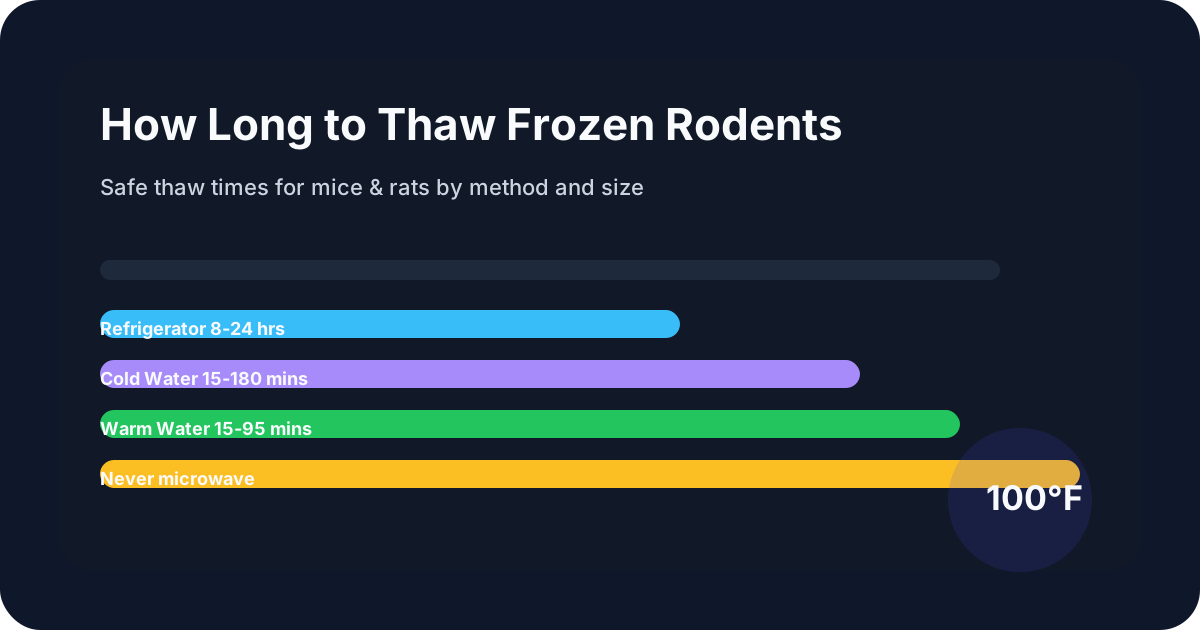
A crucial part of feeding frozen-thawed prey to your snake is timing. Thawing too fast can cook the rodent; thawing too slowly at room temperature invites dangerous bacterial blooms (learn more in our how to thaw frozen mice guide). So, how long does it take to thaw frozen rodents?
The answer depends entirely on the size of the rodent and the method you use. Here is the ultimate time guide.
1. The Refrigerator Method (Slow & Safe)
This is the safest method. You place the frozen rodent in a sealed plastic bag and leave it in the refrigerator (approx. 40°F / 4°C).
| Rodent Size | Approximate Thaw Time (Fridge) |
|---|---|
| Pinky Mice | 2 to 4 hours |
| Fuzzy / Hopper Mice | 4 to 6 hours |
| Adult Mice | 8 to 12 hours |
| Rat Pups / Weanlings | 12 to 18 hours |
| Medium / Large Rats | 24 hours (Full day) |
| Jumbo Rats / Rabbits | 24 to 48 hours |
Pro Tip: For anything adult mouse-sized or larger, simply move it from the freezer to the fridge the night before feeding day.
2. The Cold Water Method (Quick Thaw)
If you forgot to take the rodent out the night before, you can use the cold water submersion method. Place the rodent in a watertight Ziploc bag and submerge it in a bowl of cold tap water. Change the water every 30 minutes.
| Rodent Size | Approximate Thaw Time (Cold Water) |
|---|---|
| Pinky Mice | 15 to 30 minutes |
| Fuzzy / Hopper Mice | 30 to 45 minutes |
| Adult Mice | 1 to 1.5 hours |
| Rat Pups / Weanlings | 1.5 to 2 hours |
| Medium / Large Rats | 3 to 4 hours |
3. The Final Step: Warming (DO NOT SKIP)
Once the rodent is completely thawed (it feels soft all the way through to the core), it must be warmed to mimic live prey. Snakes use heat pits to target their food.
- Keep the completely thawed rodent in its sealed bag.
- Submerge it in warm water (100°F - 105°F).
- Leave it for 10 to 15 minutes.
- Check the surface temperature with an infrared temp gun. It should read around 98°F.
4. What Happens if You Thaw Incorrectly?
The "Still Frozen Core" Danger
If you rush the process, the outside of the rat may feel warm, but the internal organs and core may still be a block of ice. If a snake swallows a frozen core, it will rapidly drop their core body temperature, causing immediate regurgitation, tissue necrosis in the stomach, or even death.
The "Boiled Mouse" Danger
Never use hot or boiling water to speed up the thaw. Snakes lack the digestive enzymes required to break down cooked proteins. A cooked mouse will rot inside the snake's stomach, leading to fatal systemic infections.
Conclusion
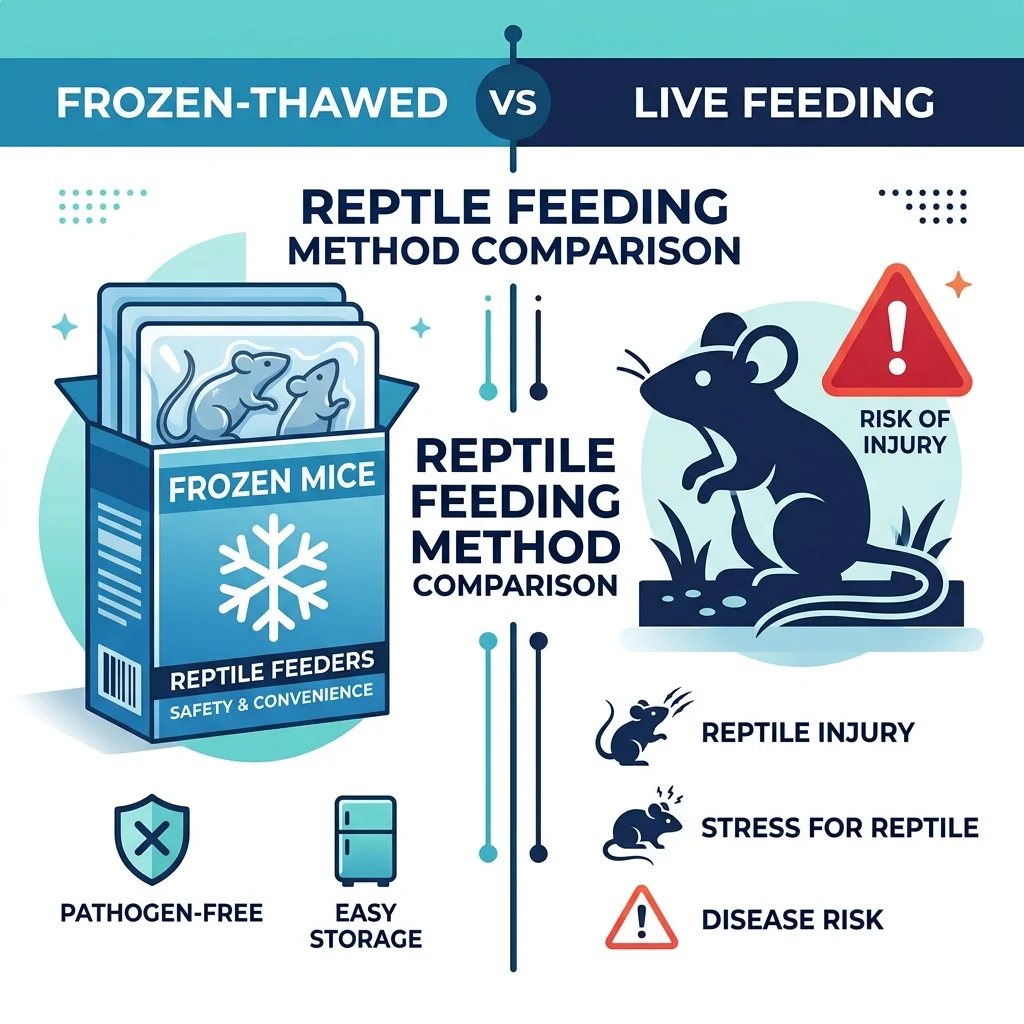
Patience is key. Use the charts above to plan your feeding schedule. By understanding exactly how long it takes to thaw frozen rodents, you guarantee a safe, nutritious, and biologically appropriate meal for your scaly friend (see our frozen vs live feeding comparison for more safety tips).